
What is industrial robot maintenance? Industrial robot maintenance is the scheduled inspection, lubrication, calibration and part replacement that keeps a robot accurate, safe and productive. It combines preventive maintenance (planned, interval-based), corrective maintenance (after a fault) and predictive maintenance (data-driven). Done well, it prevents the unplanned downtime that can cost thousands of euros per hour.
A single unplanned stoppage on a production line can cost thousands of euros per hour. When a robot breaks down mid-cycle, the consequences ripple through the entire manufacturing chain: missed deadlines, scrapped parts, emergency bills, and stressed teams scrambling to restore operations. Robots have become integral to modern industry, yet many facilities still treat upkeep as a reactive afterthought rather than a strategic priority.
The reality is straightforward. Proper maintenance is the single most effective way to protect your investment in robotics and keep your production running. Whether you operate Fanuc, ABB or KUKA robots, Yaskawa, or Staubli units, the principles remain the same: prevent unexpected failures before they happen, catch early signs of wear, and give your robotic equipment the attention it needs to perform at peak efficiency for years.
This guide covers everything maintenance personnel and production managers need to know about industrial robot maintenance – from daily routines to long-term preventive strategies that minimize downtime through structured prevention, including the often-overlooked role of physical protection.
Table of Contents
In summary:
- Preventive maintenance for industrial robots reduces unplanned downtime by up to 70% compared to a purely reactive approach
- Key maintenance tasks include lubrication, inspection, cleaning, calibration, and software updates – each on a specific schedule
- A structured maintenance plan pays for itself through lower operational costs, fewer breakdowns, and extended service life
- Protective covers are a frontline defense that dramatically reduces wear and tear on critical components in harsh industrial environments
- Well-maintained robots consistently deliver higher precision, better throughput, and safer daily operations
Why industrial robot maintenance is critical for your operations
Preventive maintenance reduces unplanned downtime by up to 70% and directly protects product quality, safety and total cost of ownership. Robots rely on precisely coordinated components – arms, joints, sensors – that accumulate stress with every cycle until a sudden breakdown forces the line to stop.
The importance of preventive maintenance goes beyond avoiding costly downtime. It directly affects product quality, workplace safety, and the total cost of ownership of your robotic systems. A unit that drifts out of calibration produces defective parts. One with degraded safety mechanisms puts operators at risk. And equipment that fails prematurely needs replacement years ahead of schedule.
Ongoing maintenance works to ensure that your units operate within their designed parameters, consistently and safely. That alone makes it one of the highest-return activities on any production floor.
Types of maintenance: preventive, corrective, and predictive
Industrial robot maintenance splits into 3 types: preventive (scheduled), corrective (after a failure), and predictive (sensor-driven). The strongest programs blend all 3.
Preventive and preventative maintenance
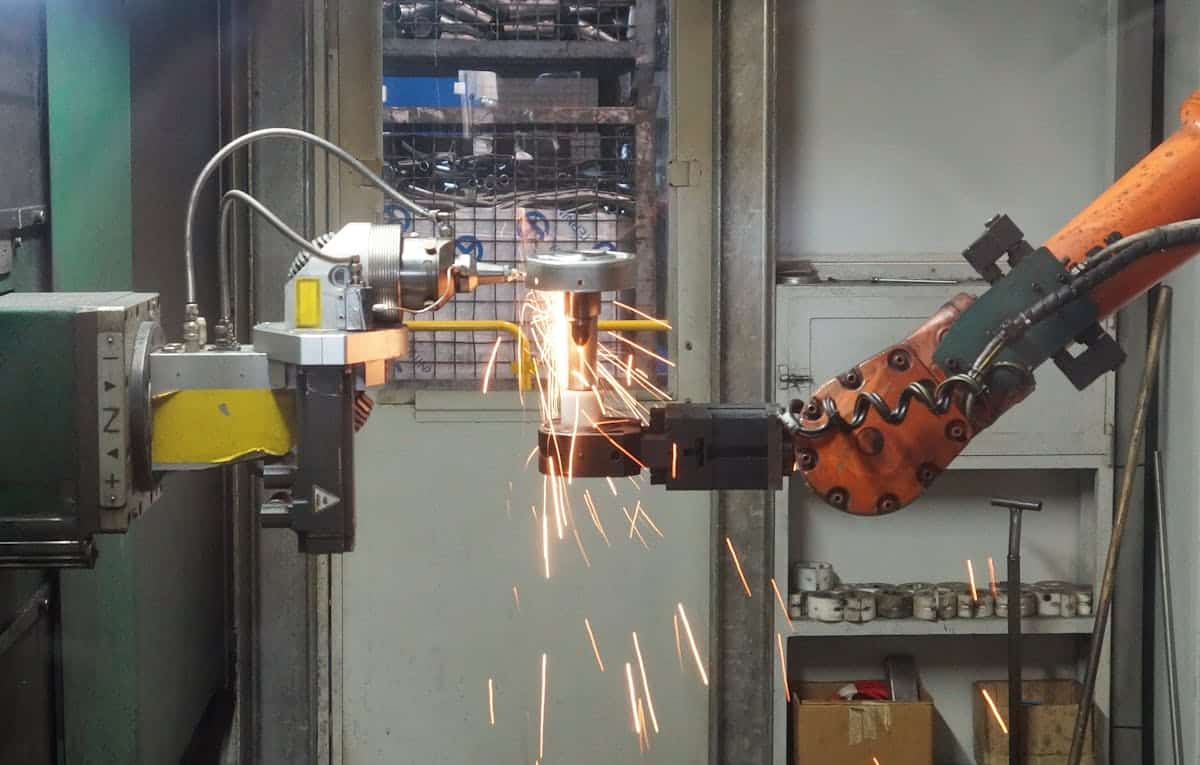
Preventive maintenance aims to address potential issues before they escalate into failures. It follows a fixed schedule – daily, weekly, monthly, annually – based on the robot type, workload, and operating environment. This proactive approach is the foundation of any serious maintenance program. Some organizations refer to this as preventative maintenance; the concept is identical. For a deeper dive, see our guide to preventive maintenance for industrial robots.
The benefits of preventive maintenance are well documented: fewer unexpected failures, longer equipment life, lower costs, and more consistent production output. For most facilities, this delivers measurable ROI within the first year of implementation.
Corrective and predictive maintenance
Corrective maintenance happens after something goes wrong – a motor fails, a cable frays, a reducer seizes. Relying on this reactive model means accepting emergency costs and production losses. Predictive maintenance takes the opposite approach: it uses sensor data (vibration analysis, temperature monitoring, current draw patterns) to identify potential issues before they cause failure, allowing teams to intervene at exactly the right moment.
Want to understand the most common failure modes and how to prevent them?
Read our failure prevention guide →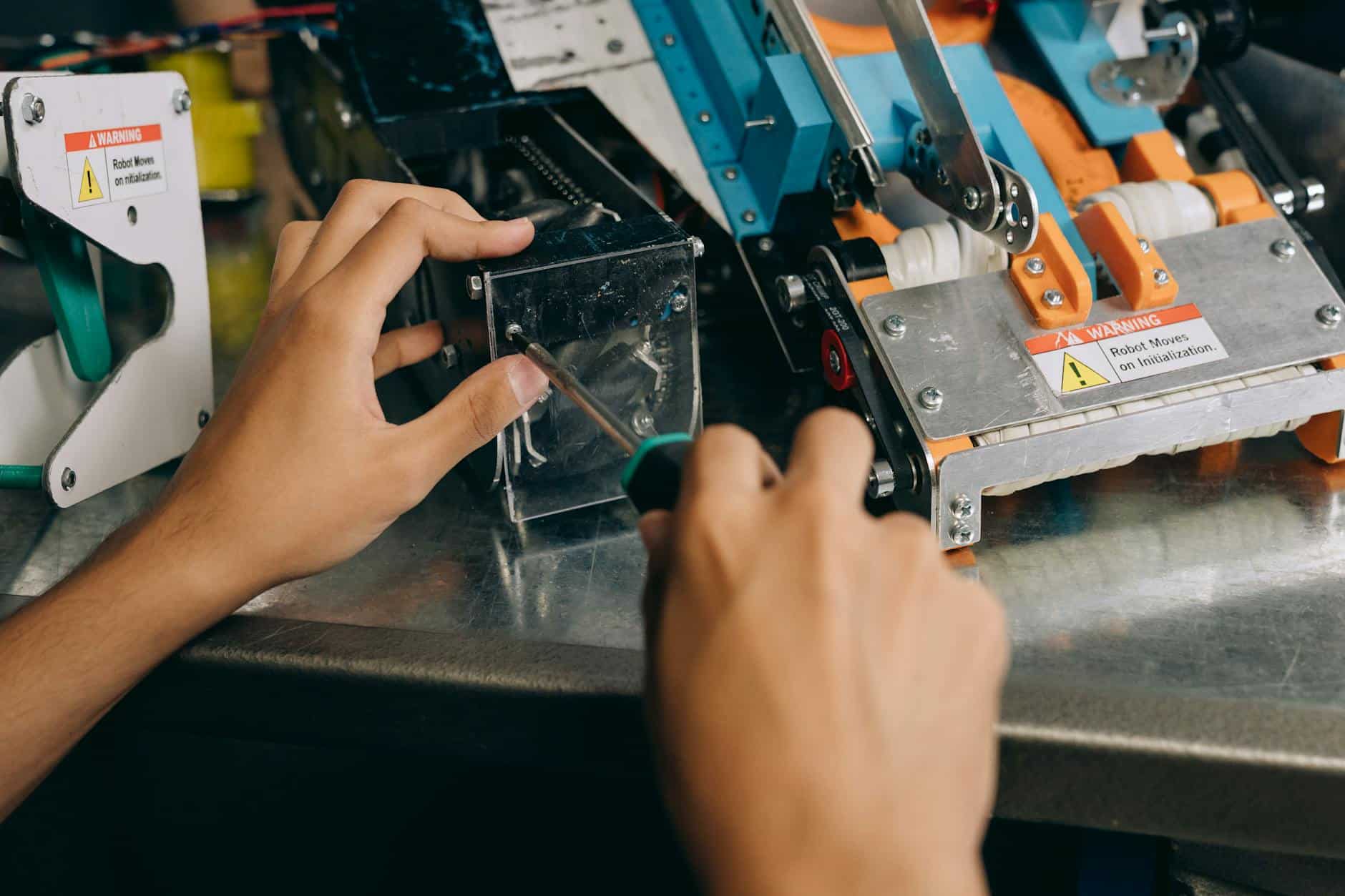
Reactive vs preventive vs predictive: at a glance
The three approaches are not mutually exclusive – most strong maintenance programs blend them. The table below shows where each delivers value and what it costs you when it is the only strategy in place.
| Approach | Trigger | Typical unplanned downtime | Relative cost per failure | Best used for |
|---|---|---|---|---|
| Reactive (corrective) | After a breakdown | Highest | 3–5× a planned repair | Non-critical, low-cost units only |
| Preventive | Fixed schedule | Low | Baseline | The core of any serious program |
| Predictive | Sensor/condition data | Lowest | Lowest over time, higher setup | High-value or hard-to-access robots |
Essential maintenance tasks for industrial robots
5 task areas form the core of robot maintenance: lubrication, inspection, cleaning, software and calibration, and safety verification – each on its own schedule. See our glossary of robot terms for any unfamiliar component.
Lubrication
Moving parts generate friction, and friction generates heat and wear. Proper lubrication of joints, gears, and bearings is one of the most fundamental maintenance activities. Follow the manufacturer’s specifications for lubricant type, quantity, and intervals. Over-application can be just as damaging as under-application, leading to increased friction, seal failures, and contamination of other components.
Inspection and diagnostics
Regular inspection covers both visual checks and instrument-based diagnostics. Look for oil leaks, unusual vibration, cable wear, loose fasteners, and physical damage to surrounding equipment. Catching early signs of wear at this stage prevents small problems from becoming expensive failures.
Regular cleaning
Cleaning removes dust, debris, metal shavings, and chemical residues that accelerate degradation. In harsh industrial environments – foundries, paint shops, food processing – contaminants attack seals, block cooling vents, and corrode electrical wiring. Use appropriate cleaning agents for each surface type to avoid secondary damage. This is not cosmetic work; it is protective.
Software updates and calibration
Day-to-day operations depend on precise software control. Keeping firmware current addresses known bugs, improves performance, and maintains compatibility with other production systems. Calibration checks ensure accuracy – particularly important after any physical intervention or component swap.
Safety system verification
Safety features – emergency stops, light curtains, safety mechanisms, speed limiters – must be tested according to a strict schedule. Equipment with a malfunctioning safety system is a liability, regardless of how well the rest of it performs.
Building an effective maintenance schedule
A solid maintenance schedule runs on 4 cycles: daily checks, weekly tests, monthly service, and an annual overhaul.
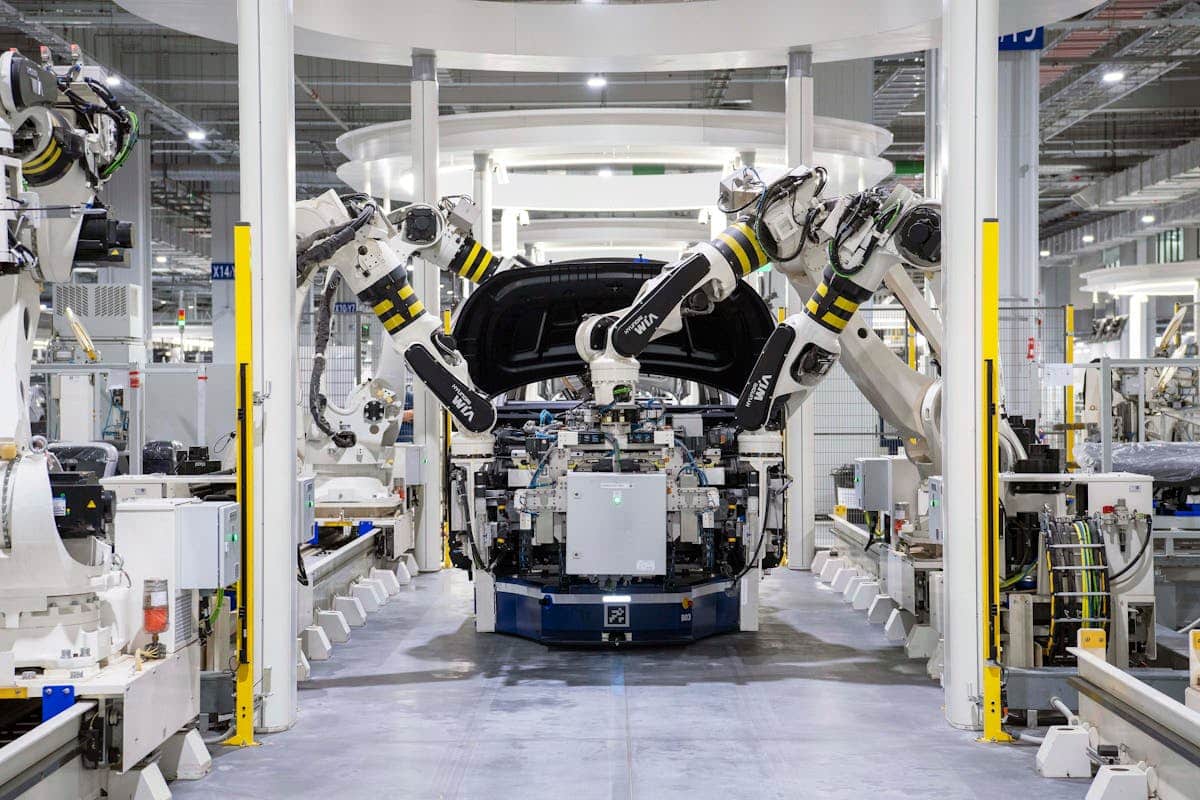
A preventive maintenance schedule should cover every unit in your facility, organized by frequency and task type. Here is a practical framework that your teams can adapt:
Daily: Visual checks of cables and connectors, unusual sounds or vibration, safety systems, and surface cleaning in contaminated environments.
Weekly: Emergency stop tests, control panel checks, error log review, and verification that covers and protective accessories remain intact.
Monthly: Lubrication at all specified points, electrical connections, backup batteries, encoder alignment, and air filter maintenance.
Annually: Complete mechanical overhaul (reducer assessment, belt changeover, bearing evaluation), full calibration, firmware updates, and maintenance plan review based on the previous year’s data.
The key is consistency. A maintenance routine that is followed 90% of the time outperforms a perfect plan that gets ignored during busy production periods. Document everything – logs create a history that helps predict future needs and justify budget allocation.
Most facilities now manage this through a computerized maintenance management system (CMMS), turning every inspection into a trackable work order and building the data set that predictive maintenance relies on. A structured robot maintenance checklist keeps each visit consistent, and deciding who carries out the work – an in-house team, the OEM, or an outsourced provider – is a separate decision covered in our guide to industrial robot servicing models.
How protective covers support your maintenance program
Custom protective covers cut contamination-driven failures by up to 80% and extend the time between service visits. Most maintenance deals with contaminants after they reach the equipment – covers stop that contact in the first place.
This is where protective covers play a direct role in planned maintenance. Custom-fitted covers act as a physical barrier between the robot and its environment, shielding sensitive parts from the very hazards that drive costs: heat, dust, metal spatter, chemical splash, moisture, and abrasive particles.
At RCC, we design and manufacture protective covers tailored to each application and environment. As a French manufacturer with decades of experience in robotics, we have seen firsthand how the right cover transforms a facility’s equation. Robots operate longer between service intervals. Cables and connectors last significantly longer. And failures caused by environmental contamination drop sharply.
Preventive maintenance helps extend equipment life – but protective covers prevent the damage that makes servicing necessary in the first place. Here are a few practical maintenance tips: combine scheduled service with physical protection for the best robot performance results. The two work together: the cover reduces the workload, and the structured program catches everything else.
A field example
At a metal-processing plant where robots ran in a heavily contaminated zone, abrasive dust was reaching joints and cabling and forcing service interventions every few weeks. After fitting custom RCC covers to the exposed units, the site reported roughly 80% fewer contamination-related interventions on those robots and a marked drop in unplanned downtime – with no change to their underlying maintenance schedule.
Reduce maintenance costs with custom protection
Our covers are designed to fit your exact model and working conditions – from ATEX zones to foundry environments. Less contamination means fewer interventions and longer service life.
See how covers reduce downtime →The cost of neglecting routine maintenance
An hour of planned maintenance costs a fraction of an unplanned stop, which often runs 3 to 5 times higher once collateral damage is counted. Skipping routine work is tempting under production pressure, but the math works against it.
Here is what facilities risk when they cut corners on maintenance practices:
Shortened service life. Robots are designed to operate for 10 to 15 years or more. Without proper care, that drops significantly. Replacing worn-out components proactively costs far less than a premature full swap – learn how to extend the life of your units.
Increased operational costs. A poorly maintained unit consumes more energy, produces more waste, and runs slower. These inefficiencies compound over time and erode the productivity gains that justified the automation investment. To understand how maintenance costs really break down, a clear view of the budget is essential.
Safety incidents. Worn joints, degraded brakes, or faulty sensors create hazardous conditions. Regulatory penalties aside, a single safety incident can shut down operations and damage your reputation far more than any upkeep budget would.
The proactive maintenance approach is not an expense – it is insurance against far greater losses.
Best practices to keep your robots at peak performance
4 best practices keep robots at peak performance: train your team, keep units clean and protected, use original spare parts, and review the plan annually.
Train your maintenance personnel thoroughly. Each model has specific service requirements, safety protocols, and diagnostic procedures. Invest in manufacturer training and keep your teams current.
Keep your robots clean and protected. Regular cleaning combined with physical protection – covers, bellows, cable management – prevents the contamination that causes most premature wear.
Use original spare parts and maintain stock. Aftermarket components may save money upfront but can introduce compatibility issues and fail sooner. When components do fail, knowing the most common robot repair issues and how to handle them saves valuable time. For critical swaps, OEM parts are the safer choice. Stock the consumables and high-wear items your routine identifies as frequent needs.
Review your plan annually. As equipment ages, its needs change. Use your logs to adapt intervals, update procedures, and allocate resources where they deliver the most value.
Adapting your approach to harsh environments
In harsh environments, service frequency may need to rise 2 to 3 times above standard intervals. Foundries, paint shops and food plants each expose robots to specific hazards – extreme heat, solvents, humidity, abrasive particles – so standard intervals are not enough. This is why RCC develops custom covers for extreme environments.
Frequently asked questions
Maintenance fundamentals
Most manufacturers recommend daily visual checks, weekly functional tests, monthly service cycles, and annual comprehensive overhauls. Units in demanding environments may need more frequent attention. Your schedule should be based on operating hours, cycle counts, and environmental conditions – not just calendar dates.
The leading causes include worn reducers and gears, contaminated joints, cable damage, overheating, and software faults. Many of these are preventable with a consistent routine and proper environmental protection. Learn more about failure modes and prevention.
With proper maintenance, most units last 12 to 15 years, sometimes longer. A disciplined maintenance program can extend the lifespan well beyond 15 years.
A complete checklist covers visual checks, service status, cable condition, safety system tests, error log review, calibration verification, and cleaning. Each item should have a defined frequency and responsible person.
Costs and best practices
It helps avoid costly emergency work, extends equipment life, and keeps production running smoothly. Studies consistently show that every euro invested in planned upkeep saves three to five euros in avoided failure costs.
Yes. Fanuc, ABB, KUKA, Yaskawa, and Staubli each have specific service procedures, requirements, and diagnostic tools. Always follow the manufacturer’s user manual.
Watch for unusual vibration, increased noise levels, positioning errors, slower cycle times, or warning codes on the controller. These are early indicators that should trigger immediate action.
Protection and equipment
Yes. Protective covers prevent contaminants – dust, heat, moisture, chemicals, metal spatter – from reaching sensitive components. This means fewer cleaning cycles and longer service intervals. See how covers reduce downtime.
Reviewed by René Domingues, founder of Robotic Cover Concept – a French manufacturer of custom robot protection covers since 1998, based in Toul, France, with units protected across Europe, Israel and Brazil.