
News

Outdoor and Weatherproof Covers for Industrial Machines
In short. Outdoor equipment covers protect industrial machines that sit outside a building envelope. That means installed on a yard, stored under a lean-to, or parked between shifts with no roof overhead. Three exposures do the damage, in order of speed. UV breaks...

Custom Equipment Covers for Industrial Machines: What to Protect and How to Choose
In short. Custom equipment covers protect an industrial machine to its exact dimensions. Nobody pulls them from a size chart. The design starts with what attacks the machine: dust, chips, coolant, UV, corrosion. It then moves to a fabric family that resists that...
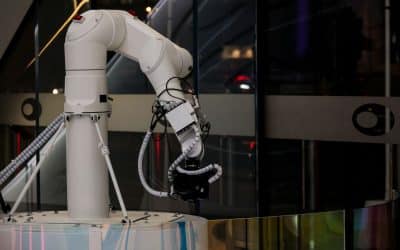
Removable Robot Protective Covers: Access Options That Cut Downtime
In short. Removable robot protective covers are covers built to come off, open or vent without a full strip-down. Four options carry most of the value: quick-release fastenings, ducting ports, inspection windows and sensor-transparent panels. Each one trades...
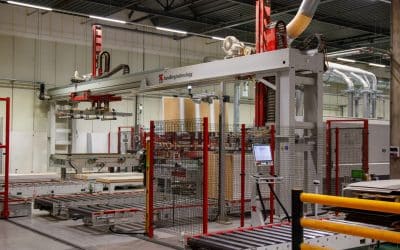
Robot Protective Covers by Robot Type: Articulated, SCARA, Delta and Cobots
In summary: a protective cover has to match the kinematics of the robot, not only the environment it works in. SCARA robot protective covers concentrate on the exposed vertical Z axis, the one part the manufacturer leaves uncovered. Articulated six-axis arms need...
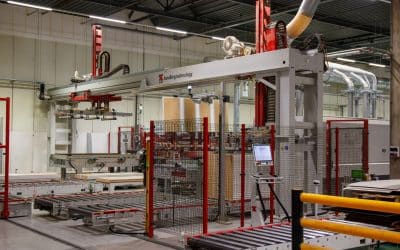
When to Replace Robot Protection Components: Wear Signs and Intervals
In summary: what the fabric is doing decides a robot cover replacement, not a date in a maintenance plan. Stiffening, pinholes, an opened seam, a thinned abrasion patch and closures that no longer hold are the five signs that protection has already been lost, whatever...
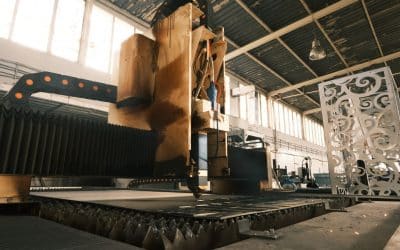
Robot Arm Covers: Sizing, Fitting and Replacement
In summary: a robot arm cover only works if it is sized to the robot's real range of motion and fitted so it never loads a joint. Getting that wrong is what produces the two classic failures: a cover so tight it fights the arm and tears at the elbow within weeks, or...
Robot Cable Management and Protection: Failure Modes and Solutions
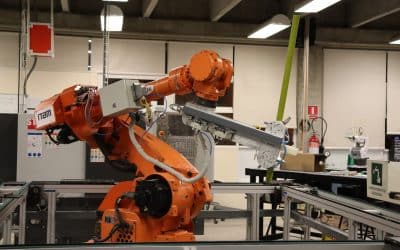
In summary: robot cable management is how the power, data and fluid lines running along an industrial robot are routed, secured and protected against the movement of the arm itself. Cables rarely fail because of a manufacturing defect. They fail through flex fatigue,...
Robot Dress Packs: Protecting Cables, Hoses and Energy Supply
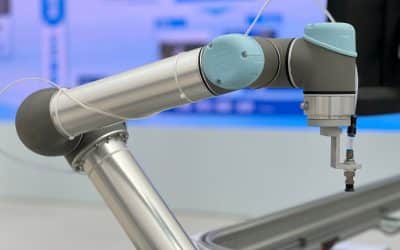
In summary: a robot dress pack is the bundle of cables, hoses and pneumatic lines that runs along a robot arm. It supplies power, air, data and welding current to the tool at the end of the arm. Left unprotected, this bundle wears out faster than the outer cover...
Robot Sleeves, Bellows and Jackets: The Complete Guide to Robot Protection Components
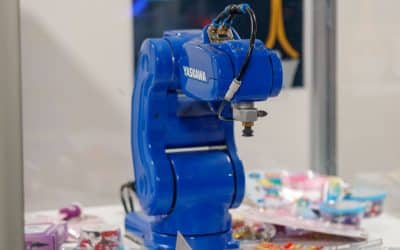
In summary: industrial robot jackets and bellows are two different components of the same protection assembly. A jacket is a full cover placed over an arm segment, or over the whole machine, against a process hazard. A bellows is a folded element that absorbs the...
Industrial Robot Calibration: When, Why and How Often
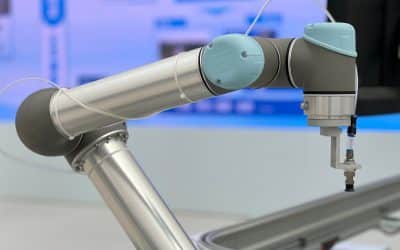
An industrial robot can be highly repeatable and still be inaccurate. It will return to a taught point again and again — but if its internal model of its own geometry has drifted, the absolute position it reaches no longer matches the coordinate you programmed....