
An industrial robot can be highly repeatable and still be inaccurate. It will return to a taught point again and again — but if its internal model of its own geometry has drifted, the absolute position it reaches no longer matches the coordinate you programmed. That gap is what robot calibration corrects, and it is what separates a robot that holds tolerance from one that quietly produces scrap.
We manufacture custom protective covers for industrial robots, so we work daily around the components whose condition decides how long a calibration stays valid: the joints, encoders and cabling. We are not a calibration service — but we see closely why accuracy drifts and how much of that drift is avoidable. This guide answers the practical questions: what calibration actually is, when a robot needs it, how often, and how to make it last.
In short
Robot calibration is the process of measuring and correcting a robot’s real geometry so its true position matches its programmed position. You calibrate after a collision, after maintenance or part replacement, when accuracy drifts, or before a task that demands high precision — typically checked once or twice a year, more often in harsh use. Because much of the drift comes from wear and contamination at the joints and encoders, protecting those components keeps a calibration valid for longer.

Table of Contents
What is robot calibration?
Robot calibration is the process of measuring a robot’s true kinematic parameters — the real lengths, angles and joint offsets of its arm — and updating the robot model so its commanded position and its actual position agree. It is worth separating two ideas that are often confused:
Accuracy versus repeatability
Repeatability is how consistently a robot returns to the same point; most industrial robots are excellent at it. Accuracy (or positioning accuracy) is how close the robot gets to a position defined by coordinates it was never taught by hand. Calibration mainly improves accuracy: it lets you program offline, from a CAD model, and trust that the robot will hit the real point.
The measurement itself relies on a reference: a laser tracker, a camera system or another sensor records where the end effector actually goes, the deviation from the target is calculated, and a correction is written back into the robot’s parameters. The output is a calibrated robot whose kinematic model reflects reality rather than the factory ideal.
When does an industrial robot need calibration?
A robot needs calibration at specific, recognisable moments rather than on a vague schedule:
After a collision or impact
Any collision can shift a joint or bend a component enough to move the tool centre point. A recalibration after a significant impact is standard practice, because the robot will otherwise keep applying an out-of-date model of its own geometry.
After maintenance or part replacement
Replacing a motor, an encoder or a gearbox, or dismantling an axis for service, changes the mechanical reference. Calibration restores the link between the physical arm and its model. This is why calibration and maintenance are closely tied.
When accuracy drifts or a new task demands precision
Gradual wear, temperature and load cause slow deviation; if quality checks show parts creeping out of tolerance, the robot is signalling for calibration. You also calibrate before commissioning a high-precision task — machining, dispensing, measurement — or before deploying an offline program that assumes accurate coordinates.
Want the full maintenance picture, not just calibration?
Read our complete robot maintenance guide →
Why calibration matters for production
The point of calibration is not precision for its own sake — it is productivity and quality. An accurately calibrated robot lets you program offline instead of teaching every point by hand, swap a robot for an identical calibrated unit without reprogramming, and hold tight tolerances across a batch. Skip it, and you pay in scrap, rework and slower changeovers.
In processes such as machining, welding, dispensing and inspection, a deviation of a fraction of a millimetre is the difference between a good part and a reject. Calibration is what keeps that deviation inside the workspace tolerance your process allows.
How often should you calibrate a robot?
There is no single interval, but a workable rule is a scheduled accuracy check once or twice a year for a robot in normal conditions, plus an event-driven calibration after any collision, major maintenance or measured drift. Robots running high-precision tasks, heavy duty cycles or harsh environments should be checked more frequently, because those conditions accelerate the wear that moves parameters out of true.
The most reliable guide is your own quality data: if in-process measurement shows accuracy trending toward the edge of tolerance, that is your calibration signal — earlier than any calendar.
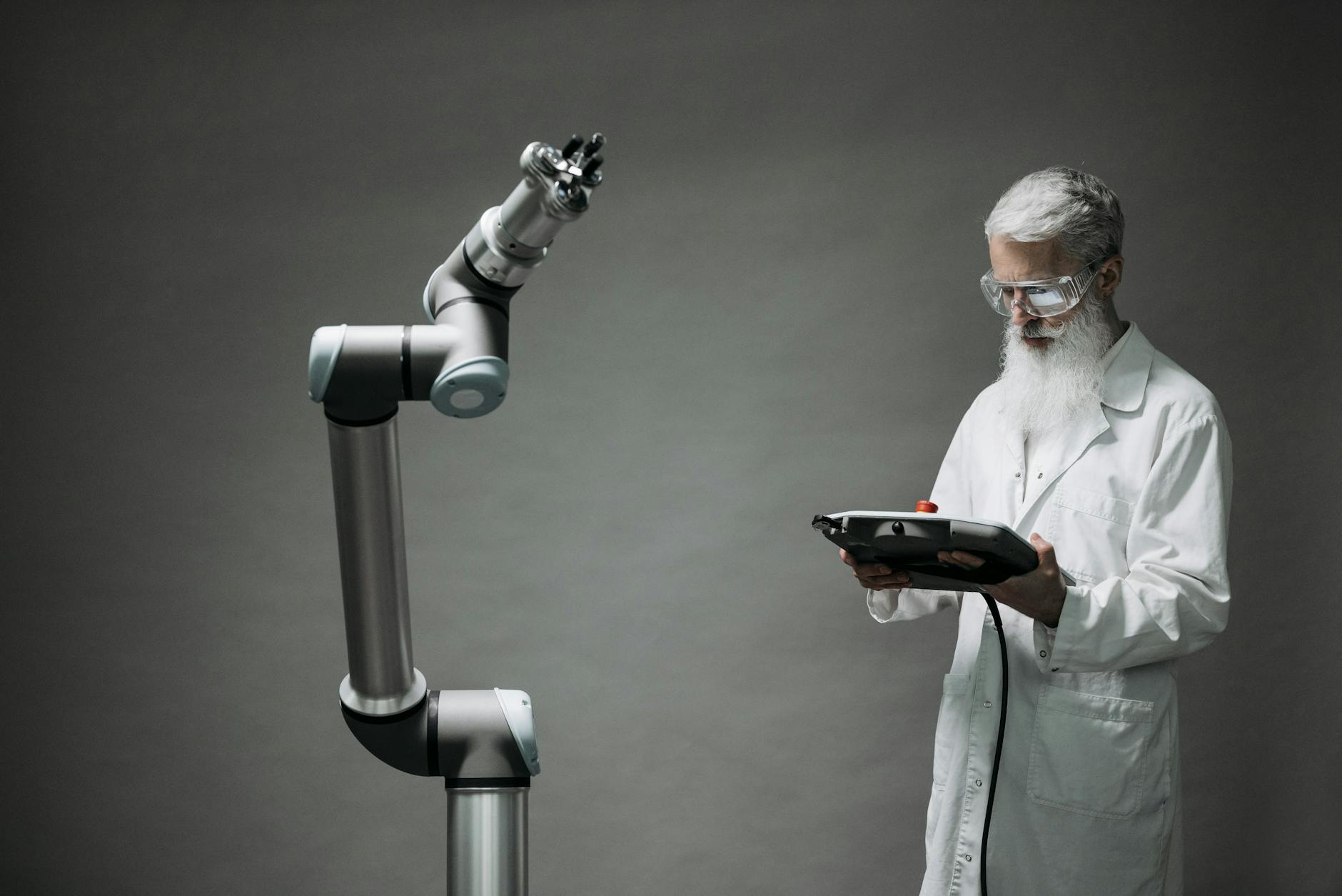
How protection keeps calibration stable
Here is the link that is easy to miss. What actually pushes a robot out of calibration between checks is physical change at the joints, encoders and cabling — and in demanding plants, much of that change is driven by the environment. Abrasive dust working into a joint, coolant or chemical mist attacking an encoder seal, heat and spatter degrading cabling: each one nudges the real geometry away from the calibrated model.
A custom protective cover does not calibrate the robot, but it protects the exact components whose wear invalidates a calibration. By keeping contamination and minor impact off the joints and sensors, it slows the drift, so the accuracy you paid to establish holds for longer and recalibration comes due less often. In precision cells running in harsh conditions, that is a direct saving on both calibration and scrap.
A field example
At a metal-processing plant where robots ran in a heavily contaminated zone, abrasive dust was reaching joints and cabling and forcing frequent service and re-checks. After fitting custom RCC covers to the exposed units, the site reported roughly 80% fewer contamination-related interventions — and far steadier accuracy between calibrations.
Running precision robots in dust, mist or heat?
See how we protect robots in harsh environments →Conclusion
Calibration is what keeps an industrial robot accurate, not just repeatable: measure the real geometry, correct the model, and the robot hits the coordinates you program. Calibrate after collisions, maintenance and measured drift, check accuracy once or twice a year, and let your quality data set the pace. Then protect the joints, encoders and cabling that quietly undo that work — the less the environment moves them, the longer your calibration lasts.
Keep your robots accurate between calibrations
Much of the accuracy a robot loses over time comes from contamination and impact reaching its joints, encoders and cabling. We manufacture custom protective covers in France that shield exactly those components, so your calibration holds longer. Tell us about your environment and we will assess what a tailored cover would change for your precision and uptime.
Request a free protection assessment →Repeatability is how consistently a robot returns to the same taught point, and most industrial robots are very good at it. Calibration improves accuracy, meaning how close the robot gets to a position defined by coordinates rather than a manually taught point. Calibration corrects the robot’s internal geometric model so its actual position matches its programmed position.
Calibrate after any collision or impact, after maintenance or part replacement that changes the mechanical reference (motor, encoder, gearbox), when quality checks show accuracy drifting out of tolerance, and before commissioning a high-precision task or an offline program that assumes accurate coordinates.
As a general rule, run a scheduled accuracy check once or twice a year in normal conditions, plus an event-driven calibration after collisions, major maintenance or measured drift. Robots in high-precision, high-duty or harsh applications should be checked more often. Your own in-process measurement data is the most reliable signal.
Indirectly, yes. Covers do not calibrate a robot, but calibration drifts largely because of wear and contamination reaching the joints, encoders and cabling. Keeping dust, coolant, chemical mist and impact off those components slows that drift, so a calibration stays valid longer and recalibration is needed less frequently.
Reviewed by René Domingues, founder of Robotic Cover Concept – a French manufacturer of custom robot protection covers since 1998, based in Toul, France, with units protected across Europe, Israel and Brazil.