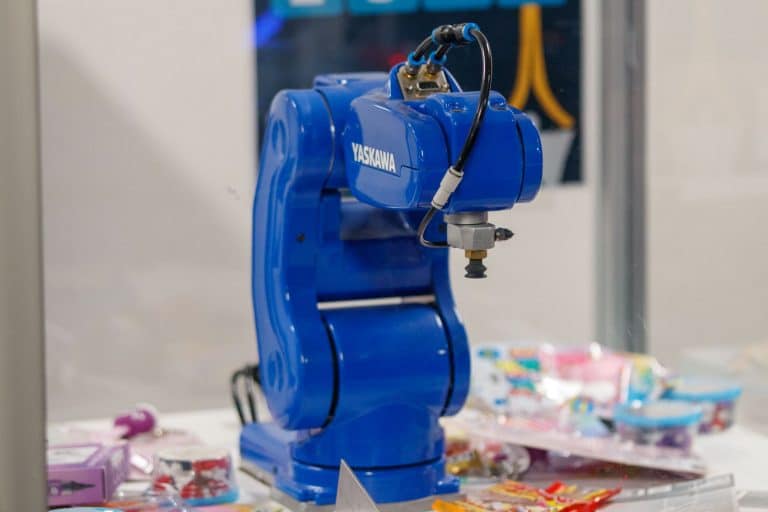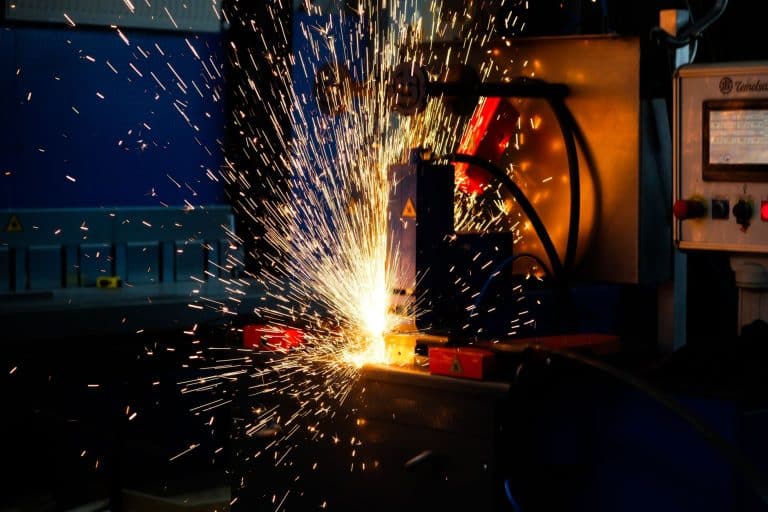
In short. A protective sleeve is a textile tube or wrap. It shields a hose or cable from abrasion, spatter, fluids and snagging. Choosing one comes down to three decisions: fabric, closure and fit. The fabric has to match what the cell throws at it, and the closure should let your crew open and close the sleeve without tools. As for the fit, it has to follow the real bundle, with its connectors and its movement. RCC has made custom covers and sleeves in Toul, France, since 1998. Its protections run on robots across Europe, Israel and Brazil. This guide covers each decision, from the fiberglass sleeve to the hose sleeve. It also explains when a cable protection sleeve cut to your cell beats a catalogue size.
Table of Contents
What actually wears out hoses and cables in a robot cell
Hoses and cables carry what a robot needs to work: power, signals, air, coolant and welding wire. They run on the outside of the arm. They meet everything the process produces. A joint seal hides inside the housing, but a hose does not.
Robot arm protection starts with the bundle that runs along it. Five causes account for most of the damage we see. Abrasion comes first, when a bundle rubs against the arm or the fixture. Repeated bending and twisting at the wrist comes second. It fatigues the outer jacket long before the conductor fails. Spatter and radiant heat burn through bare jackets in welding and casting cells. Oils, coolants and cleaning agents soften or swell rubber and plastic. Snagging on tooling, a fixture or the next robot ends the list. One cell often has several of them at once.
A protective sleeve takes these hits in place of the hose. Good protection sleeves are waterproof where the cell needs it, durable where the arm rubs and supple where the wrist turns. It costs little next to the hose, the cable or the hour of stopped production that a failure brings. Siemens gives the scale. Its 2024 study finds that unplanned downtime now costs the world’s 500 biggest companies 11% of their revenues. A worn hose is a small share of that figure, and one of the easiest to prevent. Our guide to a hose protection sleeve in robot cells covers abrasion, spatter and fluids on hydraulic and pneumatic lines.
We cover the six ways a cable fails in our guide to robot cable management and failure modes. For the whole bundle, with its routing and retraction, see our article on robot dress packs. This page stays on the sleeve itself.
Sleeve material: the fabric families and where each one fits
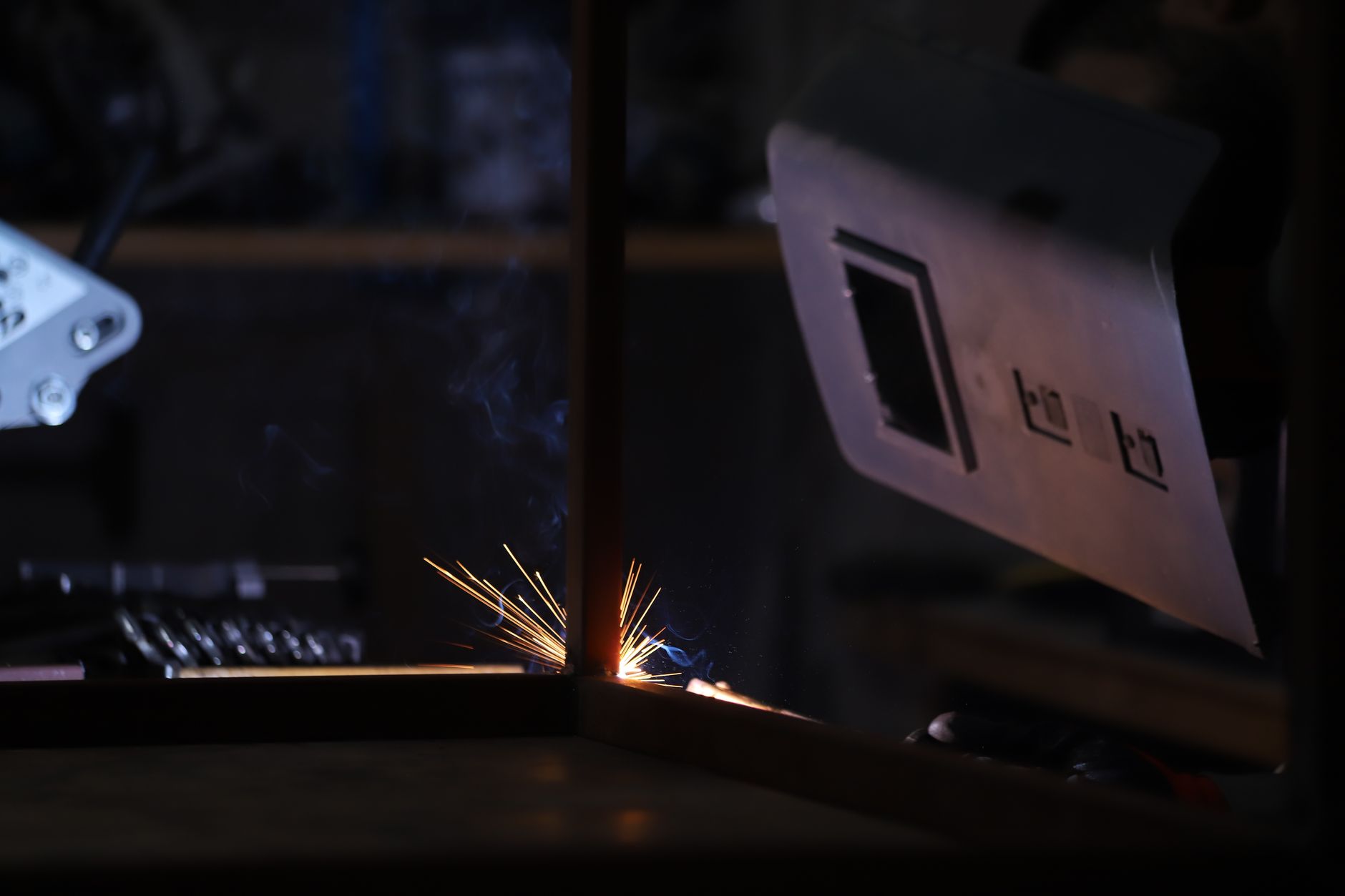
Start from the hazard, not from the catalogue. Sparks and molten droplets call for a glass fibre base. That is why the fiberglass sleeve is the usual answer to weld spatter. Oil and coolant call for a coated textile, polyurethane for instance, that sheds liquid. Pure abrasion in a clean cell is a job for a knitted or woven nylon or polyester that costs far less. Near a loading door or outdoors, add UV exposure to the list, and pick a fabric that does not degrade in daylight.
Which fabric family for which job
Our page on robot protective materials sets out the fabrics, their coatings and their limits. We will not repeat that here. The table below only maps each family to the job it does best on a hose or a cable.
| Fabric family | Best at | Watch out for | Typical sleeve use |
|---|---|---|---|
| Silicone-coated fiberglass | Spatter, radiant heat, flame | Stiffer, and the coating can scuff at tight bends | Dress packs on welding and foundry robots |
| Aramid-based fabric | Cuts, punctures, tears, sharp edges | Higher cost, less resistant to chemicals alone, cut resistant and puncture resistant only as far as the weave allows | Cut resistant sleeves for hoses near trimming, deburring and cutting |
| Polyurethane-coated textile | Abrasion, oil, coolant | Not meant for spatter | Machining and assembly cells |
| PVC-coated textile | Water, washdown, easy cleaning | Solvents and heat | Food, packaging and washed areas |
| Knitted or woven nylon and polyester | Light abrasion, low weight, low cost, UV exposure | No spatter or fluid protection on its own | Protection sleeves for clean cells with a lot of wrist and arm movement |
Every textile choice is a trade-off, and a sleeve is rarely one layer. We often combine a spatter-proof outer face with a softer inner lining. The lining stops the sleeve from chafing the hose it protects, and a breathable lining lets heat and moisture escape from the bundle. On a hot bundle we also look at what sits underneath. A heat shield only helps if the hose beneath it can breathe.
Sleeve closure: hook-and-loop, zip or sewn tube
The closure decides how the sleeve lives on the shop floor. If refitting takes ten minutes, crews leave the sleeve off after the first maintenance visit. Three options cover nearly every case.
Hook-and-loop closure
Hook-and-loop, often called Velcro, is the quickest to open. It is also the easiest to fit on a bundle that stays connected. It suits cells where crews inspect often. Its weak point is contamination. Dust, fibres and spatter clog the hooks. So we place the closure on the side of the bundle that faces away from the process, and we add an overlap flap.
Zip closure
A zip closes flat and stays shut under vibration. It fits fast-moving sections and anything that must not gape. It needs its own protection from dust and spatter. We keep it away from the points where the bundle bends most. Where a zip would fatigue, a hook-and-loop strip is the better choice.
Sewn closed tube
A sewn tube has no opening at all. That makes it the neatest and most secure option. The price is access. Crews can only fit it by threading it over a free end. It suits new installations, or lines that are disconnected anyway. Our article on removable robot covers and access options shows how the same trade-off plays out on larger covers.
Hose sleeve or cable protection sleeve: what changes

The two share a fabric catalogue, but they do not do the same job. A hose sleeve protects a flexible that carries a fluid or air. Its main enemies are external abrasion, heat from nearby processes and the chemicals that attack the hose cover. It also has to stay clear of fittings, so the sleeve must not trap a leak or hide one.
A cable protection sleeve protects a conductor that bends. Its priority is flex life. The sleeve has to move with the cable. It must add as little stiffness as possible, or it shortens the very life it should extend. Cables bundled together also need room, because a tight sleeve turns a loose bundle into a rigid rod.
Where hoses and cables share a route, one sleeve over the whole bundle is common. The fire sleeve we describe for welding robots follows that principle. Where the two behave differently, we separate them. The wider choice between sleeves, bellows and jackets sits in our guide to robot sleeves, bellows and jackets.
Fit: how to measure a protective sleeve for a robot bundle
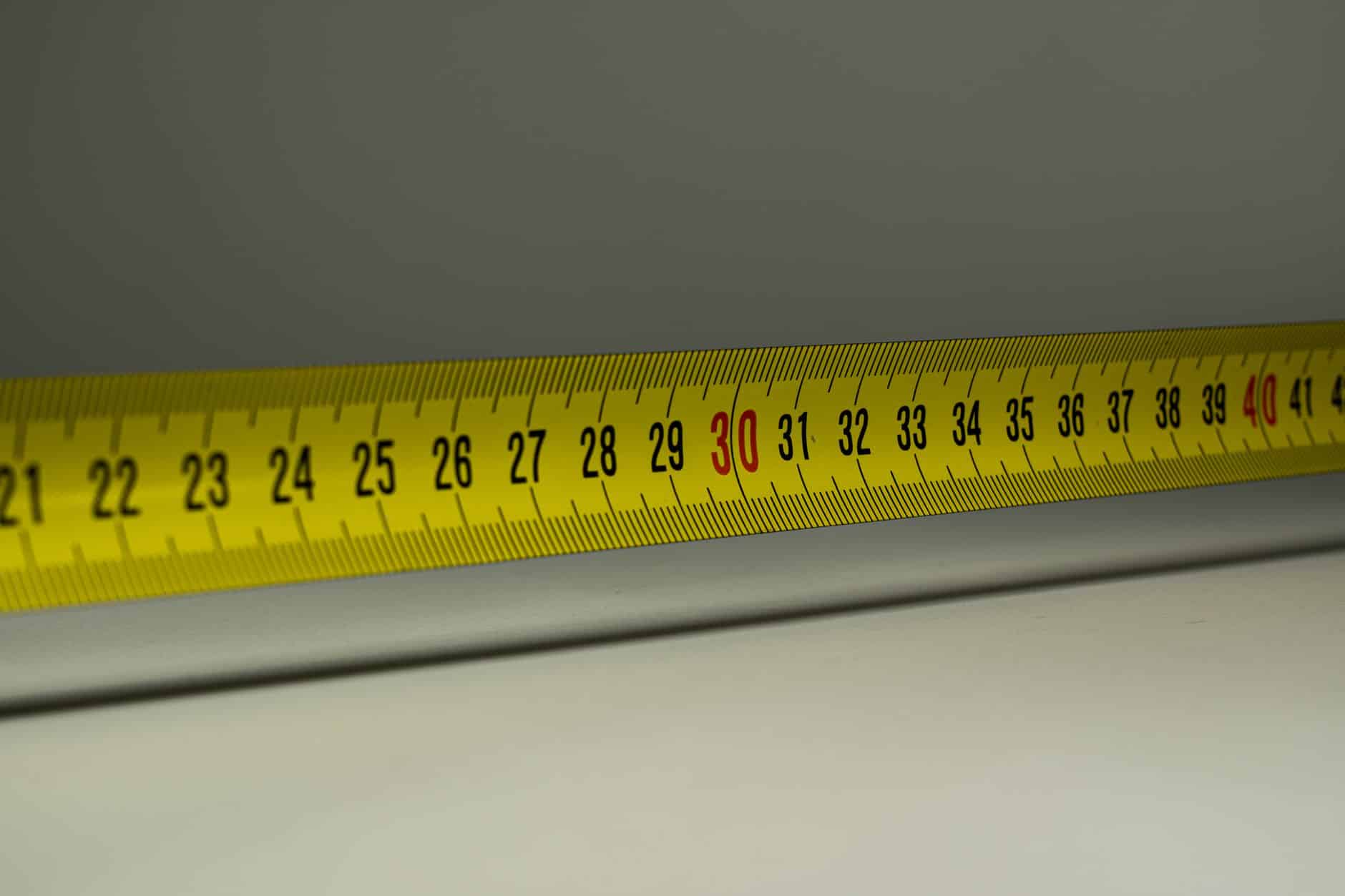
Fit is where most catalogue sleeves go wrong. Measure the bundle at its thickest point. That is usually a connector or a clamp, not the clean section in between. Then measure the length along the real path of the bundle. Do it at both ends of its travel, never along a straight line.
A sleeve that fits the bundle at rest can still fail in motion. As the wrist rotates, the bundle twists and shortens. A sleeve cut to the exact length then pulls on its fixings. We allow for the full range of the axis. We also place the fixing points where the bundle does not move against the arm. The goal is a snug fit that keeps the full range of motion, with an elastic or adjustable end cuff where the sleeve meets a clamp.
Four things let us quote without a visit. Send the largest diameter and the length at both ends of the movement. Add the position of connectors and clamps, and photographs with a tape in frame. Our guide on how to measure industrial machine covers explains the same discipline on bigger parts.
Welding cells: where a protective sleeve becomes a fire sleeve
Welding cells are the toughest place for a hose or a cable. Droplets of spatter, sparks and slag land on the bundle several times a minute. A bare jacket has no defence. The sleeve here is a spatter-grade fire sleeve. It has a glass fibre outer face and a closure that survives the first hit. The torch side carries the heaviest load, because the wire feed and the shielding gas line run right at the wrist.
We keep the detail for a dedicated article on the fire sleeve for welding robots. For the arm itself, read about welding robot protective covers. Our fitting and welding page shows the range.
Custom or catalogue: a short rule
A catalogue sleeve works on a plain round line in a mild cell, where a standard length will do. It stops working when the bundle has connectors, a changing section or a bend that moves. It also fails when a process hits it. In those cases a sleeve cut from a measured pattern lasts longer and stays on. The full comparison is in our article on custom robot covers versus standard protection.
Inspection: when a sleeve needs replacing
A sleeve is a wear part. Treat it like one. Check it at every maintenance visit, and look at four points. Look for a worn outer face, since a durable fabric still wears where it rubs. Check that the closure still holds, since an attachable sleeve is only as good as its fixing. Feel for stiffness or swelling after contact with oil. Then look for gaps where a fixing has slipped.
Durability matters, but it never replaces inspection. Replace the sleeve when the outer face is worn through, or when the closure no longer stays shut. Do not wait for the hose beneath it to show damage. A sleeve costs little, and a stopped robot does not. Our article on when to replace robot protection components gives a fuller routine.
What this looks like in a cell
Take a welding line where every robot dress pack wears a standard catalogue sleeve. Spatter lands on the same spots at each cycle, the sleeve wears through there first, and crews end up changing hoses far more often than planned. A sleeve cut from a measured pattern changes that: glass fibre on the face that sees the torch, a hook-and-loop closure placed away from the spatter, and a length that follows the arm through its full motion. Fewer hose changes is the result we look for on this kind of cell.
A machining cell can show the opposite problem. Coolant softens the cable jackets on a loading robot, and a catalogue sleeve holds the liquid against them instead of shedding it. A coated textile with a drained lower edge keeps the cables dry, and cable replacements become rare. How much is gained always depends on the line, its cycle and its fluids.
What to send before ordering a protective sleeve
Five items turn a visit into a buildable brief. The environment first: spatter, oil, washdown, dust or a mix. The bundle next: what it carries and how many lines, and whether you want colour coding by function so that a crew can tell the lines apart. Any chemical requirements belong here too. Then the geometry, with the largest diameter and the length at both ends of travel. After that the access you need, which tells us the closure. Photographs close the file.
Our design office turns that file into a pattern and a fitting plan. The first sleeve then fits without a second visit.
Send us photos of your hose and cable bundle
A few pictures with a tape in frame are enough to start. Our design office proposes the fabric, the closure and the fit.
Send your photos →FAQ
The basics
A protective sleeve is a textile tube or wrap that covers a hose or cable on a robot. It shields the jacket from abrasion, spatter, fluids and snagging, and it flexes with the bundle. It is the cheapest part in the chain that stops a hose or cable failure.
A hose sleeve guards a fluid or air line against abrasion, heat and chemicals. A cable protection sleeve guards a conductor that bends, so it prioritises flex life and low stiffness. The fabrics overlap, but the design priorities differ.
It is the usual choice where spatter or radiant heat reaches the bundle, as in welding and foundry cells. In a clean or oily cell a coated textile is lighter and more supple, so a fiberglass sleeve would be an unnecessary stiffness.
Closure and fit
Choose hook-and-loop where crews open the sleeve often and the bundle stays connected. Choose a zip where the sleeve must stay shut under vibration. In either case, protect the closure from dust and spatter and keep it away from the tightest bend.
Measure the largest diameter, usually at a connector or clamp, then the length along the real path at both ends of the movement. Note where connectors, clamps and fixings sit. Photographs with a tape in frame complete the measurement.
Yes, if it has an opening closure such as hook-and-loop or a zip. A sewn closed tube needs a free end, so it only suits new installations or lines that are disconnected anyway.
Choosing and ordering
Often, on a plain round bundle in a mild cell. Once the bundle has connectors, a moving bend or a hard process around it, a sleeve cut from a measured pattern fits better and lasts longer.
It depends on the process, the fabric and the movement, so we do not quote a fixed life. Inspect it at every maintenance visit and replace it when the outer face is worn through, before the hose beneath it is exposed.
The environment, what the bundle carries, the largest diameter, the length at both ends of travel, the access you need and a few photographs with a tape in frame. We usually quote without a site visit.
In Summary
A protective sleeve works when three choices agree. The fabric answers the hazard, the closure suits the way your crew works, and the fit follows the real bundle through its full movement. Get those right and the sleeve protects the hose or cable for the long run. The hose then stops being the part that stops the line.
For the fabric details, see our page on robot protective materials. Our technical glossary defines the terms used above. The bellows, sheaths and teach protections page shows what we build.
Ready to protect your hoses and cables?
Send us your cell details or a few photographs. Our design office prepares a made-to-measure sleeve, with a free assessment.
Request a free assessment →Browse the full range of protective covers by sector or see the cover programme on our home page.