
In summary: a robot dress pack is the bundle of cables, hoses and pneumatic lines that runs along a robot arm. It supplies power, air, data and welding current to the tool at the end of the arm. Left unprotected, this bundle wears out faster than the outer cover itself. A single cable failure can stop a production line as fast as a mechanical fault. RCC has built custom dress pack protection for Fanuc, ABB, KUKA, Yaskawa and Stäubli robots since 1998. Installations now run in Europe, Israel and Brazil.
Table of Contents
What a Robot Dress Pack Actually Is
On a six-axis industrial robot, the dress pack is the bundle of cables and hoses routed to the end effector. It’s sometimes called a dresspack or umbilical. It carries servo power, ethernet communication, welding current, pneumatic air, and often water or shielding gas for welding torches.
It usually runs through or alongside a cable carrier system, clipped to the arm at fixed points. From there it’s routed through the wrist to reach the tool. Every time the robot moves, that bundle flexes, twists and retracts with it, thousands of times a day.
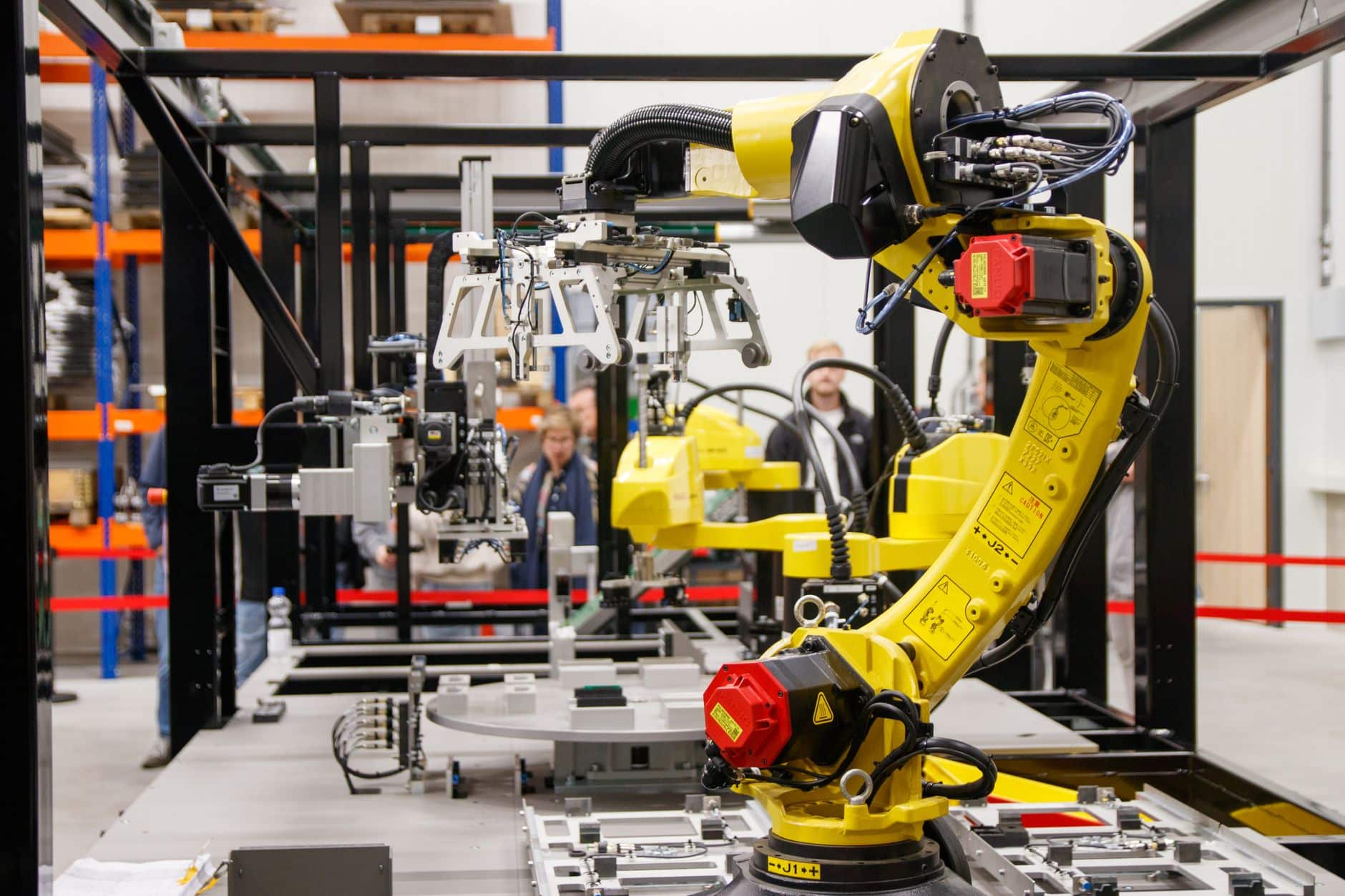
This differs from a sleeve, bellow or jacket, which covers the outside of the arm against dust, splashes and abrasion. The robotic dress pack sits underneath or alongside that outer protection. It fails for different reasons: fatigue from repeated bending, not surface wear.
This isn’t a niche concern. Global demand for industrial robots keeps climbing: Asia accounted for 74% of new robot deployments in 2024, with Europe adding another 16% (IFR World Robotics 2025). Every one of those installations needs cable and hose protection that survives the real duty cycle, which is exactly where dress pack failures start to cost production time.
Not sure if your dress pack is the weak point?
We audit cable routing and wear patterns on Fanuc, ABB, KUKA, Yaskawa and Stäubli robots. We pinpoint what’s actually causing your downtime.
Request a free audit →Dress Pack, Dressing or Dress Package: The Same Thing?
The vocabulary shifts from one plant to the next. Dress pack, dresspack and dress package all describe the same bundle running to the tool. Robot dressing is the wider practice: deciding what runs to the end effector, where it runs along the arm, and how it is held in place. Cable dressing usually means the same work on a single line rather than a full bundle.
The distinction matters when you order protection. A dress pack supplier sells you the bundle and its carrier. Dressing is what your integrator does with it on the cell. Our work sits on top of both: we protect what is already routed on the arm, whatever brand supplied it and whoever installed it.
Why Dress Packs Wear Out Faster Than People Expect
A dress pack lives through the same duty cycle as the robot, but the stress concentrates in a few places. The wrist axis is one, where the bundle twists through its full rotation. Any point where it exits a fixed mount and starts moving freely is another.
Repeated flexing fatigues cable insulation and hose walls long before they show visible damage. In welding cells, spatter adds abrasion on top of that fatigue. In foundry or paint environments, heat and chemical exposure attack the outer jacket of the cables directly.
The result is a failure mode that’s hard to predict from a visual inspection. A cable can look intact and still be one flex cycle away from breaking a conductor inside. It is one of several mechanical wear points behind unplanned stops. See our broader look at why industrial robots fail for the full picture.
What Happens When a Dress Pack Fails
A dress pack failure rarely announces itself in advance. The most common consequences we see on production floors:
- A broken signal or power cable stops the robot mid-cycle, often mid-weld or mid-handling, which can also damage the part in progress
- A cut air line drops pneumatic pressure to the gripper, and the robot either drops the part or clamps down with the wrong force
Either way, the line stops until a technician traces the fault, and that’s rarely fast. The damaged section is often hidden inside a cable carrier or wrapped around the wrist, not visible from outside. It is the same logic behind how protective covers reduce robot downtime more broadly.
Running welding, foundry or high-cycle handling applications?
See our protection ranges →Standard Dress Pack Protection vs Custom RCC Solutions
| Criteria | Standard dress pack cover | Custom RCC protection |
|---|---|---|
| Fit to robot model and axis geometry | Generic, often loose or restrictive at the wrist | Cut and routed for the exact robot and application |
| Bend radius at flex points | Fixed, not matched to actual movement | Sized to the robot’s real range of motion |
| Material by environment | General-purpose fabric | Spatter, heat or chemical-rated fabric by application |
| Replacement approach | Full assembly swap | Sectioned for targeted repair without a full teardown |
| Typical service life in harsh conditions | Weeks to a few months | Several months to over a year, application-dependent |
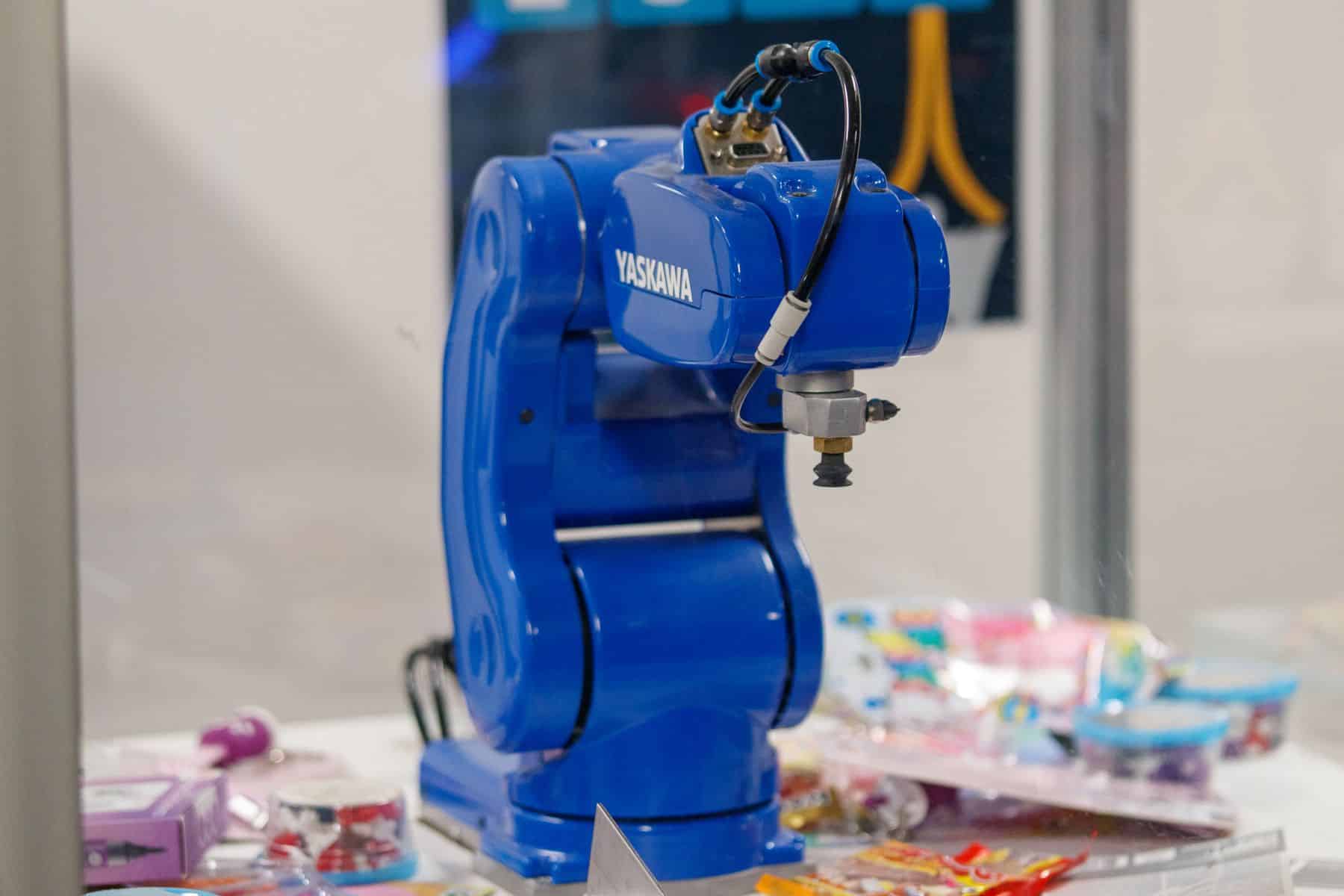
Off-the-shelf covers for robot cable management are built to fit a wide range of robot models. That means they rarely match the exact bend radius, routing path or mounting points of a specific installation.
Results from the Field
At a food processing plant, palletizing robots put heavy stress on the dress pack. The routing on the wrist axis rubbed against a fixed guard on every cycle. It cut through the outer cable jacket in under two months and caused repeated unplanned stops. RCC re-routed the bundle through a custom-fitted protective sleeve with reinforced wear points at the contact zone. The plant went from monthly cable-related stops to roughly one every eight months. That cut related downtime by an estimated 85% over the following year.
We see a comparable pattern on logistics and material handling lines. A standard dress pack cover on a high-cycle picking robot typically shows visible cable damage within three to four months. A custom cover matched to the actual bend radius at the wrist runs differently. It routinely lasts a full year or more on the same duty cycle.
Losing production time to cable or hose failures?
We diagnose the routing and material issue on site. Then we build a dress pack protection solution sized to your robot and your duty cycle.
Request a free audit →Signs Your Dress Pack Needs Attention
A dress pack rarely needs replacing all at once, and the same holds for the rest of the protection on the arm: see when to replace robot protection components for the wear signs component by component. The warning signs to watch for during routine checks:
- Visible nicks, flat spots or discoloration on cable jackets, especially near the wrist and any fixed mounting clip
- A gradual drop in air pressure at the tool with no change elsewhere in the pneumatic circuit
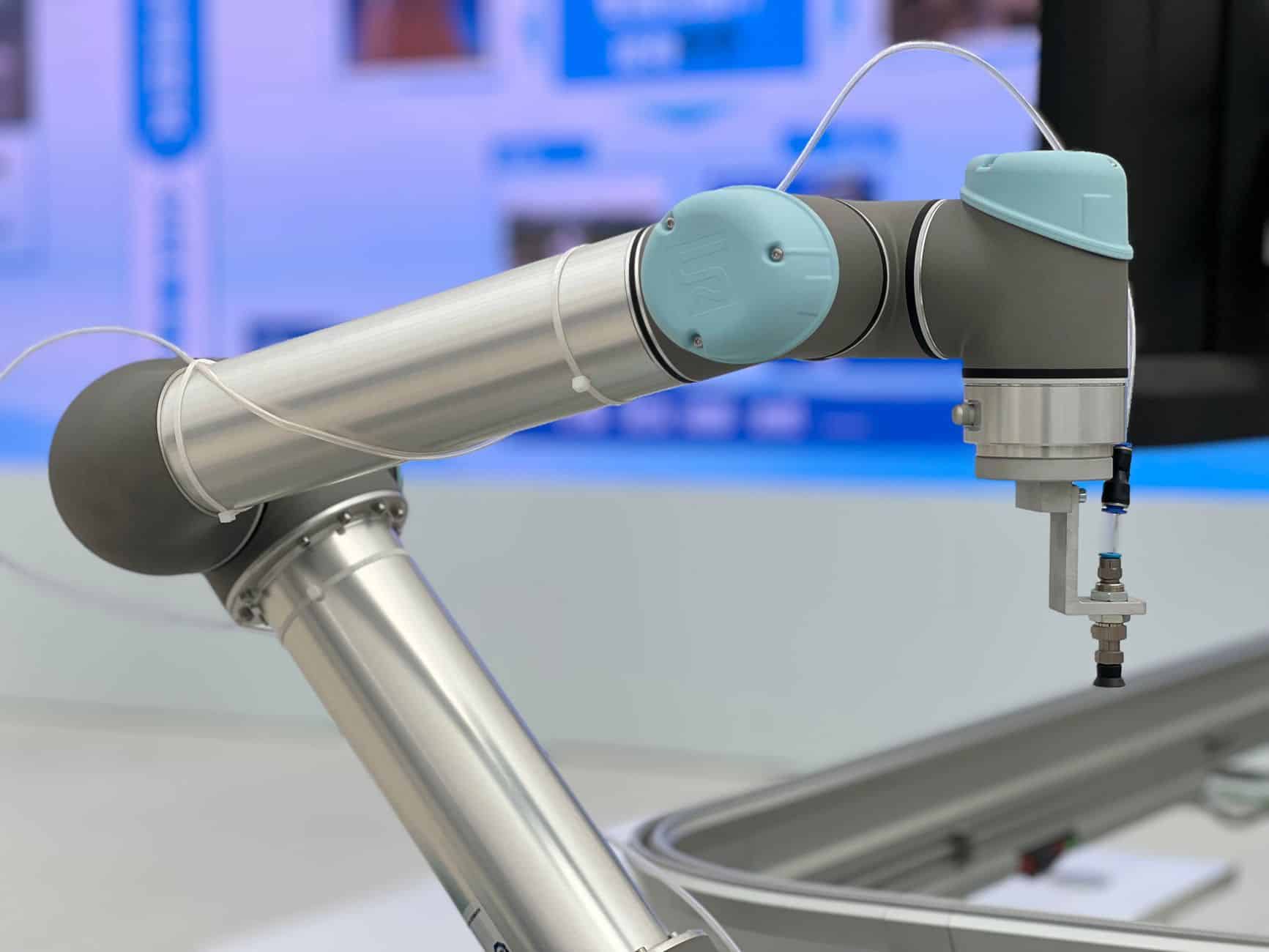
Intermittent signal faults that clear when the arm is repositioned are also a strong indicator. They usually mean a conductor is fatigued at one specific flex point rather than fully broken.
Dress Pack Systems We Build Around
Most robots we protect already carry a dress pack system from a specialist supplier. LEONI, igus and its triflex R range, Murrplastik and TSUBAKI KABELSCHLEPP are the ones we meet most often on European cells, alongside the packages sold by the robot manufacturers themselves for Fanuc, ABB, KUKA, Yaskawa and Stäubli arms.
We do not replace those systems. We build protection around them. The cover has to clear the carrier’s own bend radius, respect its retraction travel and leave the service points reachable. A cover that pinches an energy chain at full extension creates the failure it was meant to prevent.
What we need from you is short: the robot model, the make of the dress pack if you know it, and where the bundle actually rubs. Photos of the worn zones usually show what the drawings do not.
Choosing Protection by Environment
The right dress pack protection depends heavily on what the robot is doing.
Welding cells need spatter-resistant outer layers around the bundle, since molten spatter burns through standard cable jackets fast. Foundry and casting environments call for heat-rated materials that hold up near ambient temperatures above what standard cable insulation tolerates. Food and beverage lines require washdown-compatible, chemical-resistant covers that survive daily cleaning cycles without degrading.
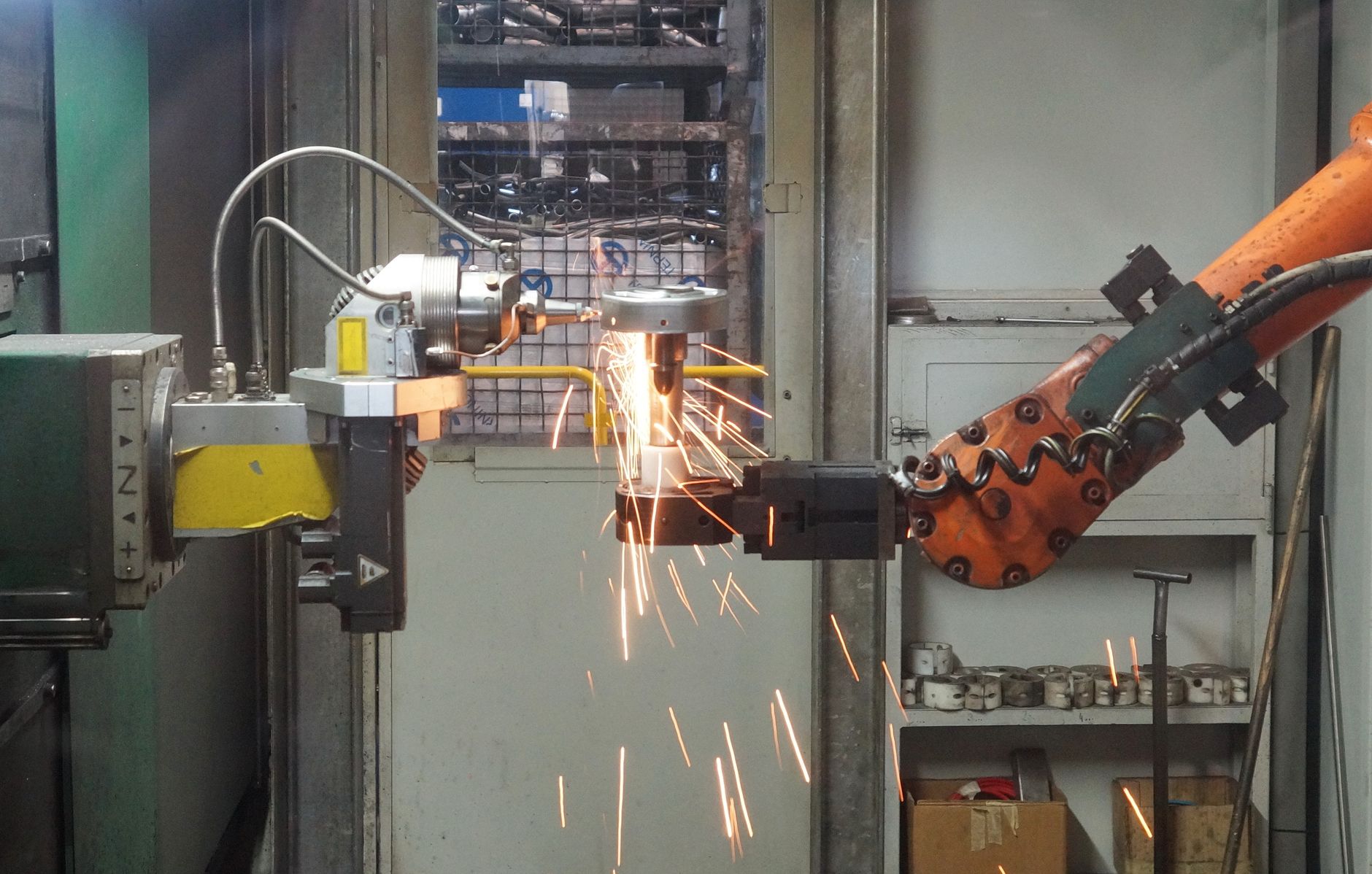
ATEX zones add another layer. Routing and materials have to meet explosion-risk requirements on top of mechanical protection — that’s where a custom design matters most.
What We Measure Before Building Dress Pack Protection
Every custom job starts with the same short list. Most of it can be gathered in ten minutes on the cell.
- Robot make, model and axis configuration, plus the reach the arm actually uses in the cycle
- The dress pack route: through the wrist, along the outside of the arm, or both
- Cycle rate, and the movement that loads the bundle hardest, usually the wrist rotation
- Environment: spatter, heat, chemicals, washdown, abrasive dust, and the ATEX classification if there is one
- Where the current protection has already failed, with photos of the worn zones
- Service points that have to stay reachable without removing the whole assembly
The last two are the ones people forget, and they are the ones that decide whether the new protection lasts a year or three months.
Beyond Protection: Routing and Retraction
Protecting the cable jacket only solves half the problem. How the dress pack is routed and retracted matters just as much for service life.
A bundle that is too long sags and rubs against the arm on every cycle. One that is too short pulls tight at full extension and fatigues fast at the anchor points. Getting the slack and the retraction path right matters. So does placing the mounting points correctly for the specific robot and application. Together, that’s what separates good cable management from a dress pack that fails in weeks. It’s exactly where a generic, off-the-shelf cover falls short.
For the components covering the rest of the arm, see our complete guide to robot sleeves, bellows and jackets. For a view of how these fit into a protection plan by industry, see our guide to industrial robot covers.
FAQ
A robot dress pack is the bundle of cables, hoses and pneumatic lines routed along a robot arm. It supplies power, data and air to the tool at the end of the arm. In welding applications, it also carries current and shielding gas.
A robot cover (sleeve, bellow or jacket) protects the outside of the arm from dust, splashes and abrasion. The dress pack is the cable and hose bundle itself. It usually runs underneath or alongside that outer cover and wears differently, through repeated flexing rather than surface contact.
Cable insulation and hose walls fatigue from repeated bending long before damage is visible. A cable can look intact and still be close to failure. It happens most at the wrist axis, where the bundle twists through its full range of motion every cycle.
Weld spatter burning through cable jackets and heat degradation in foundry or paint environments are common causes. So are simple routing errors — the bundle too long, too short, or rubbing against a fixed guard on every cycle.
It depends heavily on the environment and how well the bundle is routed. Standard covers in harsh conditions can wear out in weeks to a few months. A properly fitted custom solution typically runs several months to over a year on the same duty cycle.
A well-designed dress pack protection system is sectioned. That means a damaged portion can often be replaced without tearing down the whole bundle. This is one of the main advantages of a custom-fitted solution over a single-piece standard cover.
RCC builds custom dress pack and cable protection for Fanuc, ABB, KUKA, Yaskawa and Stäubli robots. Each one is matched to the specific model, axis geometry and application.
Yes, and it needs extra care. Routing and materials must meet explosion-risk requirements in addition to standard mechanical protection, which usually rules out generic off-the-shelf covers.
Intermittent signal faults that clear when the arm is repositioned are one clear sign. A gradual drop in air pressure at the tool, or visible wear near the wrist and mounting clips, are others. A routing and wear-pattern audit will confirm it before the failure happens on the line.
Robot dressing is the practice of routing and securing the cables, hoses and lines that feed the tool on a robot arm. The dress pack is the bundle itself; dressing covers where it runs, how much slack it has and where it is clamped.
Yes. We build protection around the dress pack system already installed, whoever supplied it. The cover has to clear the carrier’s bend radius and its retraction travel, which is why each one is cut for the specific robot and route.
The robot make and model, how the bundle is routed, the cycle rate, the environment (spatter, heat, chemicals, washdown, ATEX) and photos of where the current protection wears out.
Dress pack, dresspack, umbilical, energy chain: the terms that appear on this page, and the ones your supplier may use instead, are defined in our technical glossary.
In Summary
A robot dress pack carries the power, data, air and often welding current a robot needs to function. It wears differently from the outer cover, through repeated flexing rather than surface abrasion. Standard covers rarely match the exact routing and bend radius of a given installation. That’s why cable and hose failures remain one of the most common, and most avoidable, causes of unplanned downtime. A custom-fitted solution, sized to the robot’s real range of motion, routinely extends service life. It can go from weeks to a year or more.
Reviewed by René Domingues, founder of Robotic Cover Concept – a French manufacturer of custom robot protection covers since 1998, based in Toul, France, with units protected across Europe, Israel and Brazil.