
In summary: industrial robot jackets and bellows are two different components of the same protection assembly. A jacket is a full cover placed over an arm segment, or over the whole machine, against a process hazard. A bellows is a folded element that absorbs the travel of a joint or a linear axis without loading it. A sleeve, the third piece, is a tubular protection fitted on a section that rotates. Most working installations combine all three, plus separate protection for the cable and hose bundle.
When a robot sleeve fails on a production line, the clock starts ticking. Cables get exposed to weld spatter, and bearings pick up dust. Weak robot cable management turns that exposure into a failure that repeats every few weeks. A six-figure robot cell can sit idle for hours over a cover that costs a fraction of the repair.
A robot sleeve, bellow or jacket is what stops that from happening. But they are often lumped together as “robot covers,” without much distinction. Each one protects a different section of the arm, in a different way. Choosing the wrong one is one of the most common causes of unplanned downtime we see on the floor. It is also one of the most avoidable.
Demand for that kind of protection keeps growing. Global installations of industrial robots are forecast to grow 6% to 575,000 units in 2025, according to the International Federation of Robotics. Every new arm added to a production line is another set of joints and links that needs the right robot sleeve, bellow or jacket from day one.
In summary
A robot sleeve wraps a straight section of the arm, a bellow covers a moving joint or axis, and a jacket is a full-body cover combining both. The right choice depends on the axis, the environment and how often the section moves. RCC has built custom sleeves, bellows and jackets for Fanuc, ABB, KUKA, Yaskawa and Stäubli robots since 1998, with units now protecting production lines across Europe, Israel and Brazil. In one documented case below, switching to custom components cut related downtime by an estimated 80% over a year.
Table of Contents
What Robot Sleeves, Bellows and Jackets Actually Protect
A six-axis industrial robot has two very different kinds of surfaces to protect. Long rigid links barely flex, while joints rotate constantly through a wide range of motion. Using the same fabric and the same cut on both is where most standard protection fails. It is one of the most common mechanical wear points across robotics production equipment.
A protective cover that does not match the exact robot model and axis geometry tends to bunch, tear or restrict movement. That is why fit matters as much as fabric, across every industry we work with, and why sizing and fitting a robot arm cover deserves its own method.
A robot sleeve is a tube-shaped cover fitted over a straight arm segment, typically the upper or forearm link. It protects against splashes, dust and abrasion but does not need to flex much itself.
A bellow is an accordion-folded cover built to move with a rotating or bending joint, most often the wrist or elbow axis. It does this without tearing or restricting the movement.
Not sure which component your robot needs?
We size sleeves, bellows and full jackets for Fanuc, ABB, KUKA, Yaskawa and Stäubli robots, matched to your production environment.
See our protection ranges →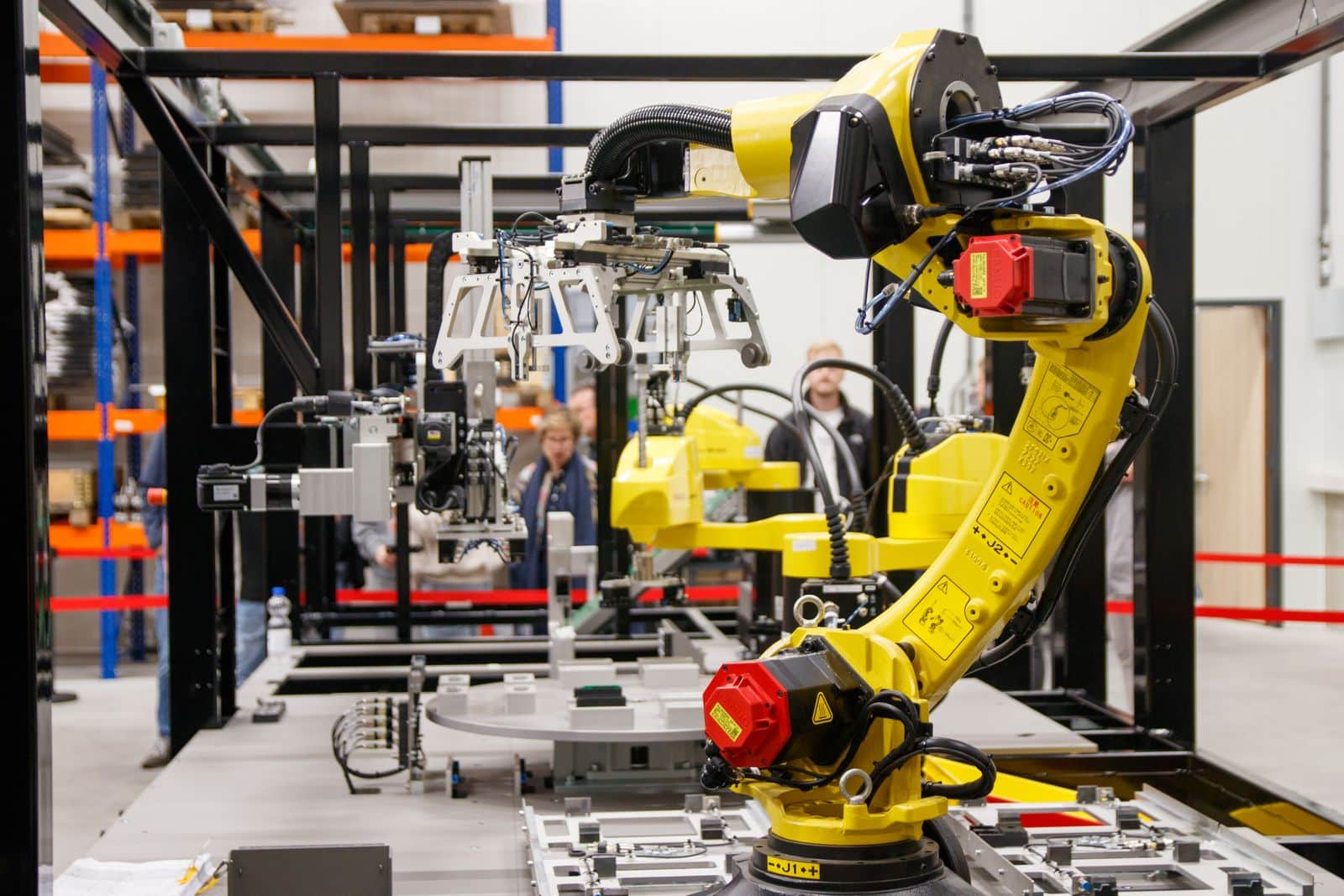
A jacket combines sleeves and bellows into one continuous cover for the whole arm. It is used when an environment is harsh enough that gaps between separate components become a weak point.
Matching the Component to the Robot Axis
The right cover depends on where it sits on the arm, not just on the environment.
As a general rule, axis 1 (base rotation) and axis 3 (forearm) are mostly straight movement. A well-fitted robot sleeve is usually enough there. Axis 2 (shoulder) and axis 5 (wrist bend) flex constantly through a wide range. That calls for a bellow cut to the exact travel of that joint. Axis 4 and axis 6 rotate the wrist and tool flange. They often need a short bellow or a reinforced cuff rather than a full sleeve. That is because they see the most repetitive motion of the whole arm.
Fanuc and KUKA six-axis models tend to concentrate wear at axis 2 and axis 5. Stäubli SCARA robots are built for cleanroom and assembly work. They generally need lighter, more flexible bellows at the rotating joints, rather than heavy sleeves on the arms.
Sleeve vs Bellow vs Full Jacket: When to Use Which
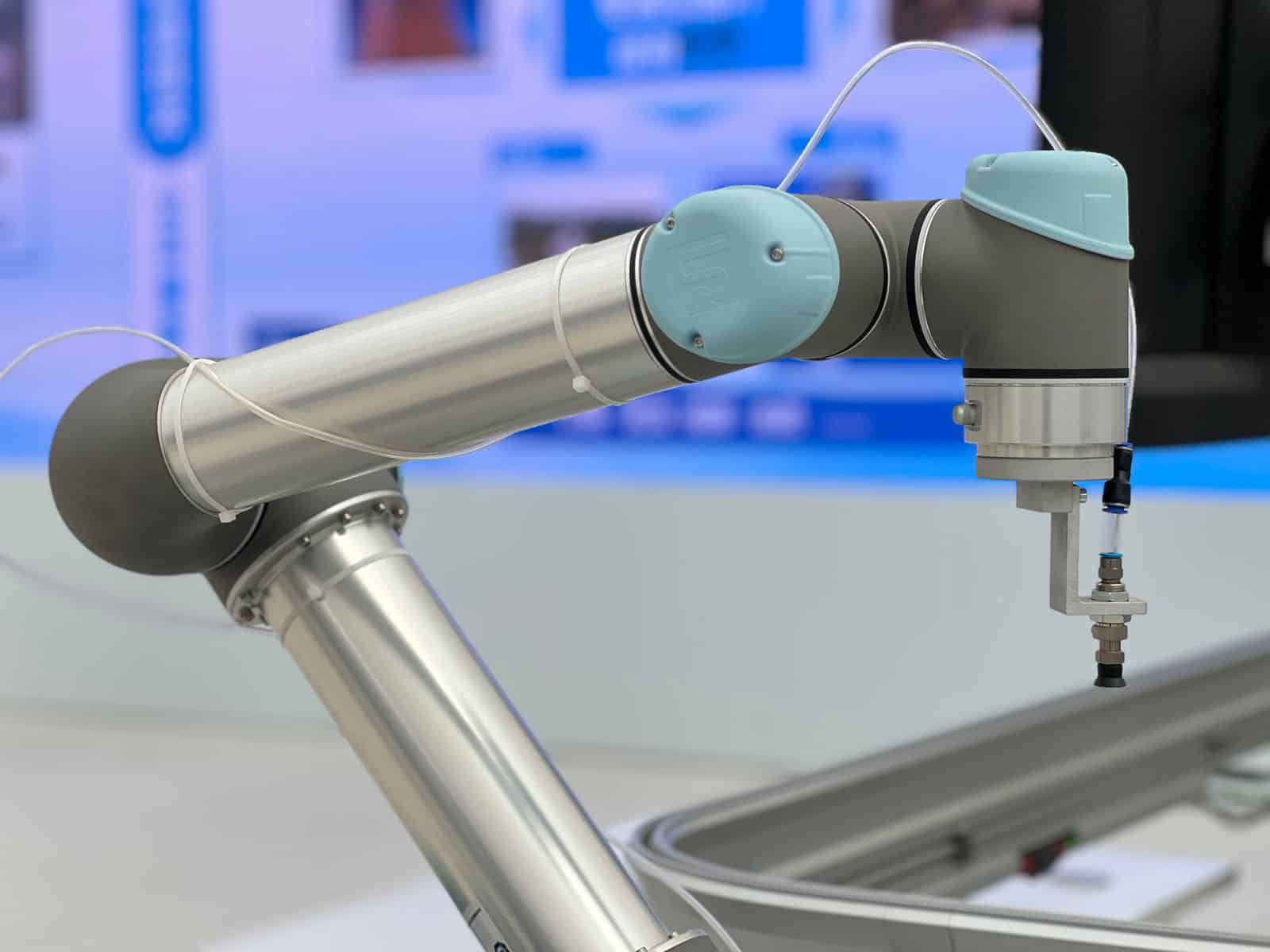
Choosing between industrial robot jackets and bellows, or a plain sleeve, comes down to how much of the arm is exposed and how often that section moves.
A sleeve alone works when only a straight link is at risk. One example is a robot loading parts in a mild dust environment. A bellow alone makes sense when the arm itself is already shielded by a machine guard, and only the joint remains exposed. This is common on integrated cells. A full jacket is the right call when the whole arm works in a harsh atmosphere. That includes welding spatter, foundry heat, paint overspray or food-grade washdown, where gaps between separate components would let contamination in.
As a rough guide, RCC recommends a full jacket whenever more than half the arm is exposed to the same hazard. Separate sleeves and bellows work better when the hazard is concentrated on one section. For the broader question of picking a cover shape and closure system, see our guide to industrial robot cover design.
Choosing by Environment: Welding, Foundry, Paint, Food and ATEX
The material and stitching matter as much as the shape of the component.
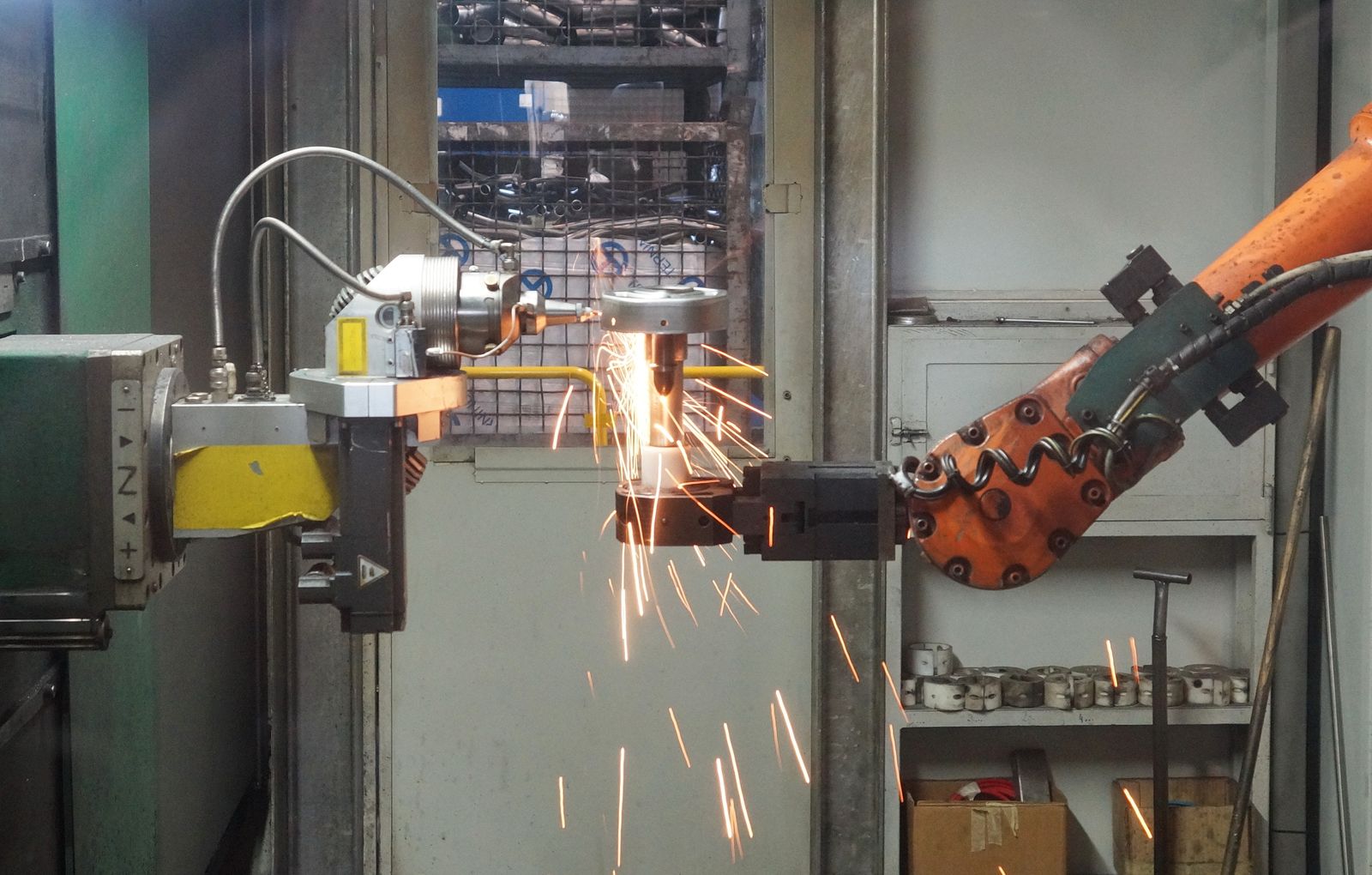
Welding robots need spatter-resistant fabric on both sleeves and bellows, since molten spatter burns through standard textiles in weeks. Foundry environments push that further. High ambient heat means the bellow’s fold pattern has to keep flexing without cracking. That holds even when the fabric itself is rated for high temperature.
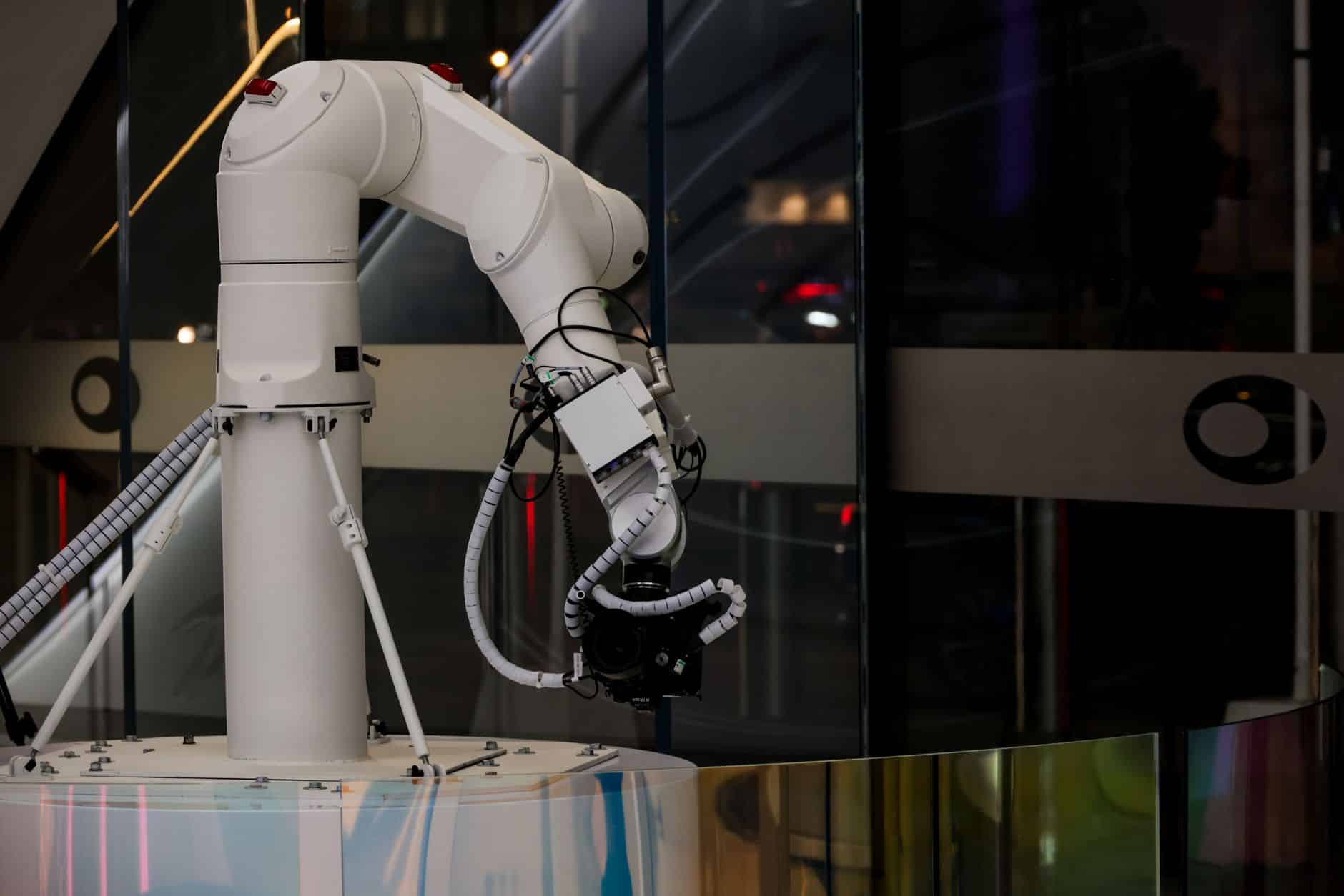
Paint shop robots need chemical-resistant, easy-to-wipe sleeves, since solvent buildup on standard fabric shortens its life fast. Food and pharmaceutical lines require washdown-rated jackets that meet hygiene standards without trapping moisture in the seams. ATEX zones add another constraint. Every component, including the stitching thread, has to meet explosive-atmosphere requirements, which rules out most off-the-shelf covers outright. Fabric choice is the deciding factor across all of these environments. This is covered in detail in our guide to robot protective materials.
Standard Covers vs Custom RCC Solutions
Generic sleeves and bellows exist for the most common robot models. They can be a reasonable starting point on light-duty applications. The gap shows up on anything demanding, a comparison we break down in more depth in custom robot covers vs standard protection.
| Criteria | Standard, off-the-shelf cover | Custom RCC solution |
| Fit on the axis | Generic pattern, loose at the joint | Measured on your exact robot model and axis travel |
| Fabric selection | Single fabric for all environments | Matched to spatter, heat, chemical or hygiene exposure |
| Lifespan in harsh conditions | Weeks to a few months | Typically several times longer, environment-dependent |
| Replacement process | Re-order and wait for stock | Pattern kept on file for fast reorder |
Results from the Field
At a French automotive component manufacturer running six-axis Fanuc welding cells, the team was replacing standard sleeves on the forearm and wrist roughly every six weeks. The cause was spatter damage, and each swap cost a line stoppage. The team then switched to custom RCC bellows on the wrist axis and spatter-rated robot sleeves on the forearm. The interval between replacements moved to close to six months, cutting related downtime by an estimated 80% over the following year.
Working in welding, foundry or ATEX conditions?
See our installation and repair service →We see a similar pattern on foundry lines. A standard bellow on a KUKA arm working next to a casting cell typically lasts a few weeks. Then the fold pattern cracks under heat. A custom bellow cut for that specific joint, and rated for the ambient temperature, routinely runs several months longer on the same application.
When to Replace Your Robot Sleeve or Bellow
Installation of a replacement is quick once a pattern is on file. But waiting for a full tear is the most expensive way to get there. A few signs point to a component nearing the end of its life before it fails. Watch for visible thinning or discoloration at the fold lines of a bellow. Also watch for stitching pulling away from the fabric, or stiffness that restricts the joint’s normal range of motion.
On a robot sleeve, watch for abrasion patches where the cover rubs against a fixture or guard. Also watch for any point where the underlying arm becomes visible. A cover that no longer moves freely with the joint does more harm than good. It starts working against the robot’s own drive. Our guide to when to replace robot protection components takes these signs component by component and gives realistic intervals by environment.
Beyond the Sleeve: Protecting Cables and Hoses
Sleeves, bellows and jackets protect the outer surface of the arm. But many robots also route cables, air lines and hoses along the same path, inside what is generally called a dress pack. That bundle wears differently from the outer cover, and needs its own protection strategy. We cover that in more detail in our dedicated guide to robot dress packs.
These components fit into a full protection plan by application and industry. For a broader look, see our complete guide to industrial robot covers.
The vocabulary around these components is not standardised from one supplier to the next. The terms as we use them, sleeve, bellows, jacket and the rest, are defined in our technical glossary.
In Summary
Sleeves protect straight arm sections, bellows protect moving joints, and jackets combine both for full-arm coverage in harsh environments. Matching the component to the axis, and to the actual hazard, spatter, heat, chemicals or hygiene, is what determines how long it lasts. That applies to any robot sleeve or bellow. Standard covers can work for light-duty applications. But demanding environments consistently favor a solution measured and built for the specific robot and axis. For a stationary or semi-mobile machine rather than a robot, see our guide to custom equipment covers for industrial machines.
Want a second opinion on your current setup?
Our team reviews your robot model, environment and current covers, and recommends the component that actually fits.
Request a free audit →Reviewed by René Domingues, founder of Robotic Cover Concept – a French manufacturer of custom robot protection covers since 1998, based in Toul, France, with units protected across Europe, Israel and Brazil.
A sleeve covers a straight, largely static section of the arm, while a bellow is accordion-folded to move with a rotating or bending joint without restricting its travel.
A bellow protects one moving joint with an accordion fold that follows the travel of that axis. A jacket is a full-body cover running over the links and the joints as a single continuous piece. Industrial robot jackets and bellows are often combined on the same arm: the jacket handles the general exposure, the bellow absorbs the movement where the axis works hardest.
Not effectively. Straight links and moving joints wear differently, so a single generic cover tends to fail early at the joint while being oversized on the straight sections.
It depends heavily on the environment, but a component matched to the actual hazard, spatter, heat, chemicals or abrasion, typically lasts several times longer than a generic cover exposed to the same conditions.
Yes. The shape and fold pattern are built around each robot’s specific geometry and axis travel, so a jacket is patterned per model rather than sold as one-size-fits-all.
Welding applications need spatter-resistant fabric able to withstand molten metal contact without burning through, combined with stitching rated for the same exposure.
Not always. A full jacket makes sense when most of the arm is exposed to the same hazard. If only one joint or section is at risk, separate, purpose-built components are usually more practical and easier to replace individually.
Yes, provided every element, fabric, thread and any fittings, meets the applicable ATEX requirements for explosive atmospheres. This rules out most generic, off-the-shelf covers.
Watch for thinning or discoloration at fold lines, stitching pulling away from the fabric, stiffness restricting joint movement, or any point where the arm underneath becomes visible.
Both. Depending on the wear, a repair can extend the life of an existing component, though a worn fold pattern on a bellow usually calls for replacement rather than patching.