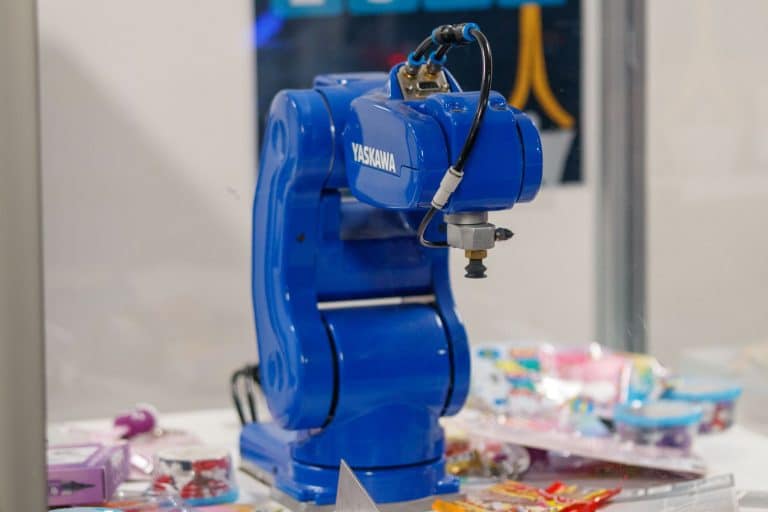
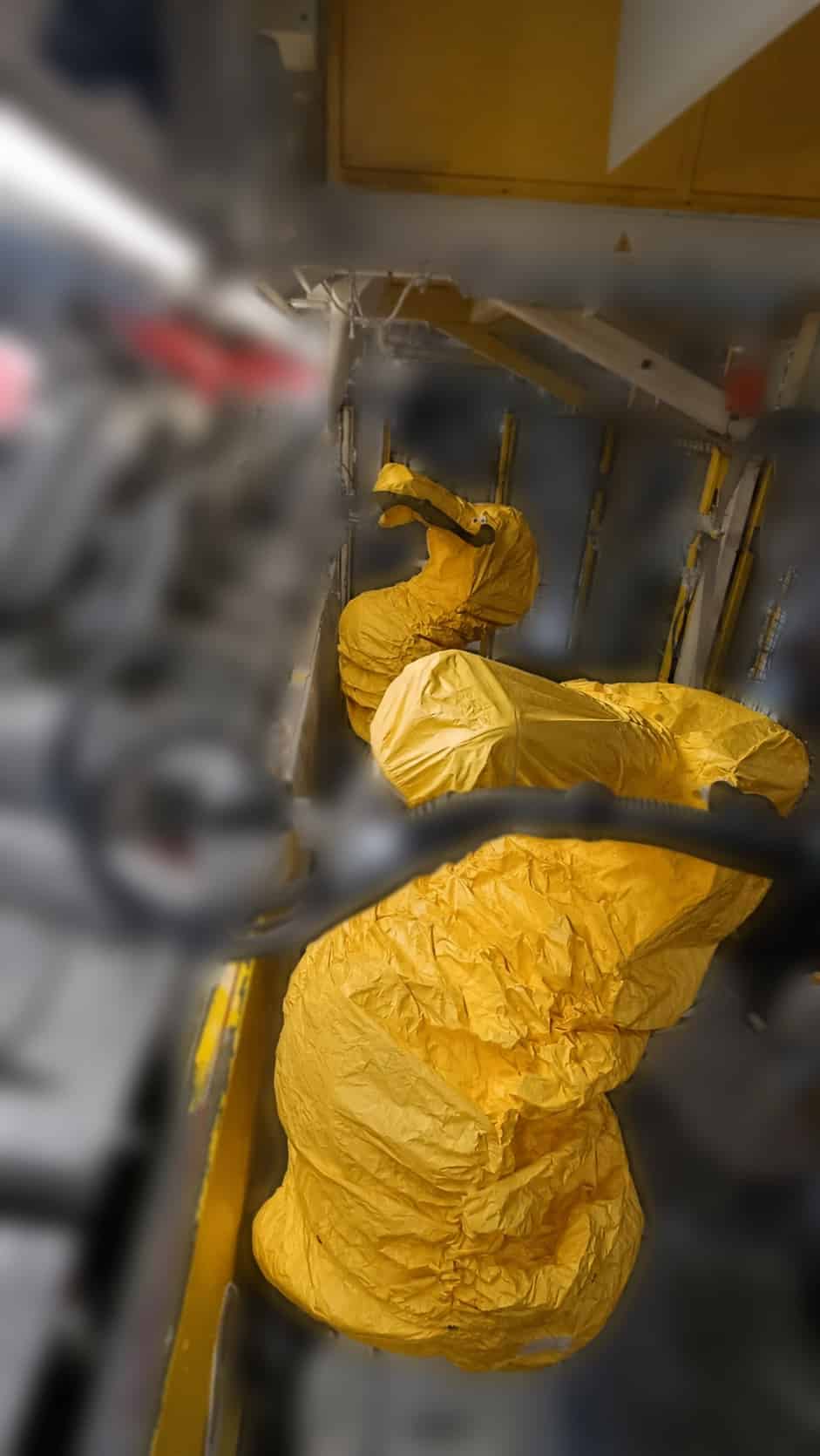
In short. A hose protection sleeve is a fabric tube that slides over a hydraulic hose or a pneumatic hose. It shields the hose cover from rubbing, spatter and splashes of fluid. In a robot cell the hose moves with the arm. Most damage starts where the hose rubs a bracket, an edge or a neighbouring line. A catalogue hose sleeve is enough for a short static run of industrial equipment. On a moving bundle, a protection cut to the route of the hose lasts longer and stays in place. RCC has made custom protection in Toul, France, since 1998, and its covers protect robots across Europe, Israel and Brazil.
Table of Contents
Where hydraulic and pneumatic hoses get damaged in a robot cell

A robot cell uses hoses for more than the arm. Clamps, grippers, tool changers and process equipment all draw on hydraulic or compressed air lines. These lines run along the arm, across the base and down to the fixtures. Each section meets a different threat. Near the base the hose is almost still. Near the wrist it bends, twists and rubs on every cycle.
Three zones need a look first. The route along the arm comes first, where the hose touches brackets and clamps. Next is the crossing point, where two lines or a line and a cable lie against each other. Last is the tool end, close to the process, where spatter, chips and fluids reach the hose. Whether the robot is a Fanuc, an ABB, a KUKA, a Yaskawa or a Stäubli, the zones are the same. Only their position changes with the model. Our guide to the protective sleeve covers the fabrics, closures and fit. This page stays on the hose.
Abrasion: the slow wear that opens a hose
Abrasion rarely looks serious at first. The outer cover of the hose turns shiny, then fuzzy, then thin. Each cycle rubs the same point against the same edge. Over months the cover wears through and the reinforcement shows. From that moment the hose can fail at any time.
A hose protection sleeve takes this wear in place of the hose. It is a sacrificial layer. The sleeve wears, and the hose underneath keeps its cover. For this to work, the sleeve must stay where the rubbing is. A sleeve that creeps along the hose leaves the contact point bare. Our page on cable management failure modes shows the mechanical side of this wear. A sleeve also cannot fix a hose that rubs because it is routed badly. Move the hose first, then protect it.
Spatter, chips and cleaning fluids: the faster threats
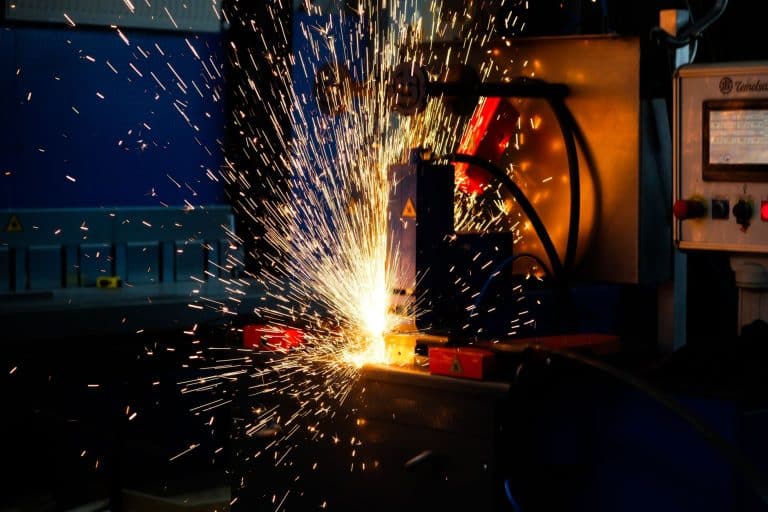
Some cells add a second threat on top of abrasion. Welding throws spatter, machining throws chips, and washing stations throw water and cleaning products. Any hose in reach of them needs more than a plain weave. Bare fabric soaks up a splash and holds it against the hose, while a coated outer face sheds it.
Spatter needs its own answer. A hose near a weld is a fire sleeve question, and we treat it in our guide to a fire sleeve for welding robots. Cleaning products are different. They reach the hose by splash, not by impact, and they stay on it between cycles. Our washing and stripping page shows the protections we build for wet cells. Before you choose a fabric, list the fluids that actually touch the hose. Then check the supplier’s data for each one. We do not give a general chemical rating here, because it depends on the fluid and the coating.
Why a leaking hose is more than a maintenance issue
A hydraulic hose that fails is not only a stop. The Health and Safety Executive in the United Kingdom warns about hydraulic injection injury, which happens when a jet of fluid under pressure breaks the skin. Serious cases have been reported at pressures above 100 bar (1,450 psi). Anecdotal evidence suggests injury may occur as low as 7 bar. The details are in the HSE safety bulletin on hydraulic injection injury. The bulletin is about hydraulic machinery in general, not robot cells. Still, it explains why a worn hose near people deserves attention before it leaks.
A sleeve can hide a leak. A damp sleeve may be a failing hose underneath. This is why inspection points and access matter as much as the fabric. Check the rules that apply in your own country and plant, because requirements differ.
Catalogue formats you will meet: sleeve, wrap and hose guard
Catalogue listings for hydraulic hose protection use a few names for different products. A nylon hose sleeve is a woven tube that slides over the hose, so the hose end must be free to pass through it. A spiral wrap is a split strip that winds around hoses, tubing and wire already in place. Then comes the spring hose guard, a coil that resists crushing and rubbing but is stiff and adds weight at the wrist. Hose protectors of this kind are sold as accessories for hose assemblies and are built for fixed machines. A fabric hose sleeve with a closure sits between them and suits a moving bundle better.
None of these is wrong. The question is which one survives the cell. Heat, spatter and cleaning fluids change the answer, and so does the service access you need. Quality of the product matters less than its match to the job. For the fabric families, we keep the detail in one place: our page on robot protective materials.
Hose protection sleeve or custom protection: how they compare
| What you compare | Catalogue hose protection sleeve | Custom protection from RCC |
|---|---|---|
| Abrasion | Same fabric along the run | Reinforced zones where the hose meets brackets and edges |
| Spatter | Depends on the fabric chosen for the whole length | Heavier face on the side that points to the process |
| Fluids | Open weave or coating chosen by the catalogue | Outer face chosen for the fluids present in your cell |
| Movement | Made for a fixed or slow-moving hose | Patterned to the route and the travel of the robot |
| Maintenance access | Cut off and refitted by hand | Split closure, fitted without removing the hose |
| Best for | Short static runs, spares, one-off repairs | Robots that run long shifts in demanding cells |
Neither column is wrong. A catalogue sleeve is right for a hose that stays put, a test bench or a quick repair. Custom work earns its cost on the robot that works every shift. There the hose moves with every cycle, and a stop has a price. For the wider choice between sleeves, bellows and jackets, see our complete guide to robot sleeves, bellows and jackets.
Keeping the hose accessible for maintenance
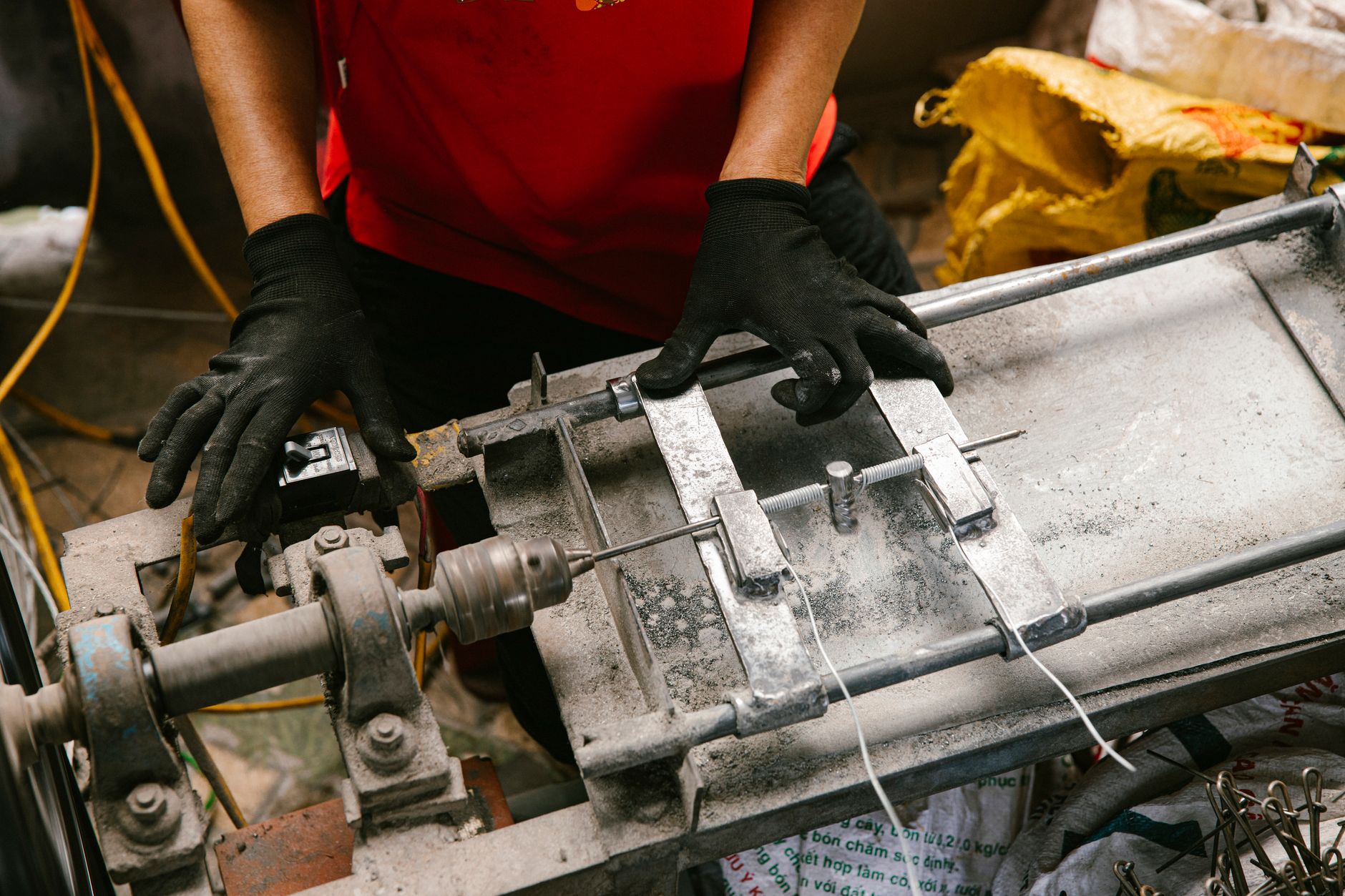
A technician needs to see the hose, feel it and reach the fitting. A sleeve that blocks all three slows every check. It also tempts crews to skip the check. The design goal is simple: protect the hose between inspections, and open fast when the inspection comes.
Three details help. A split closure lets the technician open the sleeve without disconnecting anything. A short removable section sits over each fitting, where leaks start. An inspection point sits where the hose bends most. Our guide to removable robot protective covers goes deeper on access options. The page on when to replace robot protection components sets out the inspection points.
Routing habits that spare the hose
A few habits help any hose, with or without a sleeve. Keep the bend gentle at the wrist, and leave enough slack for the full travel of the axis. Fix the hose with clamps that do not bite into the cover. Keep hydraulic and pneumatic lines apart where you can, so they do not rub each other. Clean the sleeve surface at each tool change. Fit a new sleeve over a clean, dry hose, and secure the ends so they do not move.
Write down each replacement and what you saw. After a few cycles, the log shows the real interval for your cell. It is more reliable than any general figure.
Questions to ask before you buy a hose protection sleeve
Not every buyer needs custom work. Five questions sort the cases quickly.
- Does the hose move during the cycle, or does it stay fixed?
- Which fluids touch the hose: coolant, cleaning products, oil?
- Does spatter or a chip reach the hose from one side only?
- Can a technician check the hose and its fittings without removing the sleeve?
- Is the sleeve the same fabric along its whole length, or reinforced where it rubs?
If the answers are all comfortable, a catalogue sleeve will do the job. If two or more answers point the wrong way, the cell is a candidate for protection built to the hose route. We tell customers when a catalogue part is enough. A sleeve that fits well from the shelf costs less than one we make.
What this looks like in a robot cell
Picture a plant that machines housings and washes them in the cell. The pneumatic lines to the gripper sit in the spray of the washing step. A plain sleeve soaks up the cleaning product and stays wet against the hose. A sleeve with a coated outer face and a split closure sheds the splash and opens for inspection. The technician checks the fittings at the tool change instead of cutting the sleeve off.
Or take an assembly line where a hydraulic clamp line rubs on the same bracket every cycle. Crews wrap tape on the hose, and the tape slides within days. A sleeve with a reinforced rubbing zone and secured ends stays in place. These are generic scenarios, not results from a named customer, and the gain depends on each cell.
What to send us before a hose protection is built
A short file is enough to start. Send the robot make and model, plus the number of hoses and their type, hydraulic or pneumatic. Add a photo or two of the hose run, taken at the wrist and at the worst rubbing point. List the fluids in the cell and tell us whether spatter or chips reach the hose. Tell us where the current protection fails first. If you have a worn sleeve, send it. The way it has worn tells us more than a specification sheet.
Our bellows and sheaths range shows the sleeve-type parts we build to size. For the hoses and cables of the whole arm, read our guide to robot dress packs.
Hoses wearing out in your robot cell?
Send us a photo of the worn hose run and the robot model. Our design office replies with a protection built for your cell.
Send your hose photos →FAQ
The basics
A hose protection sleeve is a fabric tube that slides over a hydraulic or pneumatic hose. It takes the rubbing, spatter and splashes in place of the hose cover. Some suppliers call it a hose sleeve.
The names overlap. Both cover a hose to protect it. What matters is the construction: the fabric, the closure and how the sleeve behaves when the hose moves. Ask for the build, not just the name.
No. The sleeve slows down the damage and takes the wear first, but every sleeve wears out. Inspection and replacement still matter.
Hoses in robot cells
Where they rub brackets, clamps and edges along the arm, then where two lines cross, then at the tool end close to the process. The exact points depend on the robot model and the route.
A coated outer face sheds splashes, while an open weave can hold them against the hose. Check the supplier’s data for each fluid in your cell, because resistance depends on the fluid and the coating.
Yes. A damp or stained sleeve can be a sign of a failing hose underneath. Choose a closure that opens quickly, so a technician can inspect the hose and its fittings.
Specifying and replacing
For a short static run, a spare or a quick repair. On a robot that works every shift, the hose moves with each cycle. A sleeve built to the route usually costs less over time because you change it less often.
Yes, if it has a split closure. A technician can then fit a new one in place, which shortens the stop.
The robot make and model, and photos of the hose run at the wrist and at the worst rubbing point. Add the fluids in the cell and where the current protection fails. A worn sleeve is the most useful sample.
In Summary
A hose protection sleeve earns its place in a robot cell when it stays where the hose rubs, sheds what the process throws and opens fast for inspection. Catalogue sleeves suit short static runs. Where the hose moves with the arm and the cell runs long shifts, protection built to the route of the hose lasts longer. It also costs less to live with.
For material, closure and fit across hoses and cables, read our guide to the protective sleeve. For welding cells, see the fire sleeve guide. Our technical glossary defines the terms used above, and the protections by sector page lists the full range.
Ready to protect the hoses in your robot cell?
Send us the robot model and a few photographs of the hose run. Our design office prepares a made-to-measure protection, with a free assessment.
Request a free assessment →See also our range of custom robot covers.