
Every industrial robot eventually consumes spare parts. The question is not whether you will replace components, but which ones, how often, and at what price. Those three variables are largely under your control, and most plants manage them reactively: a part fails, production stops, and someone pays emergency shipping for a component that a stocking plan would have put on the shelf months earlier.
This guide covers robot spare parts from the component side: what actually fails, when replacement beats repair, what a sensible parts inventory looks like, and how to cut consumption at the source. For the step-by-step repair process itself, see our guide to industrial robot repair.
Table of Contents
In summary
The components that fail most on industrial robots are batteries, dress-pack cables, encoders, motors and gearboxes, in roughly that order of frequency. A replacement gearbox alone runs €3,000 to €8,000 before labour at €80 to €150 per hour, while an hour of stopped production costs €5,000 to €50,000. A small critical-spares kit plus protection against contamination is the cheapest insurance in robotics: facilities using tailored covers report 25 to 40 percent longer intervals between service events.
The robot components that actually fail, and when
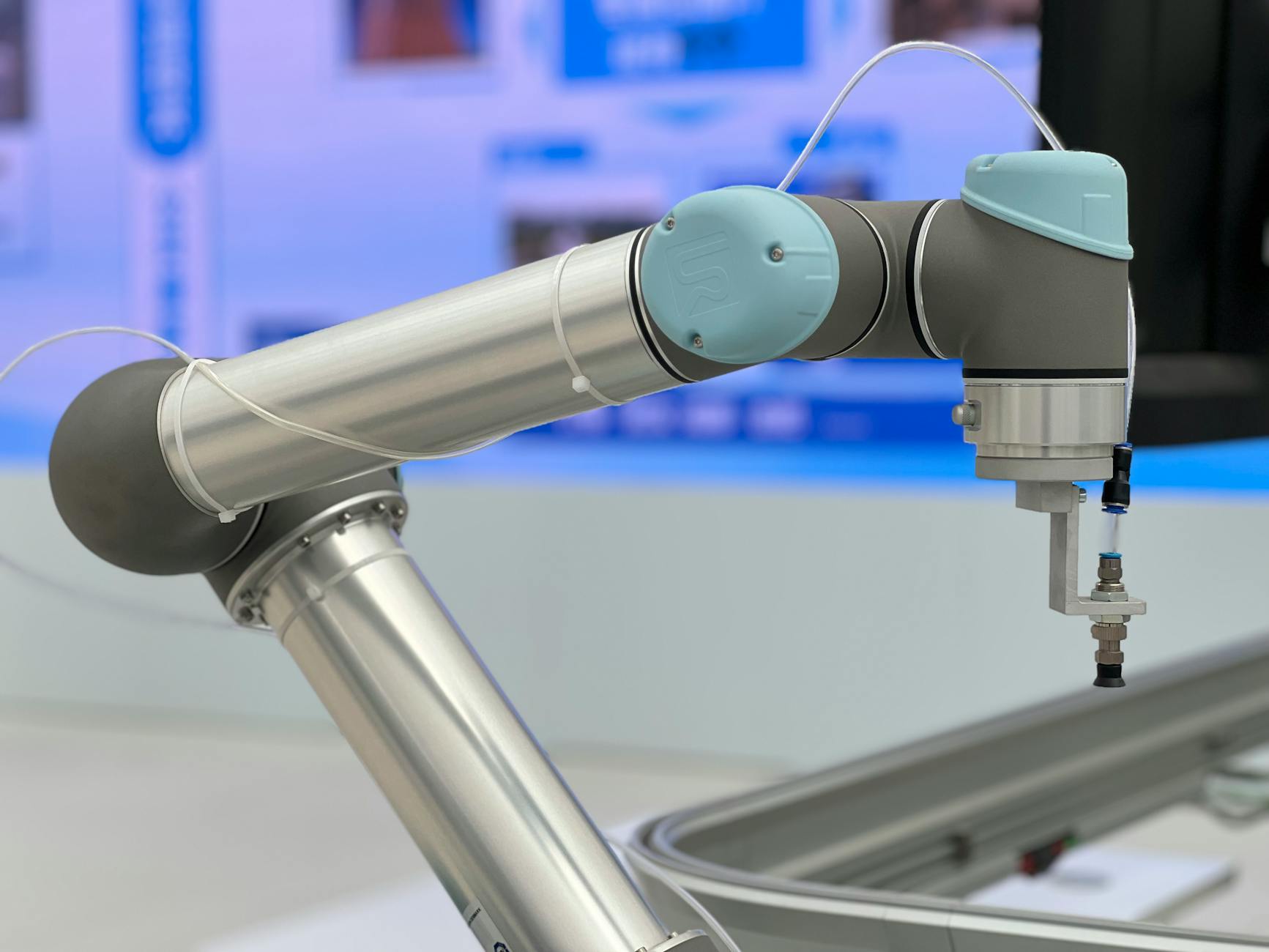
A six-axis robot is a stack of consumables wrapped around a few expensive assemblies. Backup batteries die on a calendar schedule regardless of workload, and take the robot’s mastering data with them when ignored. Dress-pack cables flex on every cycle; in high-cycle welding or assembly applications they are usually the first mechanical failure. Encoders drift or fail under vibration and contamination, and each failure means recalibration on top of the new part.
Then come the heavy items. Motors burn out under continuous overload or heat. Gearboxes and reducers wear from lubrication gaps and dust ingress, and they are the classic budget-breaker on robots past their eighth year, when maintenance costs typically rise 30 to 50 percent. The controller sits apart: power events and cabinet dust cause faults, but its real risk is obsolescence, because a discontinued controller turns every board failure into a sourcing problem. General guidance puts component inspections at every 2,000 to 5,000 operating hours; our robot maintenance checklist breaks that down task by task.
Repair, refurbish or replace: the decision framework
For each failed component, three questions settle the decision. First, what does downtime cost while you wait? A repair with a three-week lead time is a bad deal on a line losing €10,000 per hour. Second, is the part still supported? While the OEM sells new parts, board-level repair and exchange programs keep options open; once a component is discontinued, refurbished parts from reputable suppliers, with a warranty, become the realistic route for keeping older robot systems in production.
Third, what is the robot’s age and trajectory? Replacing a gearbox on a healthy five-year-old unit is routine engineering. Doing the same on a twelve-year-old robot with compounding failures may be money the fleet plan should redirect. The full cost picture, including the total cost of ownership math behind these calls, is in our robot maintenance cost analysis.
What drives the replacement bill
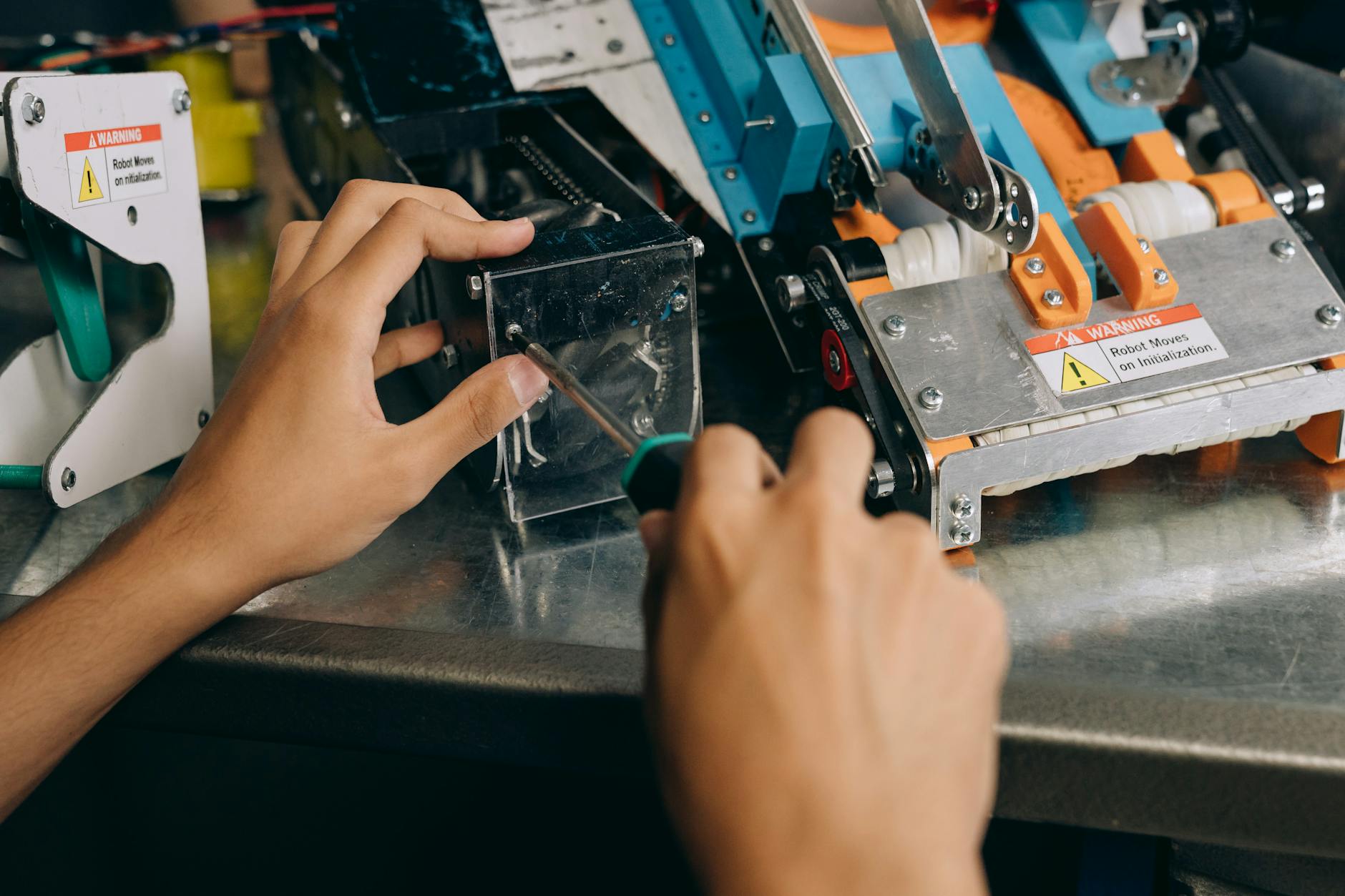
The part is only the opening number. Labour for a qualified robotics technician averages €80 to €150 per hour in Western Europe, and a complex gearbox replacement takes 6 to 10 hours before testing. Add recalibration, and a full joint refurbishment on a Fanuc or ABB unit can exceed €15,000.
The controller is the priciest single component on most robots: once you add reprogramming and commissioning time, a controller replacement often rivals a major mechanical overhaul. That is why parts availability, warranty terms and shipping lead times belong in the purchasing decision, not just the unit price.
Building a critical spare parts inventory
The goal of a spare parts kit is not to duplicate the robot on a shelf; it is to make sure no cheap component ever stops an expensive line. Stock the consumables systematically: batteries, fuses, filters, grease and dress-pack cables for every robot family on the floor. Add one encoder per family, since the part is small, stable in storage and painful to source in an emergency.
Reserve the heavy items, motors and gearboxes, for genuinely critical cells where the downtime math justifies the working capital. For everything else, negotiate availability instead of holding stock: confirmed lead times from the OEM or an exchange program, and a named emergency contact. Review the kit yearly; a parts inventory built for the fleet you had three years ago quietly stops matching the fleet you run today.
| Component | Main failure driver | Repair or replace? | Keep in stock? |
|---|---|---|---|
| Backup batteries | Age (calendar, not hours) | Replace, on schedule, before they die | Yes, always |
| Dress-pack cables | Flexing cycles, spatter, abrasion | Replace; repairs rarely hold | Yes, per robot family |
| Encoders | Contamination, vibration | Replace; recalibrate after | One per robot family |
| Motors | Overload, heat, contamination | Either; a swap runs a few thousand euros | Only for critical cells |
| Gearboxes / reducers | Lubrication gaps, dust ingress | Refurbish if isolated; part alone is €3,000–€8,000 | Only for critical cells |
| Controller | Power events, dust in cabinet, obsolescence | Board-level repair while supported; replace when discontinued | Boards and fans, not whole units |
Tired of replacing the same cables and encoders every year?
See which cover materials stop the damage →Cut component consumption at the source
Look back at the failure drivers in the table: contamination appears in nearly every row. Dust grinds gearboxes, spatter burns cables, mist coats encoders, and cabinet dust stresses controller boards. Remove the contamination and the consumption curve bends down; facilities using tailored covers report 25 to 40 percent longer intervals between service events.
At a food-industry plant, the made-to-measure covers we supplied protect Fanuc robots from the corrosive cleaning products used in daily washdowns; the components underneath stay dry, and the parts budget stays predictable. The same logic applies in welding, foundry and paint applications.
To be clear about what we are not: RCC does not sell robot spare parts. We are an independent French manufacturer of custom protective covers, and our product’s job is to make sure you buy fewer parts, less often. What a cover changes across a full maintenance program is covered in our complete robot maintenance guide, and the servicing models that go with it in industrial robot servicing. Key terms are defined in our technical glossary.
Frequently asked questions
Start with the consumables that stop production when missing: backup batteries, fuses, dress-pack cables, grease and one encoder per robot family. For critical cells, add a gearbox or a spare motor for the most loaded axis. The right kit depends on your downtime cost: at €5,000 to €50,000 per hour of stopped production, most stocking decisions pay for themselves quickly.
Replace when the part is a consumable (batteries, cables, filters), when lead time for a repair exceeds what your production can absorb, or when the robot is past 8 years and failures are compounding. Repair or refurbish when the component is expensive, still supported and the failure is isolated, such as a single gearbox on an otherwise healthy unit.
Refurbished parts from reputable sources are common for older robots, especially when the OEM has discontinued new parts. Check what warranty the supplier offers and whether the part preserves your service agreement. For robots under an OEM contract, always confirm that third-party parts do not void the coverage.
Most component failures trace back to contamination: dust in gearboxes, spatter on cables, mist on encoders. A made-to-measure cover blocks those at the source, and facilities using tailored covers report 25 to 40 percent longer intervals between service events, which translates directly into fewer parts consumed per year.
Want to spend less on robot spare parts next year?
We audit your robot cell for free and design a made-to-measure cover that keeps contamination away from the components that fail first. Manufactured in France since 1998.
Request a free audit →Reviewed by René Domingues, founder of Robotic Cover Concept – a French manufacturer of custom robot protection covers since 1998, based in Toul, France, with units protected across Europe, Israel and Brazil.