
When an industrial robot needs servicing, one question comes before any wrench is picked up: who should do the work? A facility can run an in-house maintenance team, sign a service contract with the robot manufacturer, or hand the job to an independent provider. Each model carries a different cost, a different response time, and a different level of expertise.
Getting that decision right matters. The wrong servicing setup means either paying premium rates for routine tasks your own team could handle, or waiting days for a specialist while a production line sits idle. This guide breaks down what robot servicing actually covers, the three models you can choose from, and how to match a model to your operation.
Table of Contents
In summary
- Industrial robot servicing covers scheduled inspection, lubrication, calibration, part replacement, and software checks – the structured interventions that keep a unit inside its designed parameters.
- There are three servicing models: in-house teams, OEM (manufacturer) contracts, and independent third-party providers. Most facilities end up combining them.
- A good service contract defines response time, preventive visit frequency, parts coverage, and a clear scope – not just an hourly rate.
- Servicing frequency is not fixed: a robot in a clean assembly cell and one in a foundry follow very different schedules.
- Custom protective covers cut the servicing workload at the source by keeping contaminants away from sensitive components, which lowers the cost of whichever model you choose.

What industrial robot servicing actually covers
A full service visit on a six-axis unit covers 5 core jobs: lubrication, inspection, calibration, part replacement and safety checks. It is the planned, recurring work that keeps a robot reliable – distinct from daily operator checks and from emergency repair after a breakdown.
Mechanical service. Lubrication of joints, gears and bearings to the manufacturer’s specification, inspection of reducers and belts, and replacement of high-wear parts before they fail. Worn grease and tired servomotors are among the most common reasons a unit drifts out of tolerance.
Electrical and control service. Inspection of cables, connectors and the robot controller, battery replacement, and a check of power supplies for early signs of degradation. Frayed cabling and software errors account for a large share of unplanned downtime.
Calibration and software. Re-calibration to restore positioning accuracy and firmware updates that fix known bugs and keep the robot compatible with the rest of the production line. Calibration matters most after any part replacement.
Safety verification. Testing of emergency stops, light curtains and speed limiters. A robot with a degraded safety system is a liability regardless of how well it runs. For the full task breakdown and frequency, see our complete guide to industrial robot maintenance the matching maintenance checklist, and our glossary of robot protection terms.
Put together, these tasks form a recurring service routine that mirrors the robot’s real workload in your automation cell. A robotic system running two shifts in a clean assembly line follows a lighter maintenance schedule than the same unit in a foundry, where dust and heat accelerate wear. Matching servicing frequency to actual robot needs – rather than a generic calendar – is what prevents both over-servicing and the sudden malfunction or breakdown that an overdue inspection would have caught. Done consistently, preventative maintenance and timely lubrication keep robotics uptime high and downtime to a minimum.

The three industrial robot servicing models
Industrial robot servicing is delivered through 3 models: an in-house team, an OEM contract, or an independent provider. Each suits a different fleet size and budget, and most plants blend them rather than pick just one.
In-house maintenance teams
An internal team handles servicing on site, on your schedule. This is the fastest model for routine work: lubrication, cleaning, visual inspection and basic part swaps happen without waiting for an external visit. The trade-off is expertise and tooling. Manufacturer-specific diagnostics, controller-level faults and full calibration often exceed what a general maintenance technician can do, and training a team across the major robotics and automation brands – Fanuc, ABB, KUKA, Yaskawa and Staubli – is a real investment.
OEM service contracts
A contract with the robot manufacturer gives you certified technicians, genuine OEM parts, and the deepest knowledge of that specific model. For complex predictive maintenance, controller repairs and warranty-sensitive work, the OEM is hard to beat. The cost is the highest of the three models, response times depend on the manufacturer’s regional coverage, and a contract usually locks you to a single robot brand – awkward for a mixed fleet.
Independent and outsourced providers
Third-party service companies and system integrators sit between the two. They cover multiple robot brands under one contract, typically respond faster than a distant OEM, and cost less than a manufacturer agreement. Quality varies more, so a certified service provider with documented experience on your robot models is worth the due diligence. Many facilities outsource specialist tasks – calibration, reducer overhauls – while keeping daily upkeep in-house.
In-house vs OEM vs outsourced: a side-by-side view
Across the 5 criteria below, no single model wins outright. The right choice depends on your fleet size, the mix of robot brands and types – from six-axis arms to collaborative robots (cobots) in material handling – and how much downtime your line can absorb.
| Criterion | In-house team | OEM contract | Outsourced provider |
|---|---|---|---|
| Cost | Lowest per task, high fixed cost (salaries, training) | Highest | Moderate |
| Response time | Immediate | Depends on regional coverage | Usually fast, contract-defined |
| Brand expertise | General, limited depth | Deepest on one brand | Broad across brands |
| Parts | Stocked consumables | Genuine OEM parts | OEM or equivalent |
| Best for | Daily routine tasks | Complex faults, warranty work | Mixed fleets, specialist tasks |
Not sure how often your robots actually need servicing?
See our guide to robot service intervals →What a robot service contract should include
4 elements decide whether a service contract protects your uptime: response time, preventive visit frequency, parts scope, and reporting. The contract – not the hourly rate – is where value is won or lost.
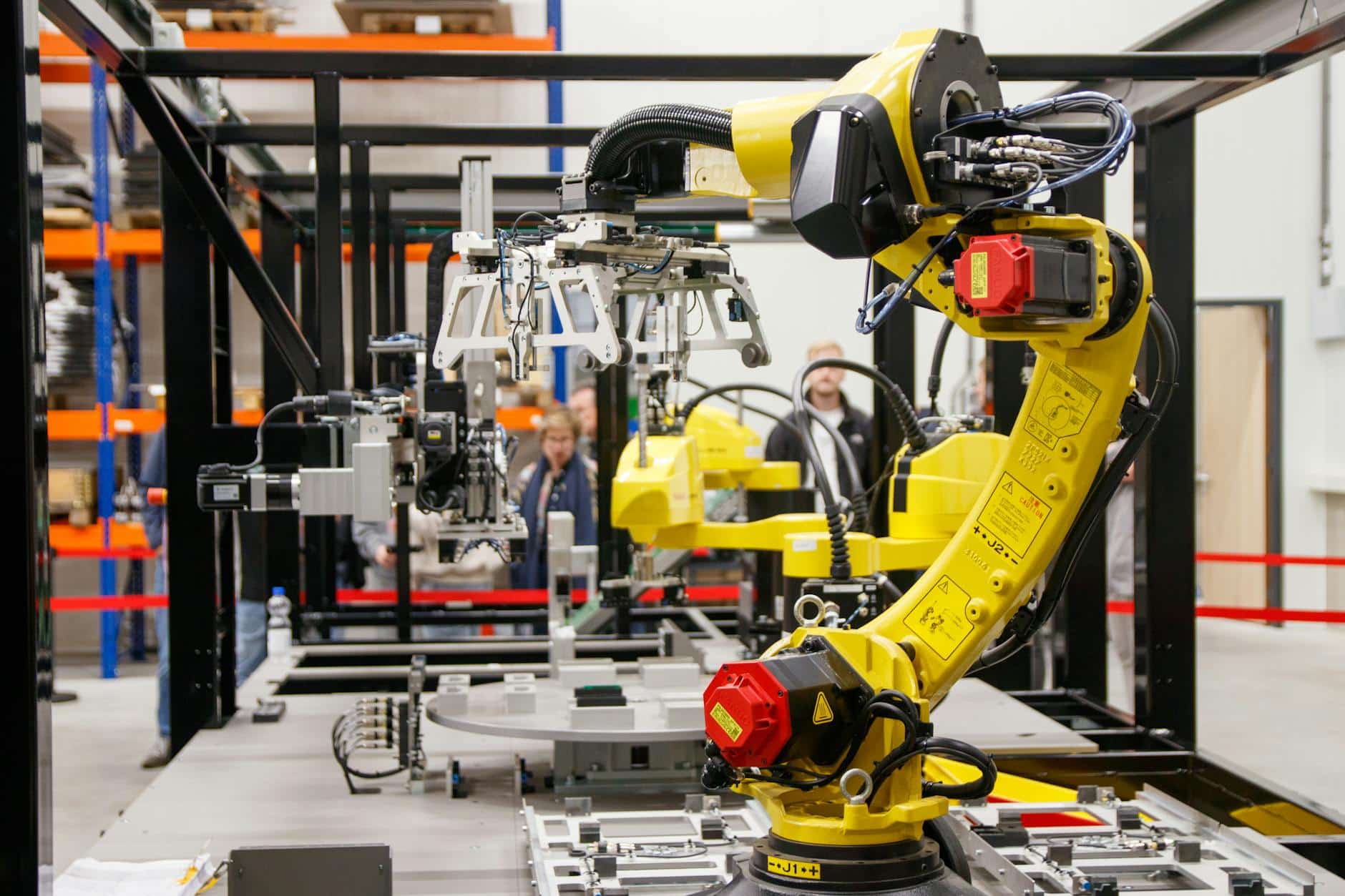
Response time and availability. The maximum delay between a fault call and a technician on site, ideally with guaranteed cover during your production hours. This is the single clause that separates a real service contract from a phone number.
Preventive visit frequency. How many scheduled service visits per year, and what each one covers. A contract built only around reactive call-outs leaves you exposed to the failures preventive work would have caught.
Parts and scope. Which parts and labour are included, and which are billed separately. Reducers, controllers and cabling are the expensive items – know where they sit. To anticipate the budget, see how industrial robot maintenance costs break down.
Reporting. A written record of every intervention. Over time this service history becomes the data that lets you predict failures, justify budget, and decide when a unit is worth keeping. Many providers manage this through a computerized maintenance management system (CMMS) you can access directly. The strongest agreements also fold in predictive maintenance – sensor data that flags a failing part before it stops the line.
How to choose the right servicing model
3 factors carry most of the decision: fleet size and brand mix, downtime tolerance, and your team’s real expertise. Match the model to your operation rather than to a sales pitch.
Fleet size and brand mix. A handful of identical units under warranty points toward an OEM contract. A large, mixed fleet usually favours an in-house core plus an outsourced provider for specialist work.
Downtime tolerance. If an hour of stoppage costs thousands, guaranteed fast response justifies a premium contract. A line with buffer stock and redundancy can accept a slower, cheaper arrangement.
Internal expertise. Be honest about what your team can safely handle. Pushing technicians beyond their training turns routine servicing into the cause of the next breakdown rather than the cure.
A field example from a welding line
At an automotive welding facility running mixed-brand robots, spatter and heat were forcing unplanned servicing roughly every few weeks on the most exposed units. After fitting custom RCC covers to the high-exposure arms, the site reported around 80% fewer contamination-related interventions on those robots and noticeably longer intervals between scheduled service visits – without changing their servicing provider.
See welding robot protection →When servicing turns into repair
Skip servicing and a routine part swap becomes an emergency repair costing 3 to 5 times more. Servicing is planned and preventive; repair is what happens once a component has already failed and the line is down – closing that gap is exactly what a good servicing model is for.
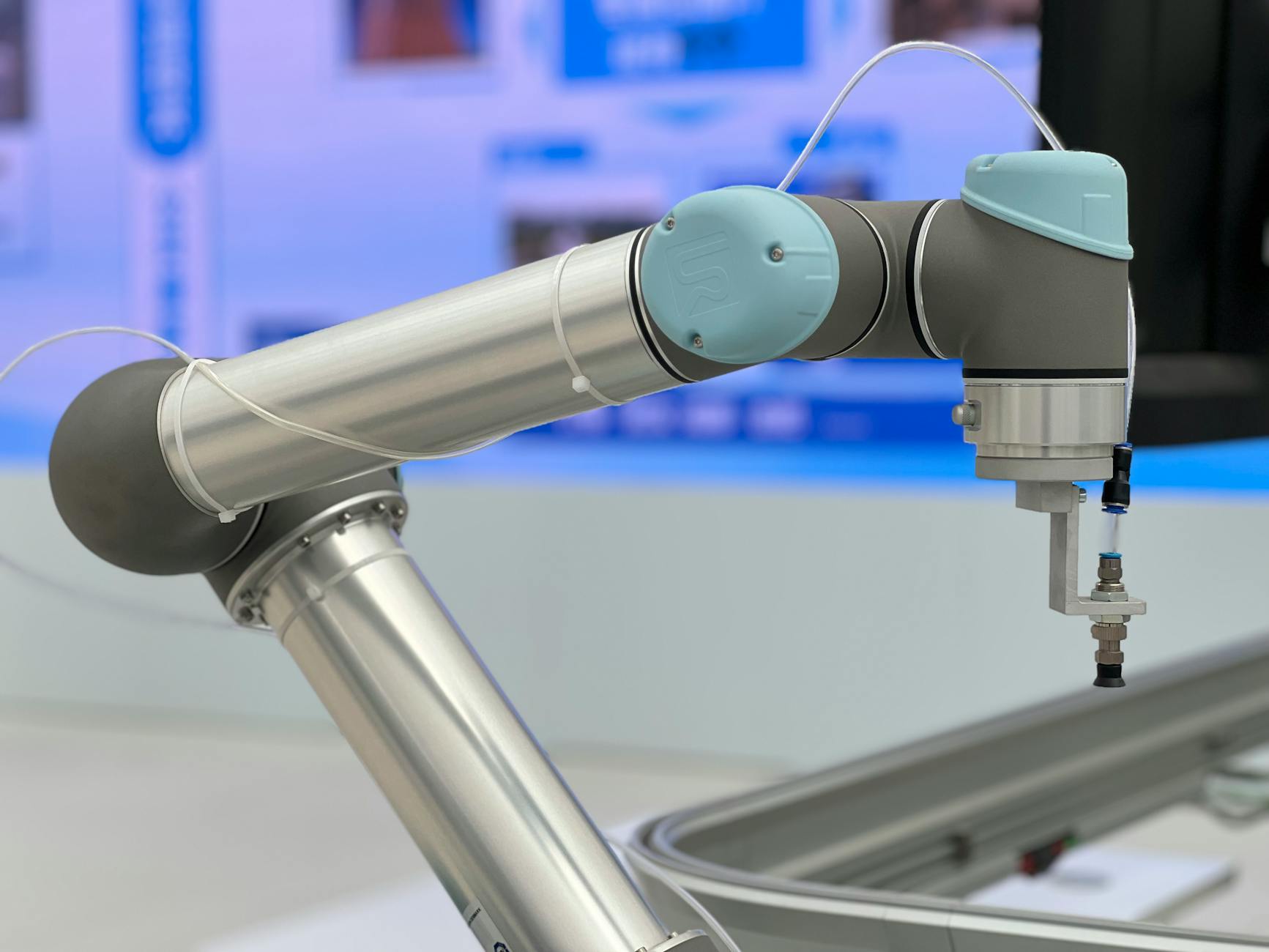
During a service visit, a technician often catches a part on its way out – a reducer with early play, a cable showing wear, a servomotor drawing too much current – and replaces or reconditions it before it triggers an unplanned stoppage. Skip the servicing and those same parts fail mid-cycle, turning a routine part replacement into an emergency repair at several times the cost. Knowing the most common robot repair issues and why robots fail helps your team act before a warning sign becomes a breakdown, while a disciplined preventive maintenance routine keeps most repairs off the calendar in the first place.
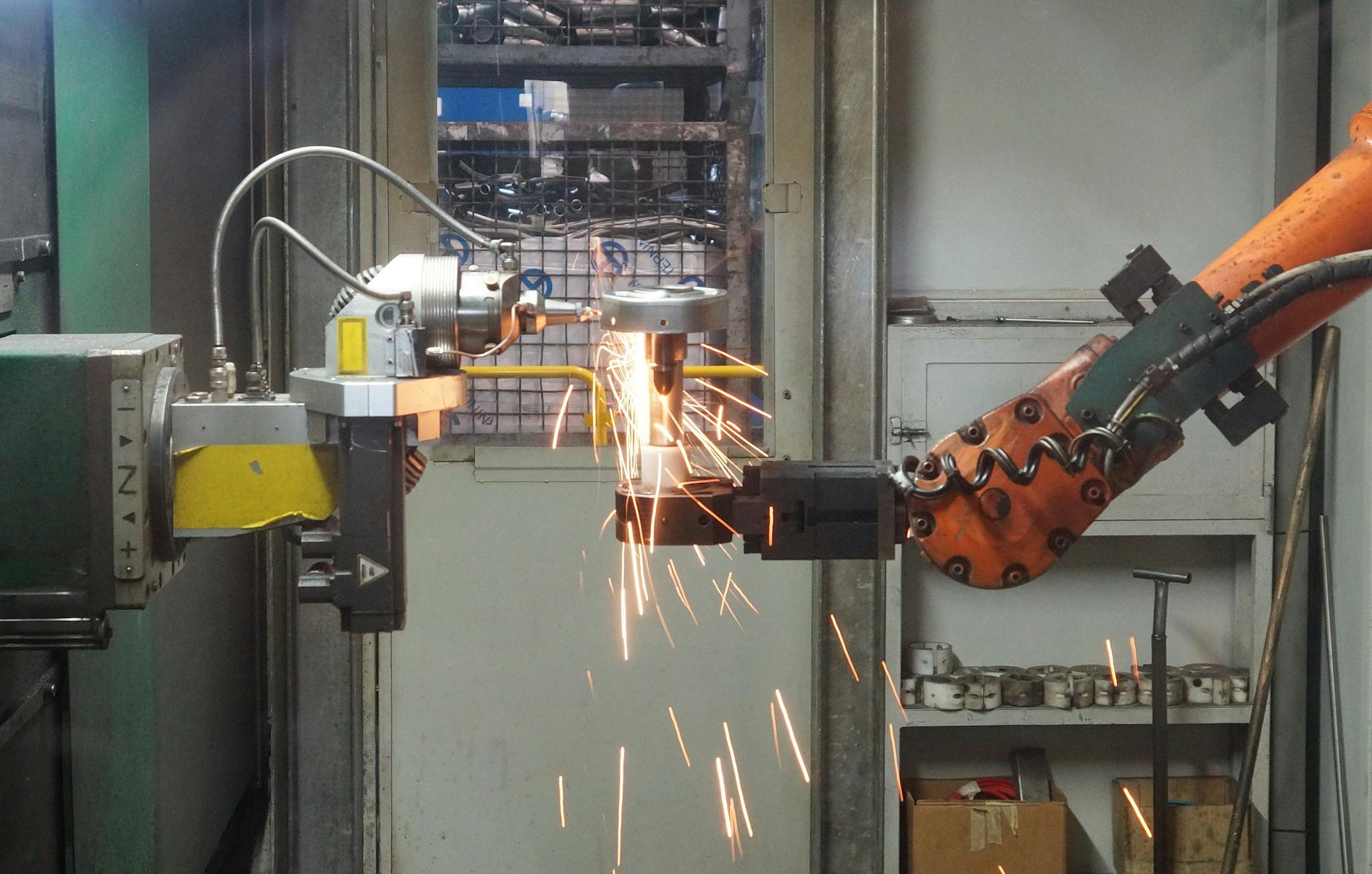
Where protective covers fit into any servicing strategy
Custom protective covers cut contamination-driven interventions by up to 80%, easing the servicing load under all 3 models. Dust, heat, metal spatter, chemical splash and moisture drive most routine interventions in harsh environments – reduce that exposure and you reduce the burden under any contract.
This is RCC’s role. As a French manufacturer founded in 1998 in Toul, with units protected across Europe, Israel and Brazil, we design and make custom protective covers fitted to each robot model and environment. We do not replace your servicing provider – we make their job smaller. Robots run longer between service visits, cables and connectors last longer, and contamination-driven failures drop sharply.
The principle is simple: servicing fixes wear after it happens; a custom cover prevents the wear that made the service necessary. Whether you run an in-house team, an OEM contract or an outsourced provider, less contamination means fewer interventions and a lower total cost of ownership.
Frequently asked questions
Maintenance is the ongoing discipline of keeping a robot reliable, including the daily checks your operators run. Servicing usually refers to the scheduled, deeper interventions – lubrication, calibration, part replacement, controller checks – carried out on a fixed interval, often by a dedicated team or external provider.
It depends on your fleet and downtime tolerance. Daily routine tasks are cheapest in-house, while complex faults, full calibration and warranty-sensitive work are safer with an OEM or a certified outsourced provider. Most facilities combine an in-house core with external specialists.
Costs vary widely with robot brand, fleet size, response-time guarantees and parts coverage, so providers quote per site rather than from a fixed price list. The decisive figure is total cost of ownership: a contract that prevents one major unplanned stoppage often pays for itself, since planned work costs a fraction of an emergency.
Yes. Independent service providers and integrators typically cover Fanuc, ABB, KUKA, Yaskawa and Staubli under a single contract, which is why mixed fleets often prefer them over a brand-locked OEM agreement.
Want to cut your robot servicing costs at the source?
We assess your robots and their environment, then design custom protection that reduces contamination and extends your service intervals. Free, no obligation.
Request a free audit →Reviewed by René Domingues, founder of Robotic Cover Concept – a French manufacturer of custom robot protection covers since 1998, based in Toul, France, with units protected across Europe, Israel and Brazil.