
A single unplanned breakdown on a production line can cost tens of thousands of euros in lost output and emergency labour. Yet many facilities still operate on a “fix it when it fails” basis, exposing their robotic systems to risks that compound over time.
A proactive strategy flips that equation. Instead of reacting to equipment failure, you catch minor issues before they become major shutdowns. This guide breaks down the differences between preventive and reactive approaches, and shows why a proactive approach is the smarter investment.
Whether you run Fanuc welding cells, ABB palletising arms or KUKA handling units, preventive maintenance for your robot fleet is not optional, the question is when and how you implement it. The answer shapes your total cost of ownership, your uptime and the lifespan of every unit on the floor. Below, we lay out the strategic comparison so you can make an informed decision about industrial robot maintenance.
In summary:
- Reactive approaches cost 3–5 times more than a structured preventive maintenance program over a machine’s lifetime.
- Regular preventative maintenance checks performed on schedule reduce unplanned downtime by up to 70 %.
- Cable damage, position deviation and repeatability issues are early warning signs that a proactive approach catches in time.
- Protective covers act as a first line of defence, shielding parts and components from contaminants that accelerate wear and tear.
- A complete preventive maintenance program combines inspection, scheduling maintenance and physical protection to keep lines running at peak productivity.
Table of Contents
What is robot preventive maintenance?
Robot preventive maintenance is a planned approach where maintenance items, lubrication, cable checks, software updates and component replacements, are carried out on a fixed schedule before anything fails. The importance of preventive maintenance goes beyond avoiding breakdowns: it preserves accuracy. Over thousands of hours, gears wear, belts stretch and harnesses fatigue. Without regular maintenance, you start seeing position deviation and repeatability issues that silently degrade product quality.
A typical preventative maintenance checklist includes visual inspection of dress packs, greasing of each axis reducer, battery replacement on controllers, verification of teach pendant functions and a check of power supplies and safety equipment. Different robot manufacturers recommend slightly different intervals, but the principle is universal: scheduled attention prevents unscheduled stoppage.
Why reactive robot maintenance costs more than you think
Reactive maintenance means waiting until something breaks. No scheduled checks, no forward planning. On paper it looks cheaper, you only pay for repairs when they happen. In practice, a single costly downtime event on an automotive welding line can exceed €15,000 when you factor in lost production, emergency labour and rush-shipped spares.
There is also cascading damage. When one component fails, a worn cable, an overheated gearbox, it often damages adjacent parts. A €200 replacement becomes a €5,000 overhaul because nobody caught the small problems early. Preventive maintenance is essential precisely because it reads those warning signs. Facilities using only a reactive approach spend 3 to 5 times more on upkeep over a 10-year period than those performing preventative maintenance on schedule.
Want a full breakdown of what upkeep really costs? Read our detailed guide.
Read the maintenance guide →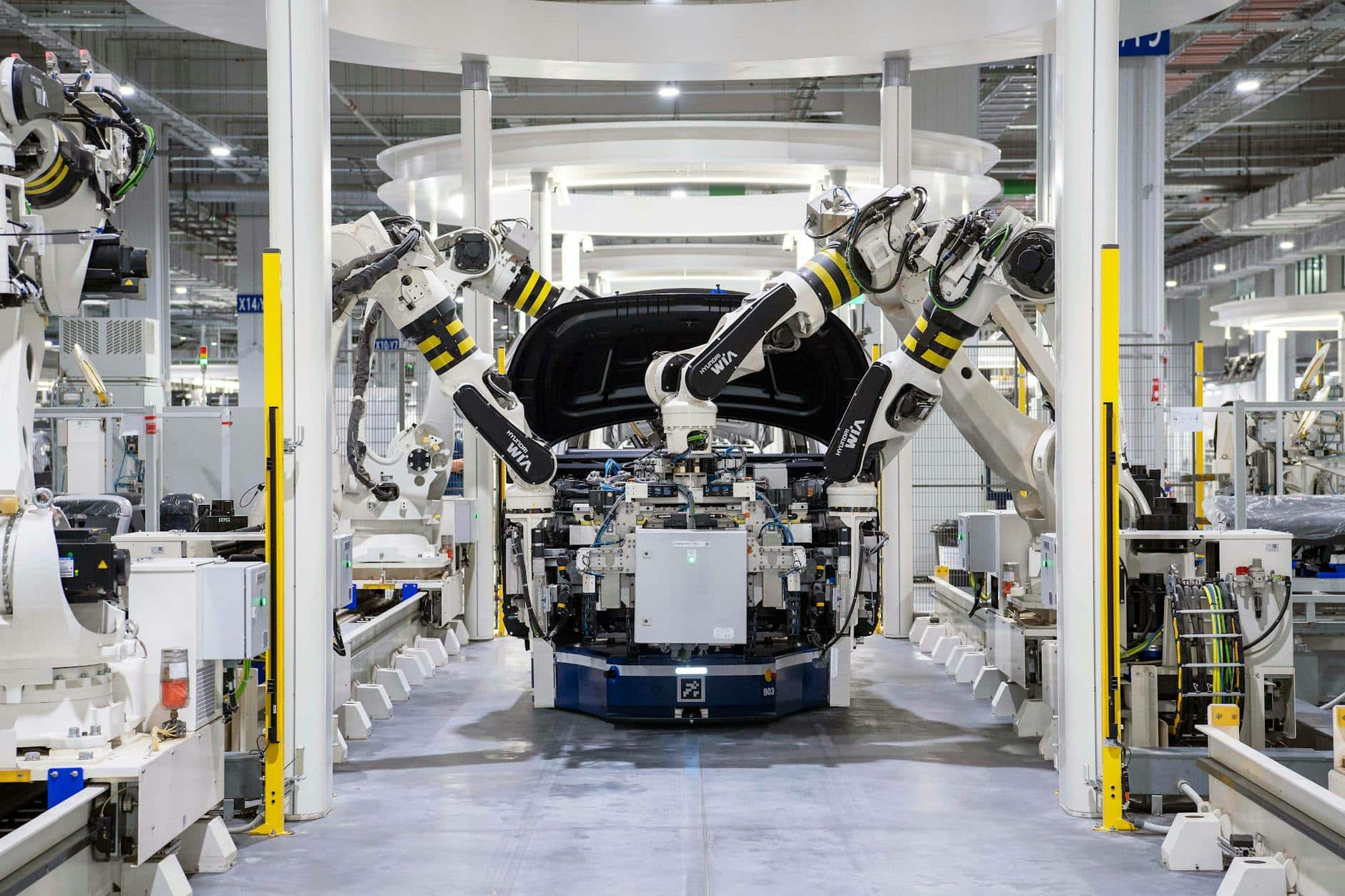
On a modern production line, a single robot failure cascades across the entire chain. Preventive maintenance for your robot fleet eliminates most of these unplanned stops by catching wear before it becomes failure.
Building an effective maintenance checklist for your automated systems
Every preventive maintenance robot checklist should be adapted to the specific type of robot, its environment and its workload. That said, the core structure remains the same across Fanuc robot cells, Yaskawa handling stations and Stäubli cleanroom units.
Daily and weekly: visual checks for signs of wear and tear on connectors and covers. Listen for unusual sounds during motion, grinding often signals a bearing issue. Verify that safety systems respond correctly. These routine maintenance tasks take minutes but help identify and address problems at the earliest stage.
Monthly and quarterly: grease sampling on each axis. Battery voltage measurement. Inspection of routing to spot early cable damage from repeated flexing, a robot in motion puts enormous strain on its dress pack. Confirm firmware is current; outdated software can mask deeper issues.
Annual maintenance and beyond: full gearbox check, belt replacement, backup battery swap and a comprehensive accuracy test. This is also the right time to reassess your maintenance procedures and confirm they still match actual operating conditions. A line that ran two shifts three years ago may now run three, and the schedule must adapt.
How often do robots need maintenance?
It depends on the application. A Fanuc arc-welding unit in a dusty foundry needs more frequent attention than a KUKA assembly arm in a climate-controlled electronics plant. As a baseline, most OEMs recommend checks every 3 to 6 months and major servicing every 12 to 18 months. Different maintenance intervals apply to different manufacturers, ABB and KUKA publish detailed schedules for each robot model in their documentation.
In harsh environments, paint shops, chemical handling, high-temperature cells, that interval can shrink to monthly for certain items. The key is to build a proactive maintenance schedule that reflects real-world conditions, not just the manual. Scheduling preventative maintenance around actual operating hours, rather than calendar time alone, gives you the most accurate cycle. Maintenance helps ensure that robots deliver consistent output regardless of the stresses placed on them.
Protective covers: where preventative maintenance for industrial robots starts
Even the best maintenance programs have a blind spot if they ignore the environment surrounding the machine. Dust, weld spatter, chemical mist, heat and moisture attack joints, sensors and controllers continuously. Preventative maintenance helps slow degradation, but physical protection prevents it from starting.
As a French manufacturer of custom protective covers, we see this pattern repeatedly: facilities invest in rigorous maintenance service contracts but overlook the contamination driving most premature failures. A properly maintained unit still suffers if particles infiltrate its reducers. Industrial robot maintenance becomes significantly more effective when the hardware is shielded from its surroundings.
Covers tailored to each setup protect the parts most vulnerable to failure causes: dress packs, axis seals, teach pendants and vision systems. The result is longer intervals between service events, fewer emergency robot repair calls and a fleet that reaches, or exceeds, the expected life of your robot.
Extend the life of your equipment with tailored protection
Our covers are engineered for each setup and each environment, from foundry heat to chemical exposure. Proper maintenance starts with proper protection.
Explore our protection solutions →Custom protective covers work alongside your preventive maintenance robot program to block contamination at the source. The result is fewer service interventions and longer intervals between scheduled maintenance.

Preventive maintenance robot best practices and tips for robotics
A successful preventive maintenance robot program is only as strong as the habits around it. Here are the maintenance tips we share with every client based on decades of experience in industrial robotics:
Document everything. Every check, every replaced part, every anomaly. Over time this data reveals patterns that let you refine your maintenance programs and reduce maintenance cost.
Combine preventive with predictive maintenance. Scheduled checks catch known wear items. Predictive tools, vibration analysis, thermal imaging, current monitoring, catch the unexpected. Together, they form a safety net that leaves almost no room for a break down or malfunction. The cost of sensors is minor compared to one equipment failure event.
Train your operators. The people closest to the machine every day are your best early-warning system. A trained operator spots issues before they become serious, and that awareness is what makes any maintenance plan effective. Robotics companies that invest in operator training consistently report fewer emergency stops.
Protect before you maintain. Effective maintenance begins with reducing contamination at the source. Covers, seals and environmental controls all contribute. Regular preventative maintenance checks are simpler and faster when the production process is designed to keep hazards away from sensitive components in the first place.
Frequently asked questions
Preventive follows a fixed schedule: you inspect, lubricate and replace parts before they fail. Reactive waits until something breaks. The proactive approach costs less over time because it avoids emergency repairs, rush-ordered parts and the production losses that come with unplanned downtime.
Most manufacturers recommend checks every 3 to 6 months and major servicing every 12 to 18 months. Units operating in harsh environments may need monthly attention on certain items. Align your schedule with OEM guidelines and adjust based on actual operating hours.
A solid checklist covers visual cable inspection, grease levels, battery voltage, safety system function, teach pendant calibration, firmware version, gearbox condition and accuracy testing. Adapt it to your specific model, application and environment.
Yes. Facilities using tailored covers report 25 to 40 percent longer intervals between service events. Covers block dust, spatter, chemicals and moisture, the contaminants responsible for most premature wear on harnesses, seals and reducers.
Watch for unusual vibration or noise, position drift, increased cycle times, overheating joints, visible harness wear and error codes on the controller. Any of these signals that components are degrading and attention is needed.
The principles are identical: scheduled checks, lubrication, harness verification and component replacement. But specific intervals, grease types and procedures vary by manufacturer and model. Always follow the OEM manual for your exact unit.
Preventive is time-based: you service at fixed intervals regardless of condition. Predictive is condition-based: sensors monitor vibration, temperature and current to flag degradation in real time. The most effective strategy combines both.
Facilities typically see a 3 to 5x return over five years. Savings come from fewer emergency repairs, lower spare parts costs, reduced idle time and longer component life. Adding protective covers and predictive monitoring increases that return further.
Stop reacting, start protecting your automation investment
The shift from reactive to a preventive maintenance robot strategy is not a cost, it is a strategic decision that pays for itself within the first year. Every hour of unplanned downtime you eliminate, every emergency call you avoid, every month of extended component life adds directly to your bottom line. Combined with proper maintenance and tailored physical protection, your machines deliver the reliability that justified the investment in automation in the first place.
We help manufacturers across Europe implement that shift. From a free on-site audit of your automated cells to custom-engineered covers built in France, our approach starts where it matters most: understanding your environment and protecting your equipment from it.
Ready to move from reactive to preventive?
Our team audits your cells, identifies the risks driving premature wear, and recommends a protection plan tailored to your production environment. Free, no obligation.
Request a free audit →