
In summary: robot cable management is how the power, data and fluid lines running along an industrial robot are routed, secured and protected against the movement of the arm itself. Cables rarely fail because of a manufacturing defect. They fail through flex fatigue, abrasion, strain at the terminations, heat, chemical attack or snagging, and each of those failure modes has its own fix. System integrators surveyed at a Robotic Industries Association conference named cable issues the single biggest cause of downtime in robot cells. RCC has been building custom cable and hose protection for Fanuc, ABB, KUKA, Yaskawa and Stäubli robots since 1998, from Toul in France, with units now running across Europe, Israel and Brazil.
Table of Contents
What Robot Cable Management Covers
Robot cable management is the discipline of getting cables and hoses from the robot base to the tool without letting the robot destroy them along the way. It covers three things: the routing path, the way the bundle is secured at each fixed point, and the protection that sits between the cables and the environment.
It is easy to confuse with two neighbouring subjects. The robot dress pack is the bundle itself, the physical set of cables, hoses and pneumatic lines. The outer sleeves, bellows and jackets protect the arm structure against dust, splashes and abrasion. Cable management is the layer in between: how that bundle travels, and what stops the environment and the motion from wearing it out.
On a six-axis robot, that means dealing with three different kinds of movement at once. The lower axes swing through long arcs at low frequency. The wrist rotates fast, in short cycles, sometimes several hundred thousand times a year. And the whole bundle has to absorb that without the cables inside it grinding against each other.
Why Cable Failures Dominate Robot Downtime
A mechanical fault on a robot is visible. A cable fault is not. The conductor breaks inside an intact-looking jacket, or the insulation wears through at a single flex point buried inside a cable carrier. The line stops, and the first hour goes into finding out why.
That diagnosis time is what makes cable faults expensive out of proportion to the part. A replacement cable is a low-value item. The three shifts spent tracing an intermittent signal fault on a welding cell are not. Among the common causes of industrial robot failure, cable and hose damage is the one that most often gets recorded as “unknown fault” the first time it happens.
The pattern is consistent across sectors. The failure is gradual, the symptom is intermittent, and the machine keeps running badly for weeks before it stops properly.
The Six Ways Robot Cables Actually Fail
Almost every cable failure we are called in on falls into one of six modes. Naming the right one matters, because the fixes are not interchangeable.
Flex fatigue and torsion
The most common mode, and the hardest to see coming. Repeated bending work-hardens the copper strands until one conductor breaks. Torsion is worse than bending: on axis 6, the bundle is twisted rather than flexed, and a cable rated for a bend radius is not automatically rated for rotation. Symptom: an intermittent fault that clears when the arm is repositioned.
Abrasion
The bundle rubs against a sharp edge on the arm, against a fixture in the cell, or against itself inside a carrier. The outer jacket goes first, then the individual conductor insulation. Symptom: visible flat spots or shine on the jacket, usually at a single repeatable contact point.
Strain at the terminations
Where the cable enters a connector, all the movement of the run is concentrated into a few millimetres. Without proper strain relief, the cable works back and forth inside the dress pack, the service loop near the tool shortens over time, and the conductor pulls at the crimp. Symptom: the fault is always at a connector, never in the middle of a run.
Heat and weld spatter
Molten spatter burns pinholes through a standard jacket in a matter of weeks. Radiant heat near a furnace or a foundry ladle hardens the jacket instead, so it cracks the next time the arm flexes. Symptom: burn marks on the side of the bundle facing the process.
Chemicals, coolant and washdown
Cutting fluids, solvents, paint overspray and high-pressure food-industry washdown all attack cable jackets, and each attacks a different polymer. A jacket that survives coolant may swell in solvent. Symptom: swelling, softening or discolouration over a long section rather than one point.
Snagging and interference
The bundle catches on a fixture, a fence post or the workpiece during a specific movement in the cycle. This one is often introduced later, when the cell is re-tooled and nobody re-checks the cable path. Symptom: sudden, severe damage rather than gradual wear, and it repeats at the same point of the program.
Running welding, foundry, paint or washdown applications?
See our protection ranges →What a Cable Failure Actually Costs
The part is cheap. The stoppage is not. On a line running two shifts, an unplanned stop costs the lost output plus the recovery time, and cable faults tend to land at the worst end of that range because of the diagnosis delay.
Planned replacement changes the arithmetic completely. A bundle swapped during a scheduled maintenance window costs a slot that was already going to be lost. The same bundle failing mid-shift costs the slot, the diagnosis, the scramble for a spare and, on a welding or dispensing cell, often a batch of scrapped parts too. That gap between planned and unplanned is the whole argument for protection, and it is the same logic behind reducing robot downtime with protective covers.
Standard Cable Management vs Custom Protection
| Criteria | Standard off-the-shelf approach | Custom RCC protection |
|---|---|---|
| Fit to the robot model | Generic sizing, loose on some axes and tight on others | Cut for the exact model and axis geometry |
| Bend and torsion allowance | Fixed, not matched to the real program | Sized to the actual range of motion and cycle |
| Material choice | One general-purpose fabric for all applications | Spatter, heat, chemical or food-grade fabric by environment |
| Access for inspection | Full teardown to see the bundle | Sectioned so a technician can open and check one zone |
| Repair after damage | Whole assembly replaced | Damaged section replaced on its own |
| Service life in harsh conditions | Weeks to a few months | Several months to over a year, application-dependent |
Results from the Field
At an automotive tier-one supplier, a welding cell was losing a bundle roughly every six weeks. The maintenance team had been treating it as a cable quality problem and buying better cable. The wear pattern told a different story: the damage was always on the same 15 centimetres, on the outside of the axis 3 elbow, and it was spatter, not flexing.
We reworked the routing to move the service loop off the spatter path and fitted a sectioned spatter-resistant protection over the exposed zone. The bundle went from six weeks to over a year, and the cell recovered the equivalent of about eight unplanned stops a year. The cost of the protection was recovered in the first quarter.
A second case, in a machining shop: intermittent signal faults on a handling robot, no visible damage anywhere. The fault was strain at the tool-side connector, caused by a service loop that had shortened by a few centimetres over two years of cycling. A proper strain relief and a re-cut loop closed a fault the team had been chasing for four months.
Losing shifts to cable faults you cannot locate?
We audit routing, wear patterns and failure history on site, identify which of the six failure modes you are actually dealing with, and build protection sized to your robot and your duty cycle.
Request a free audit →Matching the Solution to the Failure Mode
Once the failure mode is named, the solution is usually straightforward. What does not work is applying all of them at once, which is how bundles end up over-constrained.
- Flex fatigue and torsion — increase the working bend radius, let the bundle rotate freely on axis 6 instead of clamping it, and use cable rated for torsion where the arm twists.
- Abrasion — remove or pad the contact point first, then protect the zone. Protecting without removing the edge just moves the wear onto the protection.
- Strain — strain relief at every termination, and a service loop long enough to absorb the full stroke without pulling.
- Heat and spatter — spatter-resistant or heat-rated fabric over the exposed zone, sized so it does not add stiffness where the arm flexes.
- Chemical attack — jacket and protection material matched to the specific fluid, not to a generic “chemical resistant” label.
- Snagging — re-run the program dry after every re-tooling and watch the bundle, not the tool.
The most common mistake we see is over-restriction. Cables bound tightly with ties, tape and extra wrapping cannot move, so all the motion of the arm gets absorbed by a few centimetres of cable at each fixed point. That accelerates exactly the fatigue the ties were meant to prevent.
Choosing Protection by Environment
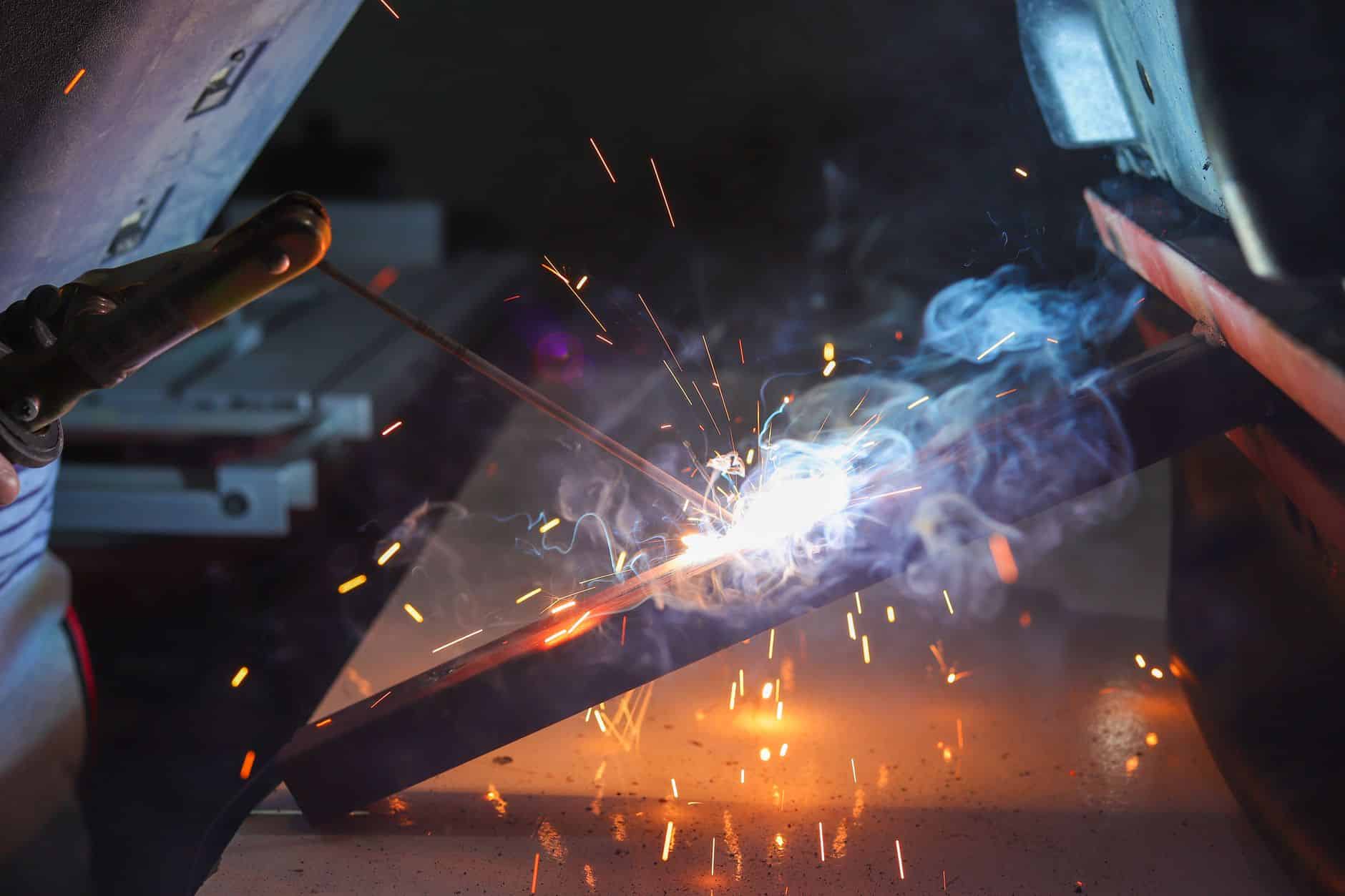
The environment decides the material, and it is worth being specific about it. Welding needs spatter resistance and a fabric that does not harden under radiant heat. Foundry work adds sustained high temperature and abrasive dust. Paint shops need a surface that does not shed fibres and can be cleaned of overspray. Food processing means daily washdown, cleaning chemicals and a food-contact-compatible material.
ATEX zones add a further constraint on top of all of that: routing and materials have to satisfy explosion-risk requirements under directive 2014/34/EU as well as mechanical protection, which is usually where generic off-the-shelf solutions stop being an option.
An Inspection Routine That Catches Failures Early
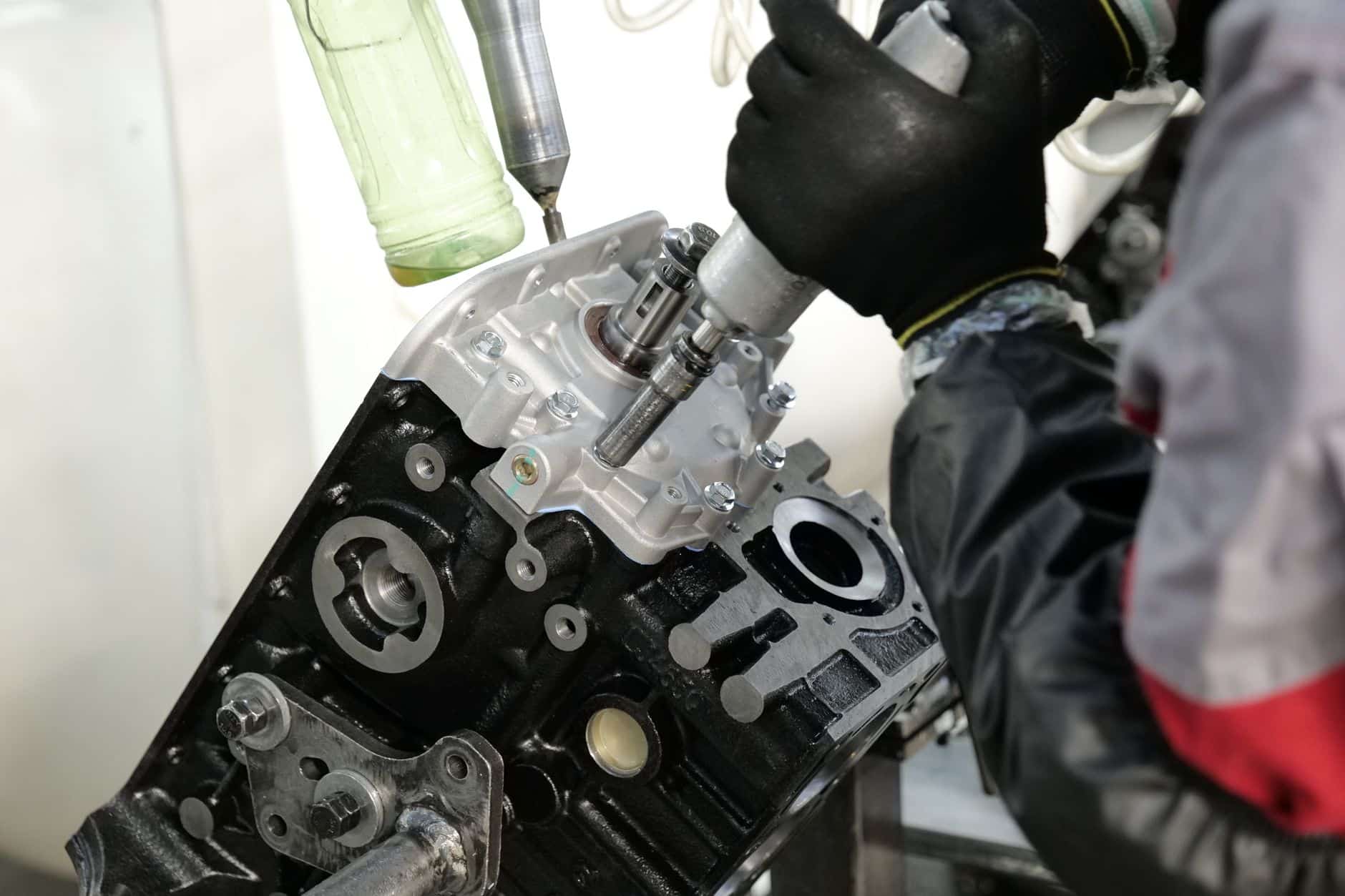
Cable failures announce themselves, but only to someone looking. A short routine at each maintenance window is enough:
- Run the program dry and watch the bundle through the full cycle, especially after any re-tooling.
- Check the service loop length at the tool. If it has shortened, the bundle is migrating and the strain relief needs attention.
- Look for shine, flat spots or burn marks on the jacket, and note where they are. The position identifies the failure mode.
- Flex the bundle by hand at the wrist. Stiffness or crackling means the jacket has hardened.
- Log intermittent faults with the arm position at the time. Two or three entries usually locate the flex point.
None of this takes more than fifteen minutes per robot, and it is the difference between replacing a bundle on a Friday afternoon and replacing it at two in the morning.
FAQ
Robot cable management is how the cables and hoses running along an industrial robot are routed, secured and protected so the robot’s own motion does not destroy them. It covers the routing path, the fixing points, and the protection between the bundle and the environment.
Because they move constantly. Repeated flexing and torsion fatigue the conductors, and abrasion, strain at the terminations, heat, chemicals and snagging attack the jacket. Cables rarely fail from a defect; they fail from cycles.
The dress pack is the physical bundle of cables, hoses and pneumatic lines on the arm. Cable management is the discipline of routing, securing and protecting that bundle so it survives the robot’s movement.
It depends entirely on the environment and the cycle. In harsh applications, unprotected bundles are often replaced within weeks to a few months, while a correctly sized custom protection commonly extends that to several months or more than a year.
Yes. Routing changes, strain relief and sectioned protective covers can all be fitted to an installed robot without modifying the machine. What matters is measuring the real range of motion first, so the protection does not restrict the arm.
Most often a conductor fatigued at a single flex point rather than fully broken. The signature is a fault that appears and clears when the arm is repositioned, which points to a specific spot in the routing rather than to the controller.
Yes, and it is one of the most common causes of premature failure. When the bundle is bound too tightly, the arm’s movement is absorbed by a few centimetres of cable at each fixed point instead of being spread over the whole run.
A spatter-resistant fabric that does not harden under radiant heat, fitted so it does not add stiffness where the arm flexes. Materials that perform well against coolant or dust are not automatically suitable against molten spatter.
Yes, with additional constraints. Routing and materials must meet explosion-risk requirements under directive 2014/34/EU on top of the mechanical protection, which generally rules out generic off-the-shelf solutions.
In Summary
Robot cables fail through six identifiable modes, and each one leaves a signature: where the damage sits on the bundle tells you which one you are dealing with. Flex fatigue and torsion break conductors from the inside; abrasion, heat, chemicals and snagging attack from the outside; strain concentrates everything at the terminations. The expensive part is never the cable, it is the diagnosis time and the unplanned stop. Naming the failure mode first, then fitting protection sized to the actual robot and duty cycle, is what turns a bundle replaced every six weeks into one replaced once a year.
Reviewed by René Domingues, founder of Robotic Cover Concept – a French manufacturer of custom robot protection covers since 1998, based in Toul, France, with units protected across Europe, Israel and Brazil.