In short. A conveyor cover has to protect a piece of equipment that is 20, 40 or 80 metres long, that people reach at dozens of points, and that often carries food. That is why it is built in sections, not as one shell.
A good conveyor cover follows the full length of the run, opens wherever an operator needs a hand, and washes down without holding water. Where product touches the fabric or passes close to it, the surface and the seams matter as much as the fit.
RCC has made custom covers in Toul, France, since 1998, and its covers protect production equipment across Europe, Israel and Brazil. This guide covers length, access, cleaning and product contact, and what to send us so the first conveyor cover fits without a second visit.
Table of Contents
Why a conveyor is not a small machine stretched out
A machine is a volume. It has a footprint, a height and a handful of openings, so one cover can wrap it. A conveyor is a line. Its length dwarfs its width, its height changes from one section to the next, and its geometry has nothing in common with a machine housing. Cutting one long tube of fabric for it is the first mistake.
Length brings problems a machine never has. Fabric sags between supports. A seam that is fine over two metres wanders over twenty. Nobody can lift a single cover for the whole run, so any repair or fitting stops the line while a crew wrestles with it. Sections of a manageable size solve all three, and they define the whole design.
Where a run changes shape
Straight belt sections are the easy part. The trouble sits at the points where the line changes. Inclines and declines alter the section height. Curves and transfers add angles. Drive units, take-ups and sensor brackets stand proud of the frame. Each of those needs its own pattern, cut from a measured survey and not from a catalogue size.
Length: building a conveyor cover in sections
The rule is simple: one section, one crew, one job. A typical section runs between one and three metres, depending on the height of the frame and the weight of the fabric. Two people can lift it, fit it and release it without stopping neighbouring sections. Each section overlaps the next, so no gap opens along the run.
Sections also make the run maintainable. A worn or damaged part can be replaced on its own. The rest of the line keeps its protection. On a 30-metre conveyor, that is the gap between changing one section in ten minutes and stripping the whole cover.
Joins are where sectional covers usually fail. A butt joint gaps as soon as the frame vibrates. An overlap that faces the wrong way funnels dust and wash water straight in. We orient every overlap against the direction of the main contamination source, whether that is falling product, splash from a nearby station or dust from an adjacent process. For dust-heavy areas, our guide to a cover built for dust, chips and oil mist explains how sealing works around moving parts.
Access along the whole run, not at one panel
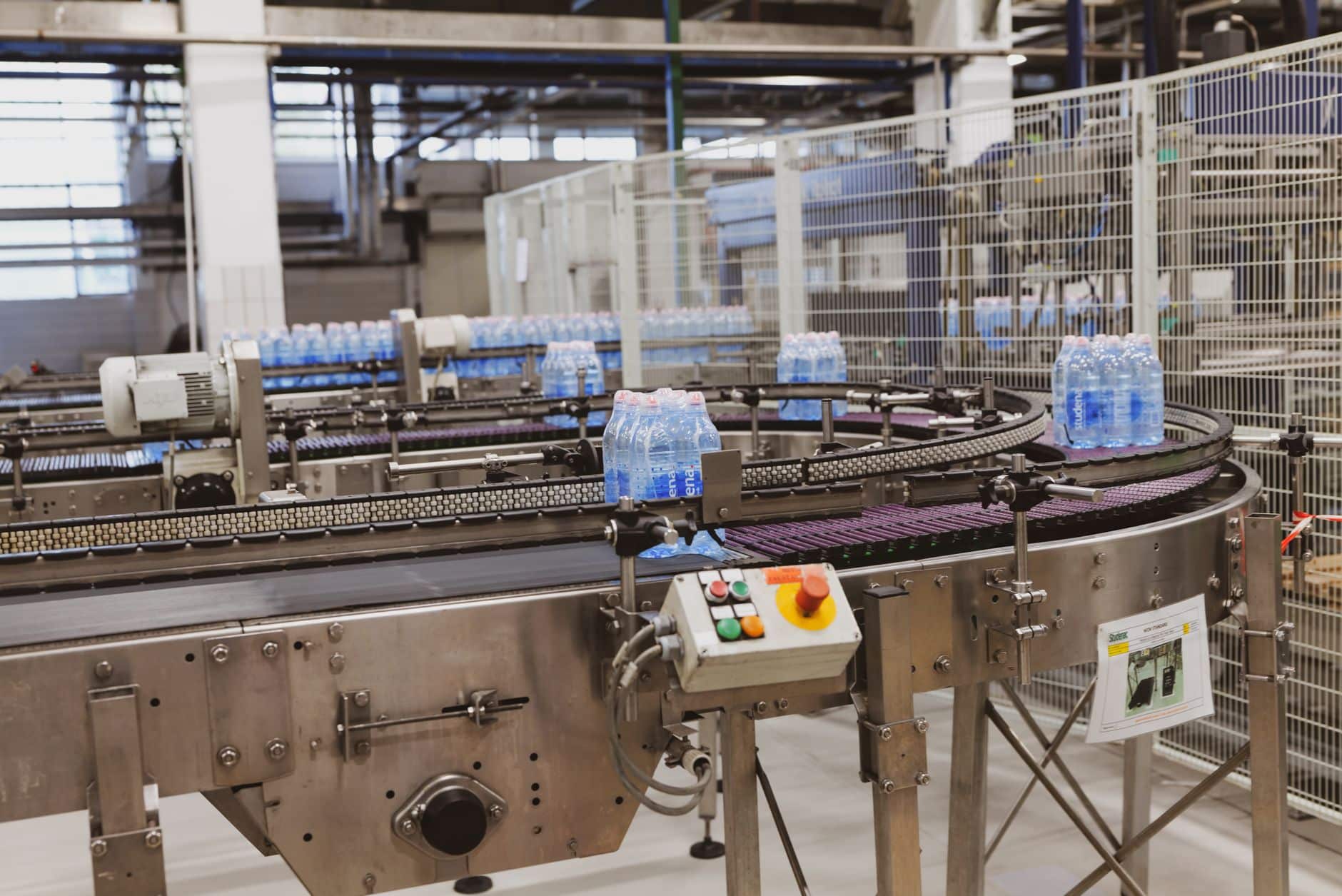
A machine has a few access panels. A conveyor has access needs every few metres. Operators clear jams, check belt tracking, reach a sensor, take a sample or lubricate a roller. If each task means removing a section, crews stop taking the cover seriously, and they leave it off. A cover that stays off protects nothing.
The fix is to plan the openings from the way the line is actually used. Inspection flaps go where crews look most often. Zip or hook-and-loop closures sit where a hand needs quick entry, never buried under a seam. Lift-off sections go where the belt or a drive has to come out. Every opening has to close again fully, because a flap that never quite shuts is worse than none.
Two rules keep this workable. Openings follow the maintenance log, not the drawing office’s guess. And the closure type matches the frequency: a flap for daily checks, a full removable section for the quarterly one. Our guide on how to measure a machine for a made-to-measure cover shows the survey method, and the same discipline applies along every metre of a run.
Cleaning constraints and product contact in food plants
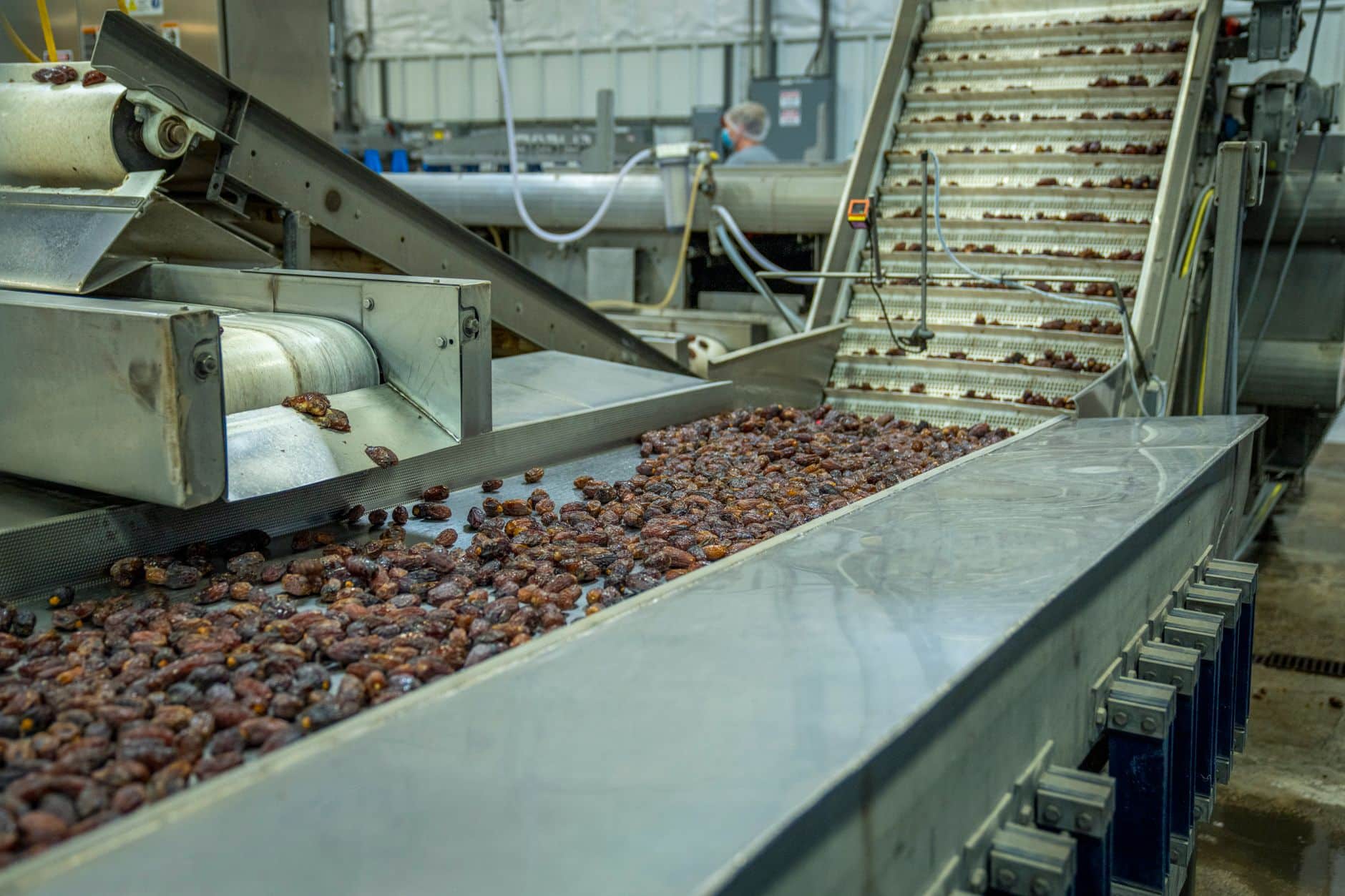
Food plants add a second brief to the first one. The cover must survive the sanitation routine, and it must not become a contamination source itself. Cleaning teams use hot water, foam and chemicals on a schedule. Anything that traps moisture, harbours residue or sheds fibres is a liability on a hygiene audit.
The stakes are commercial as much as regulatory. Food Safety Tech reports that even a limited product recall can cost a brand up to $10 million, and it adds that a full line shutdown to deep clean and test equipment can cost far more. A cover that cuts down manual cleaning, or that keeps contamination away from the belt between shifts, addresses exactly that risk.
Contact with product changes the specification
Some covers never touch the product. They protect frames, drives and bearings from splash and dust. Others sit close to open product, or brush it as it moves. In that second case we work from the plant’s own hygiene rules. Smooth surfaces, no exposed stitching where product can lodge, and sloped panels that shed water matter more than any datasheet claim. We ask about the cleaning agents and the wash-down pressure before we choose anything, and we do not promise a certification the plant has not asked us to meet.
Temperature, humidity and the zones a line crosses
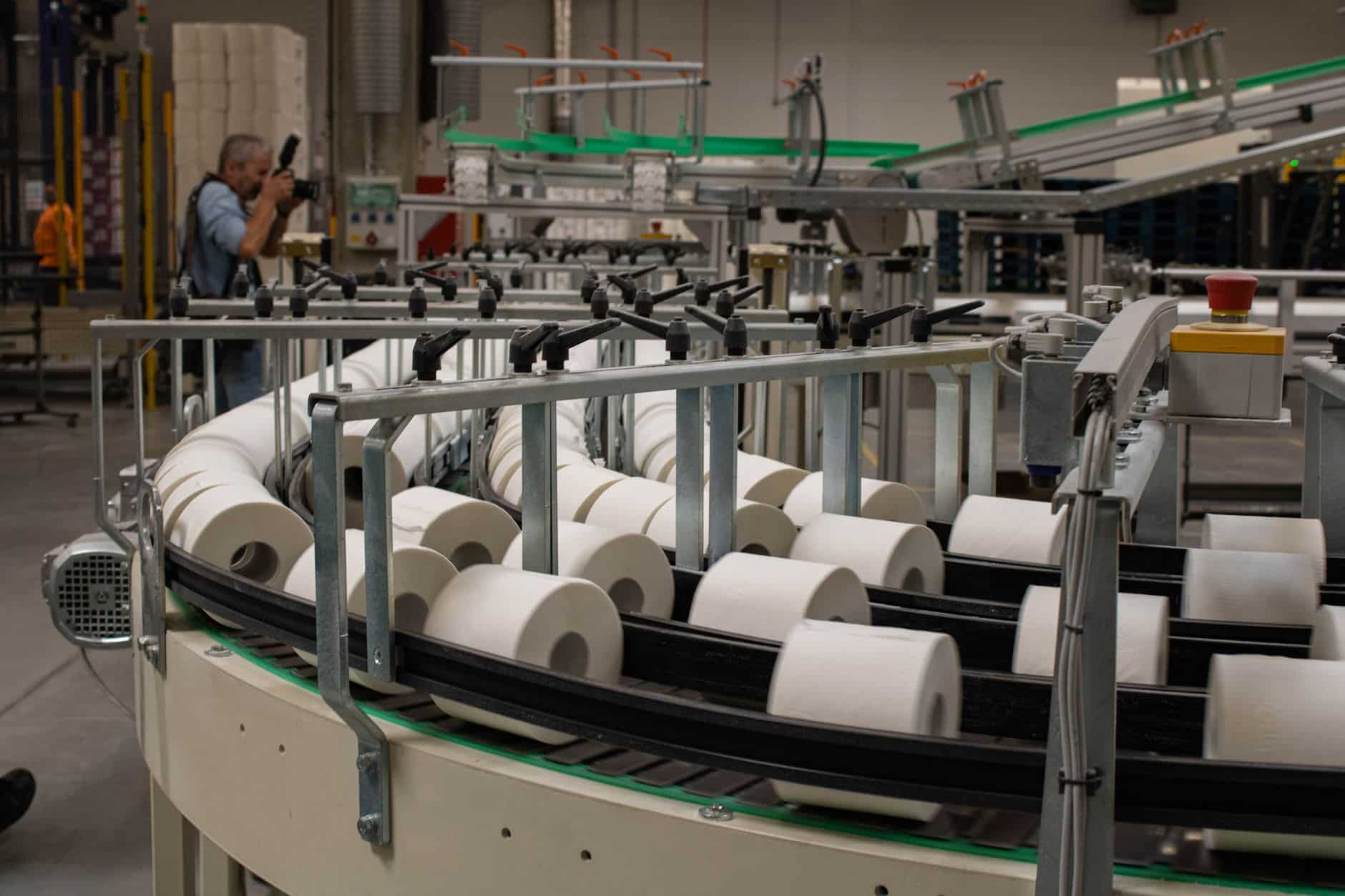
A long line rarely lives in one climate. It may leave a chilled room, cross an ambient corridor and end near an oven or a sealing station. Condensation forms where cold meets warm. Heat builds near the cooking end. One specification for the whole run ignores all of that.
So we split the run into zones and ask what each zone sees. A chilled zone needs a cover that stays flexible and sheds condensation. Near the heat source, the build has to keep its shape. In a washed zone, drainage comes first. The sectional logic stays the same everywhere, and only the build changes from one zone to the next.
Transitions between zones deserve a line of their own in the brief. A cover that crosses from cold to warm air collects moisture at exactly that spot. We place a section break there, so that one section never spans two climates. It costs nothing extra on the pattern, and it stops condensation from running along the run.
Zoning also keeps the bill sensible. You pay for the demanding build only where the line demands it. The rest of the run gets a simpler protection that still opens and closes the same way, so crews handle every section identically.
Fitting, fixing and taking it off again
A cover that takes an hour to fit will not be fitted. So the fixing system decides whether the cover is used. Straps, hook-and-loop bands and quick-release buckles all work. Each one suits a different frame. Tubular frames take straps well. Flat-sided frames suit bands. Panels that come off daily need buckles that survive a thousand cycles.
We also plan where the fixings sit. On a wash-down line, a fixing that collects water becomes a hygiene problem, so we keep buckles above the splash zone and away from the belt edge. On a dusty line, we cover the fixings so that dust cannot pack into them. These details never show up on a drawing. They show up on the shop floor at 6 a.m. on the first shift.
Fitting instructions matter as much as the fabric. Every section carries a marker that shows its position in the run, so a crew never has to guess where a section goes. We supply a short fitting plan with the set, and we mark the sections that open most often. That small step saves a surprising amount of time over a year.
Planning the survey along the run
Surveying a line takes longer than surveying a machine, but it follows a routine. Start at the infeed and walk toward the discharge with a notebook. Note every change of height, every curve and every transfer. Mark each point where a person stops to work: a jam clearance spot, a sampling point, a sensor. Then walk it again during a shift, because the way crews use a line rarely matches the way the drawing shows it.
Bring the maintenance team into the walk. They know which points get opened daily and which ones nobody has touched in a year. That single conversation shapes the opening plan better than any dimension. Photograph each station with a tape in frame, and note the wash method beside the photo.
What an uncovered line quietly costs
An uncovered line looks cheaper until you count the small losses. Dust settles on rollers and bearings, and drive units run hotter. Splash from a neighbouring station reaches the belt edge. Idle lines collect debris over a weekend, and the first hour of Monday goes on cleaning. None of these events makes a headline. Together they eat into the maintenance budget and shorten the life of the equipment.
A cover changes that pattern only if crews keep it on. That is why every design choice above comes back to the same test: does it make the cover easier to live with than to leave off? Sections, openings, fixings and drainage all answer that one question.
Conveyor cover or machine cover: what changes
| Design point | Machine cover | Conveyor and line cover |
|---|---|---|
| Shape | One volume, one pattern | A run of sections, each with its own pattern |
| Handling | One cover, lifted once | Sections one or two people can fit alone |
| Access | A few panels | Openings every few metres, matched to the maintenance log |
| Joins | Few, mostly at the base | Many overlaps, oriented against the contamination source |
| Cleaning | Wipe-down or occasional wash | Scheduled wash-down that the cover must drain and survive |
| Product contact | Rare | Frequent in food lines, so surfaces and seams drive the design |
What this looks like on a real line
A bottling plant ran a 36-metre conveyor with a single tarpaulin thrown over the idle section at weekends. Fitting took four people and about 40 minutes, so it was often skipped. We replaced it with 14 sectional covers that a single technician could fit in about 15 minutes. Over the following year the plant reported a clear drop in lubricant contamination on the drive side, and the weekend protection stopped being skipped.
A food packaging site had a wash-down conveyor where an earlier cover held water in its seams. Cleaning crews removed it every night, which took roughly 25 minutes. The new sloped, drained sections stayed in place through the daily wash, and the nightly removal step disappeared from the sanitation checklist. The figures are typical of these projects and depend on each line.
What to specify before ordering a conveyor cover
Four items turn a walk along the line into a buildable brief. Send:
- the total length and how the run splits into sections, including every incline, curve and transfer;
- the position of every drive, take-up, sensor and support that stands above the frame;
- where operators need access and how often;
- the cleaning method, the chemicals and the presence of open product.
Photographs taken along the run, with a tape in frame, complete the file.
Our design office turns that file into a set of section patterns and a fitting plan. Environment decides the rest. A line in a washed hall needs a different build from one that crosses a yard, and the outdoor and weatherproof cover guide covers the second case.
Send us the layout of your line
A sketch with lengths, inclines and access points is enough to start. Our design office returns a sectional plan built for your line.
Send your line layout →FAQ
The basics
A conveyor cover is a fabric protection built in sections that follows the length of a conveyor or production line. It shields the frame, drives and belt from dust, splash and contamination, and it opens wherever crews need access.
A machine cover wraps one volume. A conveyor is a long line with changing heights, curves and many access points. One large shell sags, cannot be lifted by a crew and stops the whole line when it needs repair.
There is no fixed limit, because the cover is built as a chain of sections. Each section is typically one to three metres, light enough for one or two people to fit alone.
Access and cleaning
Through openings planned from the maintenance log. Inspection flaps serve daily checks, zip or hook-and-loop closures serve quick hand access, and a lift-off section serves the rare job where a drive or belt has to come out.
It can if it is designed for it. Sloped panels, drained seams and surfaces that do not hold water matter most. Tell us the wash method, the pressure and the cleaning agents before we choose the build.
Sometimes. Where product passes close to the fabric or brushes it, we work from the plant’s hygiene rules and keep surfaces smooth, with no exposed stitching where product can lodge. Tell us whether contact is possible.
Specifying and ordering
The total length and section breaks, every incline, curve and transfer, the position of drives and sensors, where operators need access, and the cleaning method. Photographs along the run with a tape in frame complete the file.
Only when the lines share the same geometry. Patterns come from a survey of each run, so identical lines can reuse one pattern, while a different layout needs its own.
Split it by zone. A washed hall, a dusty area and an outdoor stretch have different needs, so each zone gets its own build, while the sectional logic stays the same across the whole run.
In Summary
A conveyor cover works when it respects the geometry of a line. Build it in sections, plan access along the whole run, and design for the cleaning routine and for product contact. Get the survey right and the cover fits first time, then stays on because crews can live with it.
This guide covers one kind of equipment. Our broader guide to custom equipment covers for industrial machines covers fabric and construction choices, and our technical glossary defines the terms used above. For fabric properties, see our page on robot protective materials.
Ready to protect your line?
Send us your layout or a few photographs. Our design office prepares a made-to-measure sectional cover, with a free assessment.
Request a free assessment →Browse the full range of protective covers by sector or see the cover programme on our home page.